A smaller group than the chewy side
155 recipes measured as crispy and 29 carry enough ratings to choose between. That is enough to see a pattern, and it is a thinner base than the chewy page stands on.
The biggest difference between a crisp cookie and a chewy one is not an ingredient. It is how much dough you put on the tray.
Thin, even snap all the way through. Spreads wide, bakes dry. Everyone writing about this reaches straight for the sugar, but the crispy recipes we measured average 35 g of dough against 50 g for the chewy ones, before a single ingredient changes. A smaller cookie has more edge for its middle and less water to lose, so it dries and crisps where a big one stays soft.
Read against 619 published chocolate chip cookies recipes and 10,058 reports from cooks who changed one thing.
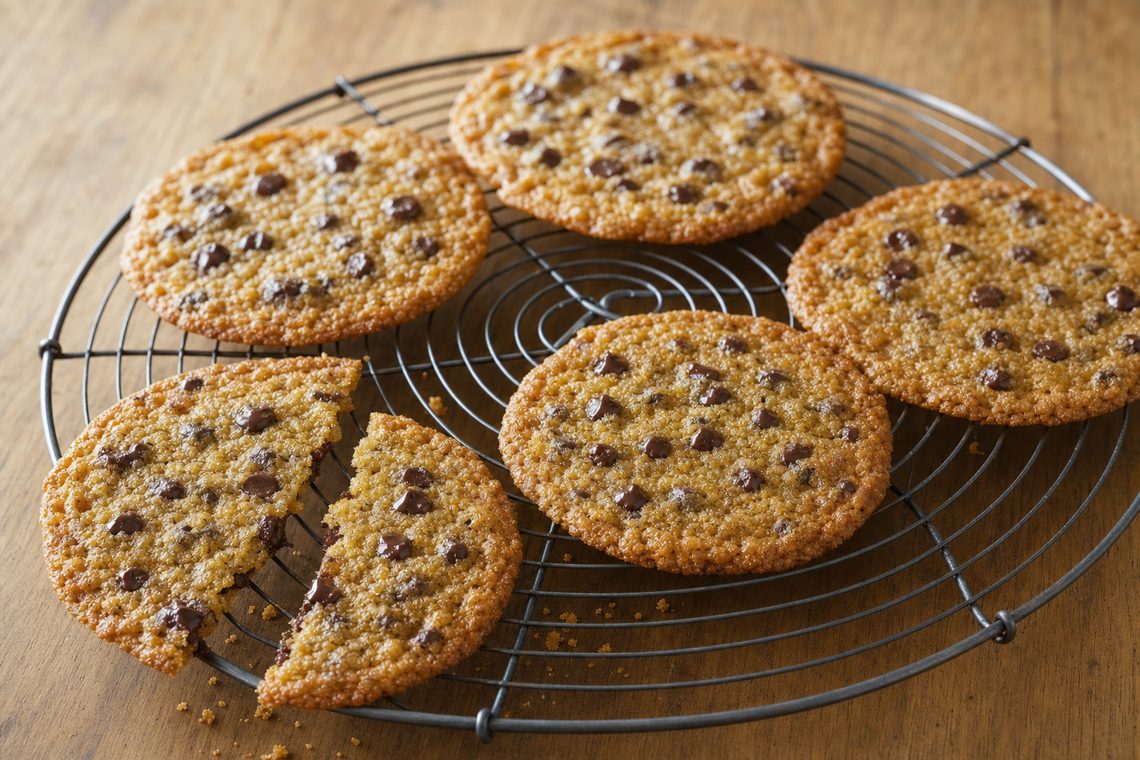
A smaller cookie has more edge for the amount of middle, and the edge is the part that dries out.
This is why the same dough can give you two different cookies. Scoop it small and most of what you bite is edge: set, dry, snapping. Scoop it large and the middle stays wet long enough to stay soft while the rim finishes. Before you change one gram of sugar, change the scoop.
| Texture group | Dough per cookie | Based on |
|---|---|---|
| Crispy | 35 g | 20 recipes |
| Chewy | 50 g | 52 recipes |
| Cakey | 75 g | 10 recipes |
Each of these was read from cooks who changed one thing and said what happened. Direction and rank only. We will not tell you how wide the result will be.
More butter is the one formula lever we can measure directly, and it runs on the same mechanism that causes flat cookies by accident: warm butter frees its water early, so the dough spreads before the oven can set it. Overshoot the spread you are chasing here, and our page on cookies going accidentally flat is the way back.
Most advice treats these as opposite ends of one slider, which is why people are told to pick. The edge dries because it is thin and exposed; the middle stays soft because it is thick and insulated. A larger cookie baked a little hotter and pulled a little sooner does both, which is exactly what a bakery-style cookie is.
Of the 29 crispy recipes with enough ratings to choose between.
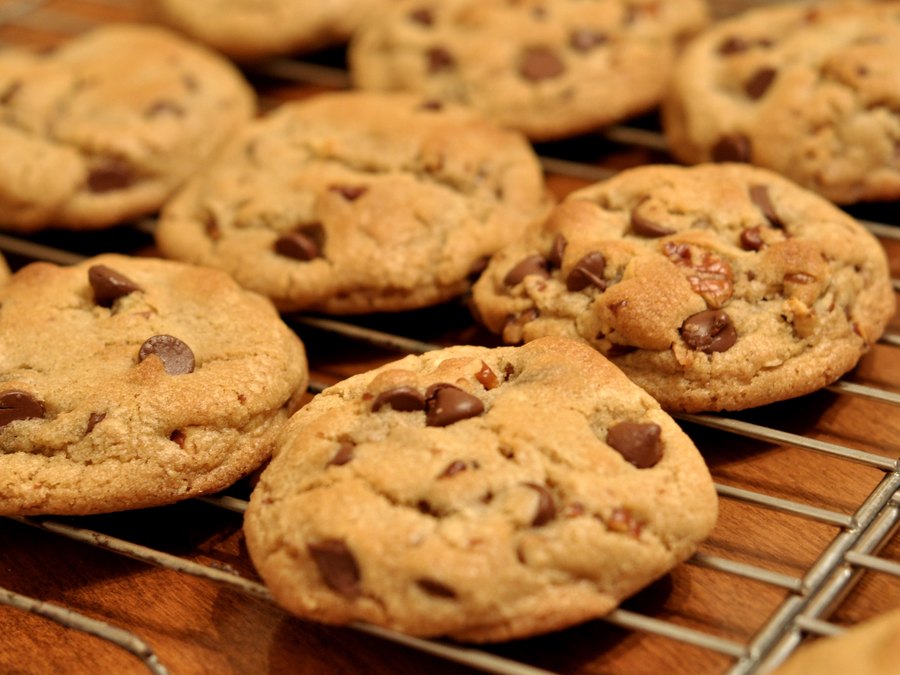
Its sugar sits low on brown, which is the other half of what makes a cookie crisp. We could not resolve a portion weight for this one, so we are not going to tell you how big it bakes.
from www.kingarthurbaking.com 4.5 553 cooks rated it
Grouped by formula rather than by title, which is why a few of these do not say “crispy” anywhere on them.
The remaining 119 are on the full list of all 619 recipes.
So you know how far to trust the rest of this page.
155 recipes measured as crispy and 29 carry enough ratings to choose between. That is enough to see a pattern, and it is a thinner base than the chewy page stands on.
Crispy recipes are consistently smaller across published recipes. Nobody portioned one dough two ways and baked both, so the link between size and crispness is strong and it is still an association.
We can tell you which way each change pushes and which pushes hardest. Your oven, your tray and how cold the dough was all move the result too, and none of them are in our data.