Decided before the oven, not in the tin

Why do my cookies go hard, and how do I keep them soft?

The tin and the bread trick help. The thing that actually decides it gets set in the bowl.

Every page on this question tells you how to store the cookie. We looked at what the cookie is made of instead. Across 85 recipes and 7,124 reviews, 20 cooks told us something about storing, freezing or keeping these moist. Here is the mechanism behind all of it, and the one formula decision that predicts more than any tin can fix.

285Bakes behind the levers
85Recipes compared
20Cooks on storing/freezing
1Measured effect, one mechanism
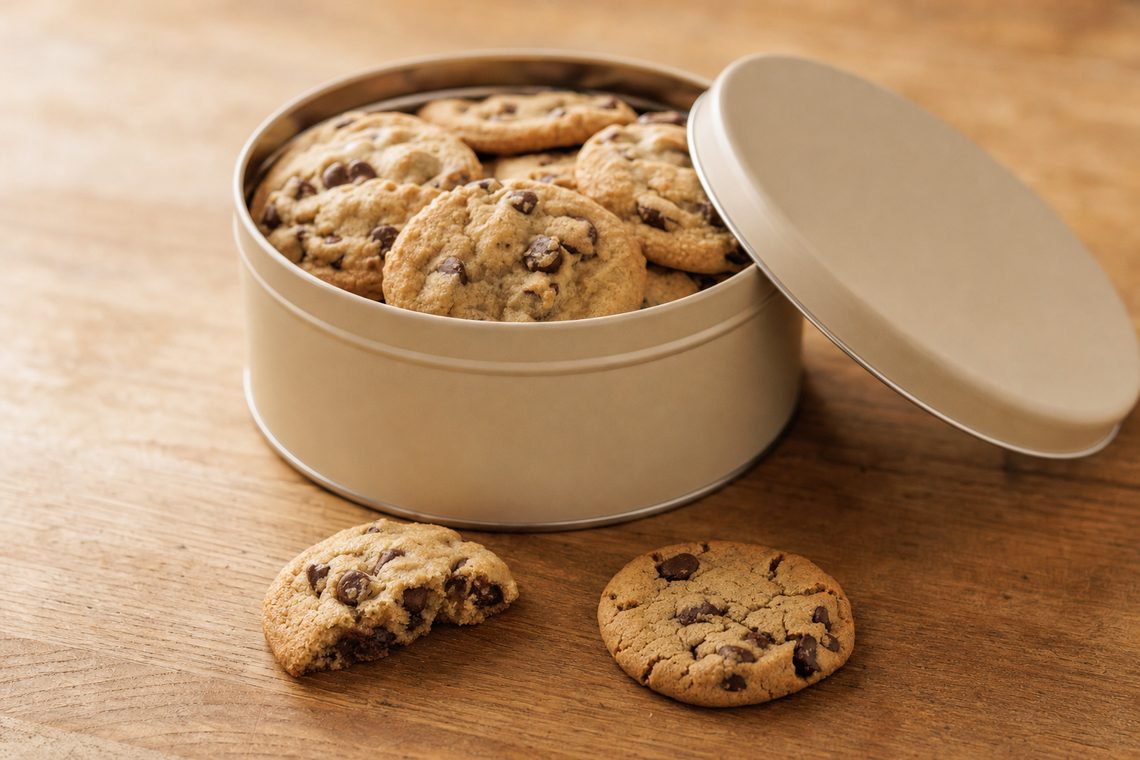
A chocolate chip cookie the day after baking.
Sam crockett · CC-BY
The mechanism, stated plainly

What actually keeps a cookie soft

Not a container. A ratio, fixed before the dough is even mixed.

Where it is actually decided 285 bakes

More brown sugar means more water stays in the crumb

Invert sugar in molasses binds water and holds it in the crumb after baking. Retained water is what chew is.

That single property is behind the fitted effect on this axis: recipes with a higher share of brown sugar come out chewier. Worth being direct about that edge result: it runs crisper, not softer, so it is not the tidy "everything gets softer" story a page like this wants to tell. What we can say is narrower and still real. A more tender bite and retained water are close to the same physical fact, and retained water is also the raw material a cookie is made of before it starts drying out over the following days. We did not measure that later part directly, no cook in these reviews baked the same recipe twice and timed how long it stayed soft. The bite result is the closest fitted stand-in we have for it, which is why the recipe built for chew is the one we would point to first if staying soft matters more to you than the edge.

What to do: if a recipe keeps going hard on you overnight, brown sugar share is the formula lever most tied to retained moisture. Check it before you touch the storage container. Full breakdown of the ratio here.

Real, but treating the symptom

An airtight container keeps them moist

This is correct and it is the entire content of almost every other page on this question. Sealing the cookies away from dry air slows the water leaving the crumb. What it cannot do is add back water a low-brown-sugar formula never held onto in the first place. It can only slow a loss that a different ratio would have slowed on its own, from the inside, without a tin.

What to do: do this anyway, it costs nothing. Just do not expect it to rescue a formula that was never going to stay soft.

Fits the physics, no report behind it

Already hard? Check how the flour got measured

Flour scooped by volume packs unpredictably and can run well over the weight a recipe was written for. Extra flour ties up more of the dough's water in gluten and starch, leaving less free to keep the baked crumb soft: the same water the brown-sugar ratio is trying to hold onto, lost a different way. It is a single report, not a fitted lever, but it points at the same physical story as everything else on this page.

What to do: weigh the flour. It is the cheapest check available before you blame the sugar.

Where the fix actually lives

Most recipes already split the difference

If a recipe is going stale fast, this is the number worth checking before anything else.

Each tick is one of the 85 recipes, from all white sugar on the left to all brown on the right. The shaded band is the middle half; that is where most published recipes already sit.

The typical recipe puts a little over half its sugar in as brown, the midpoint sits at 53%. 19 of the 85 we compared use no brown sugar at all, and those are the ones most likely to be the "goes hard by tomorrow" recipe someone is complaining about. Not because the recipe is broken, but because nothing in it was ever going to hold water in the crumb. 10 go all the way to brown; if the more tender bite our data measures is the whole goal, that end of the range is where to look, and the full effect and its trade-offs are here.

Freezing cookies

What cooks actually do for the long term

The freezer questions in our reviews are almost all about dough, not baked cookies. That gap is itself useful to know.

Notice what is missing: we have no reports in these reviews of cooks freezing already-baked cookies, only dough. We are not going to invent advice for a question our own cooks did not answer; see the honesty section below.

Dry and crumbly, specifically

Is crumbly the same problem as hard?

They are related, not identical

Our model tracks whether a cookie reads sturdier or more crumbly as its own outcome, separate from chew. It is a real axis in how we score a cookie. It is also one we could not fit to any ingredient ratio in this corpus: no lever for it survived the fitting the way the brown-sugar effects did.

The physics we do have

Flour protein plus available water plus agitation builds an elastic network that resists the bite. That is the mechanism behind gluten, and gluten is what keeps a bite pulling instead of falling apart. It is the same reasoning behind the flour-weighing report above: too much flour, or too little water reaching it, and the crumb has less holding it together as well as less water in it to begin with.

Dry is usually hard's earlier cousin

A cookie going dry and a cookie going hard are both water leaving the crumb; dry is what it feels like on day one, hard is the same process further along. The brown-sugar ratio above is the formula-level answer to both. If yours feels dry straight out of the oven rather than a day later, that is more likely to be over-baking than storage or formula. Worth a look at the problems hub if that is the case.

Honesty

What this page cannot tell you

We have no shelf-life number

We cannot tell you how many days a cookie stays soft, in a tin or out of one. Nobody in these reviews reported baking the same recipe and timing when it went stale, so there is no comparison to draw. The reasoning above is sound chemistry: retained water is what a tender bite is, and staleness is water leaving the crumb over time. But that is chemistry applied to a question we did not directly measure, not a measured result on its own.

Nothing on containers, wrapping or bread

The bread-in-the-tin trick, wax paper versus plastic, glass versus metal, none of that is in our data. We are not going to invent a ranking for it. What we can say is that all of it works the same way: slowing moisture loss from the outside, which is a smaller effect than not losing it in the first place.

Direction, never a day count

285 bakes tell us more brown sugar means a crisper edge and a more tender bite, not a softer cookie across the board. They do not tell us by how much, in grams, or translate into a day count. Treat this as which way to move the ratio, not a number to hit.