Check first
invisible in every recipe
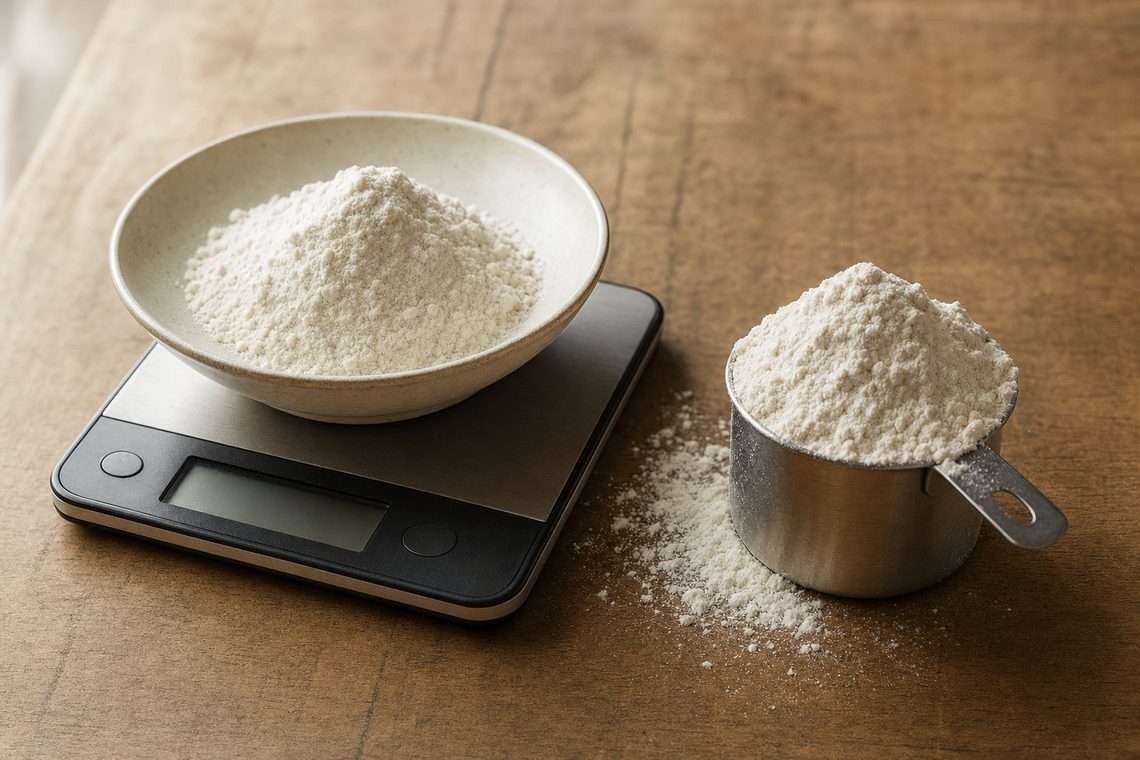
Weigh the flour
A cup scooped from the bag can hold a third more than a cup spooned in and levelled, which is enough on its own to change the cookie.
This is the most common cause of both flat and cakey cookies, in opposite directions, and the recipe is usually not the thing at fault. If you change one habit in your baking, change this one. 120 g per cup of plain flour, on a scale.
Honest note: recipes record what they asked for, never what went into your bowl, so this is the one cause we cannot put a number on. It is still the first thing to check.
Weighing is the single change most likely to fix a batch. If you do not have one: Escali Primo scale As an Amazon Associate we earn from qualifying purchases
Check second
619 recipes compared
Match the butter method the recipe was written for
Cold, softened, melted and browned butter are four different ingredients, not four temperatures of one.
Butter is roughly a sixth water, and whether that water is locked in fat crystals or already free changes how much gluten forms before the tray reaches the oven. A recipe built around creamed butter will not behave if you melt it, and the reverse is just as true.
Check third
measured across the whole set
Portion by weight
Cookie size is a formula variable, not a serving choice.
Mass decides how far the edge dries before the centre sets. The same dough that bakes evenly at 30 g can come out crisp at the rim and molten in the middle at 70 g, which means a good share of what looks like a recipe fault is a scoop fault. Weigh one portion, then match the rest to it.