Descriptive, not controlled
The comparison above groups 15 different published recipes against 40 creamed and 26 melted ones. It is not one dough browned, creamed and melted by the same cook in the same kitchen, and every section above says so.
15 of the 85 recipes we compared brown the butter first. Here is how that group actually reads against the ones that cream it or melt it.
Every recipe on this topic tells you to brown the butter and stops there. We can go further: 15 of the 85 recipes we compared measured as browned-butter, so we can show you how that group actually reads against the 40 that cream the butter and the 26 that just melt it, plus the elected recipe, in full, below.

15 recipes grouped as browned-butter, read against 40 creamed and 26 melted. Different published recipes sorted by formula, never one dough baked three ways. Direction only, never a magnitude.
| Outcome | Browned-butter recipes read |
|---|---|
| Chew | In between |
| Sweetness | Sweeter |
| Colour | In between |
| Thickness | In between |
The browned-butter group reads sweeter than the creamed and melted recipes on sweetness, and lands in between them on chew, colour, and thickness. Whatever is behind that, a grouped comparison like this cannot prove it's the browning doing the work rather than something else about how these cooks write a recipe. It could be the browning. It could be that cooks who brown butter also tend to write a slightly different recipe in other ways. See the full four-way breakdown, including melted and cut-in butter, on what melted, softened or browned butter actually changes, and what else moves chew specifically on soft & chewy cookies.
Fat state at mixing: Butter is 16-18% water. Cold or creamed butter locks that water in fat crystals where the flour cannot reach it; melted butter frees it, so gluten forms before baking.
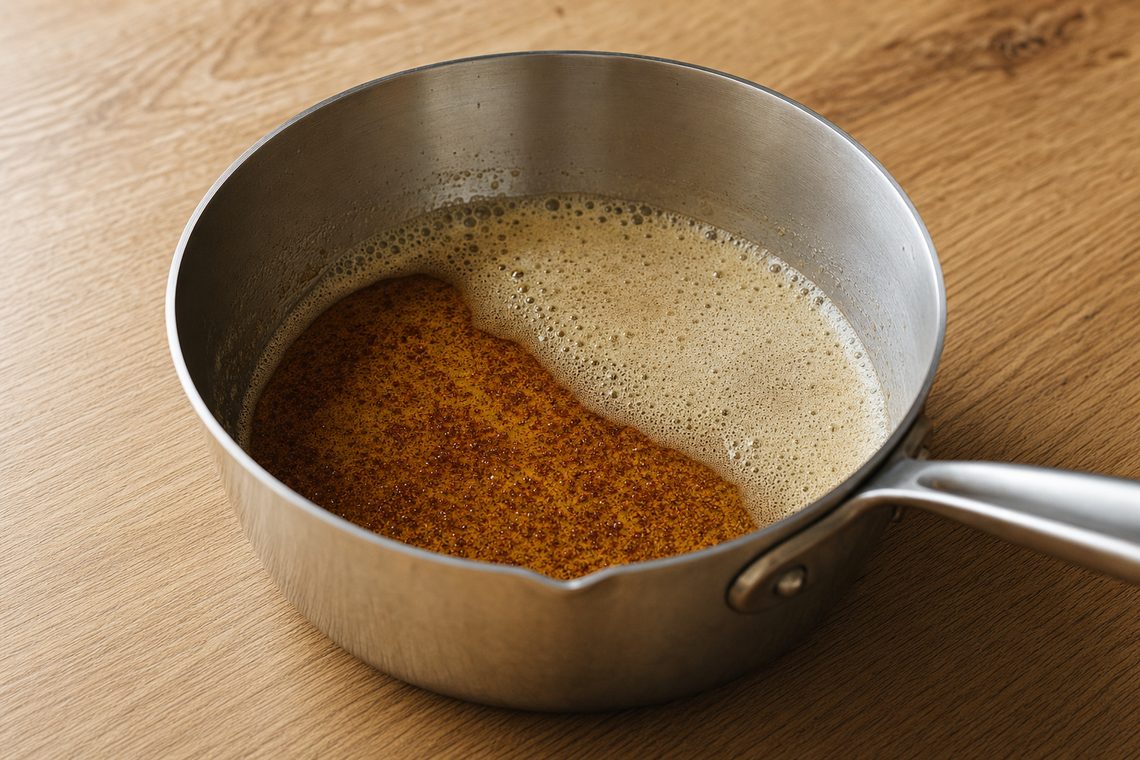
Butter is roughly 16–18% water. Melt it and that water stays put. Brown it (cook it past melting until it foams, the milk solids toast and the pan goes quiet) and a real share of that water boils off along with the steam. What's left in the pan is not just butter with a different flavour. It is less butter, and drier butter, than what you started with.
That matters because we cannot take it apart from here. Flavour compounds and lost water arrive in the same pan at the same time, from the same few minutes over heat. When the browned-butter group above reads sweeter than the rest, some of that could be the toasted flavour changing how cooks scored the cookie, and some of it could be genuinely less water in the dough. Both are real. We cannot tell you the split, and any page that claims it can is guessing.
Elected from 15 browned-butter recipes by proof (our combined read of rating and how many cooks left one), then by how many cooks rated it. The single highest-proof recipe in this group of 15 is actually a gluten-free formula: a real browned-butter cookie, just not what most people mean by this search. We elected the top-proof recipe made with ordinary flour instead; it also happens to carry more cook ratings than any other recipe in the group, including that one.

from infinetaste.com 4.63 1,993 cooks rated it
It is the most cook-rated recipe of the 15 in this group, made with ordinary flour, and it browns the butter as its very first step rather than treating it as an optional swap.
Gram weights already sit in the ingredient list below, exactly as the author wrote them. Cool the browned butter until it is solid again before you cream it: go in while it's liquid and the cookies spread thin.
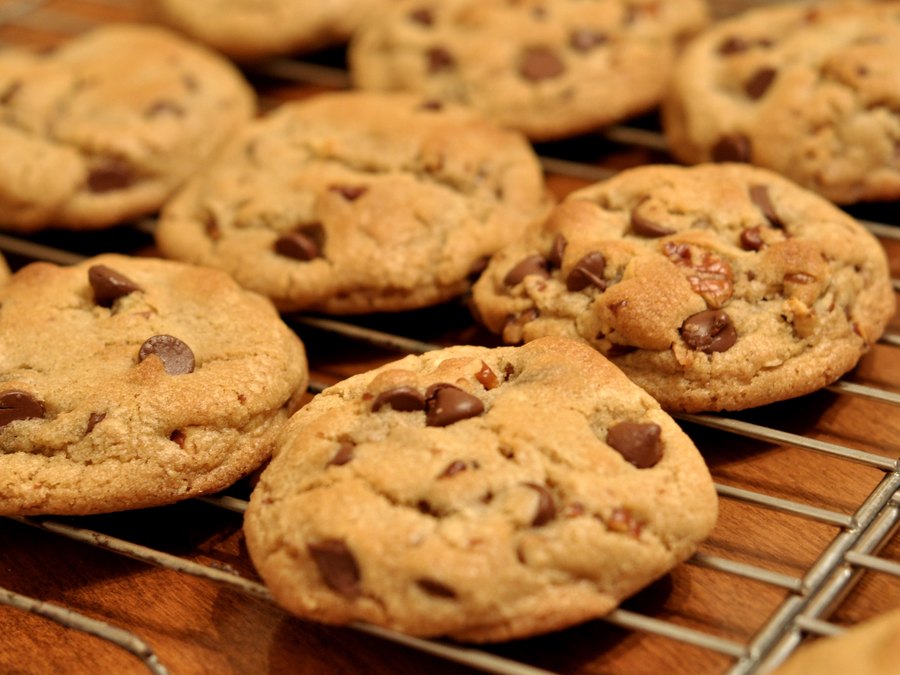
This recipe is Brown Butter Chocolate Chip Cookies by infinetaste.com. It is their work, reproduced so you can bake from one page.
Grouped by what the recipe actually does with the butter, not by whether “brown butter” is in the title, which is why a couple of these don't say it up front. Sorted by how many cooks rated them.
The comparison above groups 15 different published recipes against 40 creamed and 26 melted ones. It is not one dough browned, creamed and melted by the same cook in the same kitchen, and every section above says so.
Browning removes water from the butter at the same time it builds toasted flavour. Our data cannot tell you how much of the chew difference comes from which. Chew is also the only outcome where the browned group stands apart at all; on the other three we measured, it lands in between the creamed and melted groups instead.
We know which recipes brown the butter, not for how long or how dark cooks took it before pulling it off the heat. Both change how much water is lost and how strong the toasted flavour is, and neither is in our data.
15 recipes is enough to see a pattern on chew, and it is fewer than the 40 creamed recipes it's compared against, worth knowing before you treat the comparison as the last word.