The best-evidenced ingredient we have

What brown sugar actually does in cookies

More brown sugar gives you a crisper edge and a more tender bite. Those are the two effects that held up, and they are not the ones you are usually promised.

Every page on this subject says the same thing about molasses and moisture without showing you anything. This one is mostly evidence, from 799 bakes where a cook moved the ratio and nothing else: what changes when you shift it, how far real recipes shift it, and what to do if you have run out.

Read against 619 published chocolate chip cookies recipes and 10,058 reports from cooks who changed one thing.

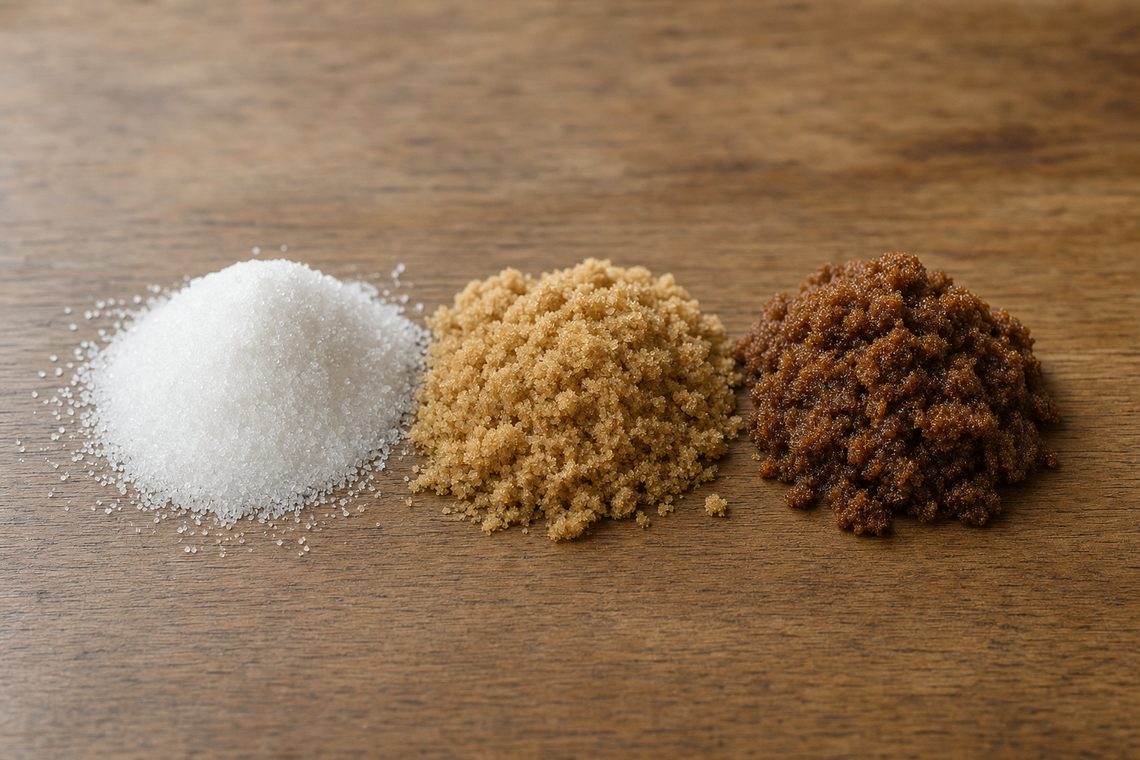
White, light brown and dark brown sugar side by side, the brown ones packed and visibly damp.
Grammy's Kitchen · illustration
The short answer

More brown sugar makes the edge crisper and the bite more tender

Both effects trace to the same property: molasses in brown sugar holds water in the crumb. That does not stretch to thicker or more spread, we have no fitted read on either from this ratio, only on the edge and the bite.

Read from cooks who shifted the ratio on a recipe and reported what changed. Direction and rank only, never a magnitude.
More brown sugar makes itBecause of Read from
ChewierMoisture retention799 bakes

Worth saying what is not on that list. Brown sugar is often credited with making cookies taste sweeter or darker. Neither survived as a measured lever once the formulas were corrected, so we have taken them off. If you see us claim either elsewhere, it is out of date.

Where real recipes sit

Almost nobody goes all the way to either end

The argument is usually framed as brown versus white. In practice published recipes treat it as a dial, and cluster in the middle.

Each tick is one of the 619 recipes, from all white sugar on the left to all brown on the right. The shaded band is the middle half.

What the spread tells you

The typical recipe puts a little over half its sugar in as brown, the midpoint sits at 59%. Only 48 of 619 go all-brown and 71 go all-white. If you are deciding a ratio, you are choosing inside a band that most published recipes already agree on.

Which means

Shifting from a typical recipe to all-brown is a bigger move than it sounds. You would be leaving the range almost every published recipe occupies. It is a legitimate thing to do for the crisper edge and more tender bite the two effects above measure, and you should expect a noticeably different cookie rather than a slightly better one.

The other half of the question

So what is the white sugar for?

Brown sugar gets all the attention, but the total amount of sugar is doing its own job, and it is a different job.

More total sugar makes it

  • Crisper at the edge 8 bakes
  • Sweeter 45 bakes
  • Flatter and wider 319 bakes
  • Chewier 799 bakes

Why the two are not interchangeable

Sugar competes with the flour for water. Tie enough of it up and there is less left to build structure with, so the dough stays slack, spreads further and browns harder at the edge. That is the effect of sugar as a quantity.

The brown-to-white ratio is a separate question laid on top of it: how much of that sugar arrives carrying molasses, and therefore how much water is held in the crumb rather than given up. You can change one without changing the other.

If you have run out

Can you make chocolate chip cookies without brown sugar?

Go ahead 71 of 619 use none

Swap white sugar in one for one, by weight

It works, and it will not be the same cookie: you lose the two things brown sugar measurably adds, a crisper edge and a more tender bite.

Run those in reverse and the honest read is a softer edge and a chewier bite, not the thin, pale cookie older advice predicts. This ratio has no measured link to spread at all, so we will not tell you it comes out flatter. Treat the swap as a change of style rather than a downgrade.

By weight, not by cup. Brown sugar packs, so a cup of it weighs more than a cup of white, and matching cups quietly changes the sugar total too.

Open question not in the published record

Making your own with molasses is worth a try

The usual ratio, a tablespoon of molasses per cup of white sugar, is chemically sensible, and no published recipe we hold documents doing it.

Recipes call for brown sugar or they do not, so there is no group to compare against and no honest number to give you. It is a reasonable thing to do in your own kitchen. It is not something we can vouch for, and we would rather say so than pass along a ratio dressed up as a finding.

Why it works

It is all one property

Moisture retention

Invert sugar in molasses binds water and holds it in the crumb after baking. Retained water is what chew is.

Straight with you

Where we would be guessing

So you know how far to trust the rest of this page.

Direction, not dose

We can tell you that more brown sugar means a crisper edge and a more tender bite, and that this is the best-evidenced ingredient on the whole site. What a ten per cent shift does to your particular cookie is past what these recipes can say.

Light and dark read the same to us

Recipes call for light or dark brown sugar and we resolve both to one ingredient. Dark carries more molasses, so we would expect it to push further in the same direction. That is a reasonable expectation and we have not measured it.

Two effects, not the whole story

Claims about sweetness and colour were dropped when the formulas were corrected and the model refitted. Their absence here means we could not support them on this data, not that brown sugar leaves those things alone.