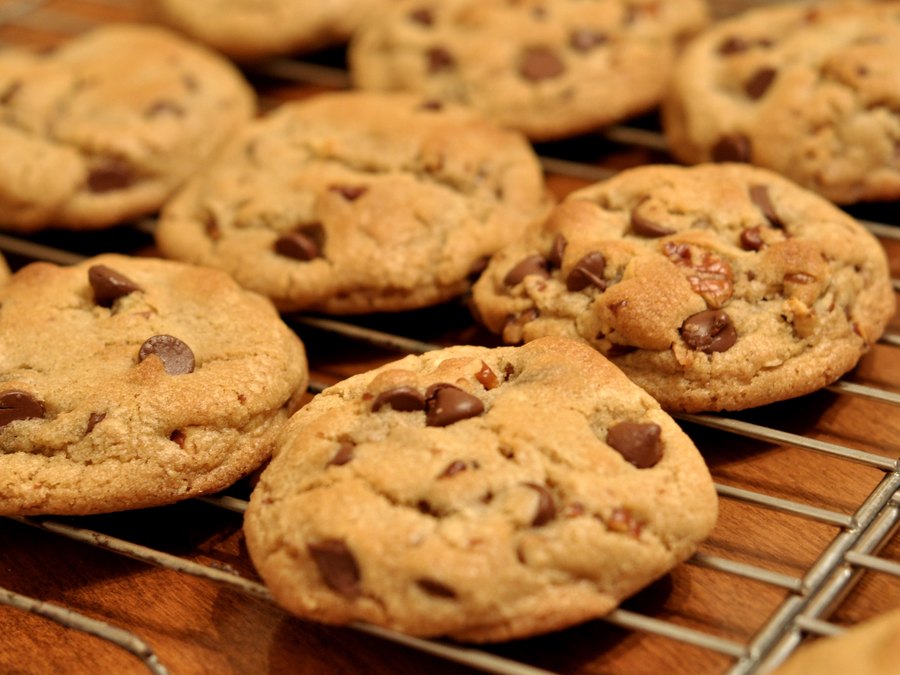
20 of the 85 recipes we compared

Gluten-free chocolate chip cookies

Not a wheat recipe with the flour swapped out. The ones that work are a different formula, on several measured axes at once.

20 of the 85 recipes we read use no wheat flour at all, a real group but a smaller one than the 65 wheat recipes it sits beside, and we say that plainly before anything else on this page. What we can still do with 20 recipes is compare them to the wheat side on the same measured axes we use everywhere on this site, and the gap is not one ingredient. It's several, at the same time.

20Gluten-free recipes
65Wheat recipes compared against
85Total recipes
7,124Reviews read
Gluten-free chocolate chip cookies cooling on a rack.
Sam crockett · CC-BY
The wedge

It isn't the flour. It's the whole formula.

Line the 20 gluten-free recipes up against the 65 wheat ones on the same axes we measure everywhere on this site, and they move apart on several of them at once, not just the one ingredient you'd expect.

A recipe that only changed the flour would look identical to a wheat recipe on every other axis. These don't. Direction only, ranked by how consistently each one moved: we will not tell you by how much.

Gluten-free recipes against wheat recipes, by average formula. Ranked by how much each axis moved, strongest first.
What's differentDirection
Brown sugarLess than the wheat recipes
ChocolateLess than the wheat recipes
ButterMore than the wheat recipes
EggMore than the wheat recipes
SugarLess than the wheat recipes
Cookie sizeLess than the wheat recipes

The brown-sugar gap is the one we'd bet a reader would guess last, and per what brown sugar actually does it is the axis most responsible for chew. Gluten-free recipes lean away from it, on average, not toward it.

The part a flour swap can't explain

Same texture group, still a different cookie

Chewy is chewy is chewy, except it isn't

Hold the texture group fixed and compare like for like. The 10 gluten-free recipes that landed in the same chewy group as the 44 wheat ones still read as less chewy on our chew measure than the wheat recipes sitting right next to them in that same bucket. Same classifier, same group, still a gap. Whatever is causing that is not something our texture classification is catching, which means it's coming from somewhere in the rest of the formula, not from being sorted into the wrong bucket.

The flour axis sees the split, not what's inside it

We track flour protein as a lever because more of it builds more gluten, and gluten is most of what makes a bite pull rather than crumble (see what actually makes cookies chewy). That axis now draws a clean line: all 20 gluten-free recipes read at its floor value, while the 65 wheat recipes read higher, most at the standard all-purpose level and a handful higher still for bread flour. What it can't do is tell almond flour from oat flour from rice flour from a store-bought blend. Every gluten-free recipe here reads the identical number, whatever's actually in the bag.
The pick

The most-trusted gluten-free recipe in the group

Of the 20 gluten-free recipes we compared, this is the one the most cooks came back to rate.

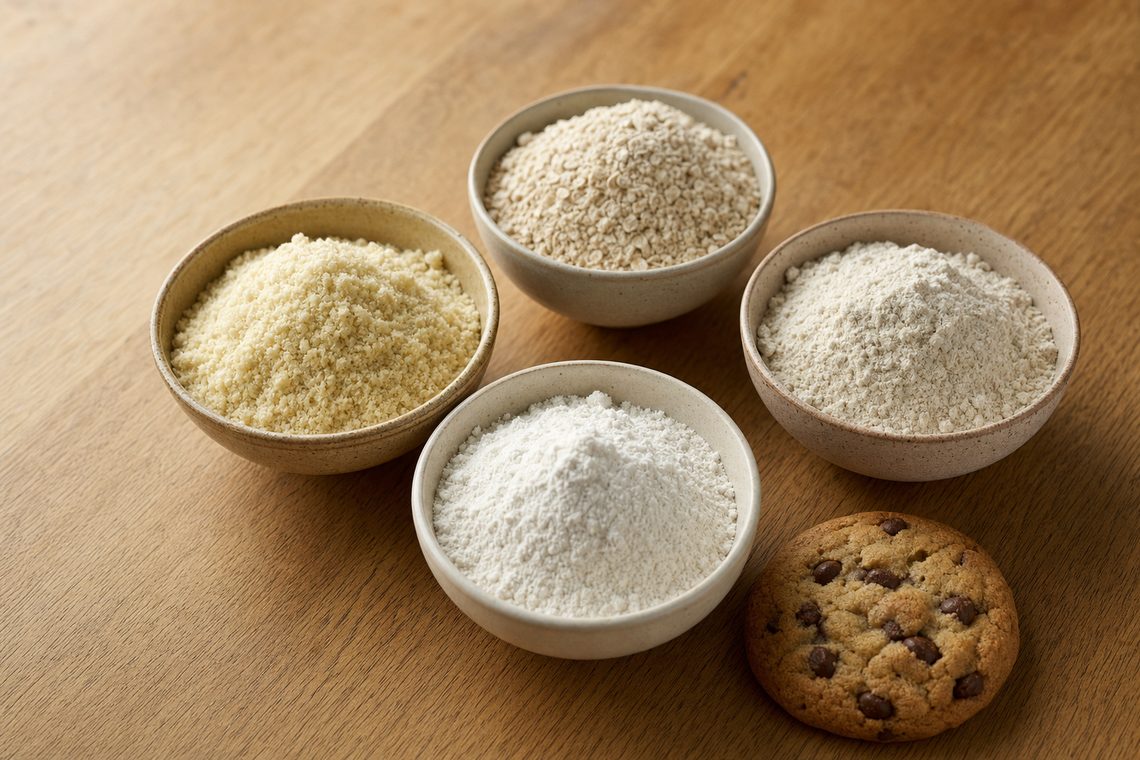
Finished gluten-free chocolate chip cookies.
Best of the 20

Gluten Free Chocolate Chip Cookies

from joyfoodsunshine.com 4.99 282 cooks rated it

It uses a standard creamed-butter method, no substitutions beyond the flour blend itself, and it is the gluten-free recipe with the most cooks behind it in the whole set.

10 minHands on
1 hrWaiting
16Makes
47 gEach
200Kcal
beginnerLevel
Still contains dairyeggsoy
The recipe

Gluten Free Chocolate Chip Cookies

Weights are ours, converted from the published measures. Gluten-free blends behave differently cup for cup depending on the brand, so weighing the flour matters here more than it does with wheat.

Ingredients

  • ½ cup salted butter114 g
  • ½ cup granulated sugar100 g
  • ½ cup light brown sugar106 g
  • 1 teaspoon pure vanilla extract4.3 g
  • 1 large egg50 g
  • 1 ½ cups gluten-free all-purpose flour204 g
  • ½ teaspoon baking soda2.3 g
  • ¼ teaspoon baking powder1 g
  • ½ teaspoon fine sea salt3 g
  • 1 cup chocolate chips170 g

Method

  1. Preheat oven to 375 degrees Fahrenheit (190 degrees Celsius). Line 2 baking sheets with parchment paper, set aside.
  2. In a small bowl, combine gluten-free flour, baking soda, baking powder and sea salt. Set aside
  3. In the bowl of a standing mixer fitted with the paddle attachment, cream together butter and sugars until light and fluffy.
  4. Add egg and vanilla and beat until combined.
  5. Add dry ingredient mixture and beat until the dough is uniform throughout
  6. Add chocolate chips and stir until evenly distributed.
  7. Use a small cookie scoop to measure out 1 ½ TBS portions of dough, then roll into balls and place on prepared baking sheets at least 2” apart (I usually put 8 or 9 cookies on each baking sheet).
  8. Bake in preheated oven for 9-10 minutes, or until cookies are barely set.
  9. Cool on baking sheet for 5-10 minutes before transferring to a wire cooling rack to cool completely.

This recipe is Gluten Free Chocolate Chip Cookies by joyfoodsunshine.com. It is their work, reproduced so you can bake from one page. The gram weights beside each ingredient are ours.

The whole group

All 20 gluten-free recipes, most-tried first

Drawn from 17 different sites: almond flour, chickpea flour, protein-powder and keto formulas, and store-bought gluten-free blends all sit in this list together, because "gluten-free" describes what's missing, not what's used instead.

Honesty

What this page cannot tell you

A smaller group than the rest of this site

20 gluten-free recipes against 65 wheat ones. That's enough to compare on average, and it is a thinner group than every other page on this site works from, worth knowing before you weigh the table above too heavily.

Fitted mostly on wheat

Every measurement this site makes (chew, spread, how set the middle is) was fitted across a corpus that is 65 wheat recipes to 20 gluten-free ones. The models are not wrong for that reason, but they are less certain here than anywhere else on this site, and we would rather say that than project confidence we don't have.

Almond flour vs. oat flour vs. a blend: we can't say

The flour-protein axis is good for exactly one thing here: telling gluten-free apart from wheat. All 20 gluten-free recipes read the same floor value on it, whether the recipe calls for almond flour, oat flour, rice flour, chickpea flour or a store-bought blend. We cannot tell you whether one of those behaves differently from another in this formula. The axis was not built to see inside that group, and the data to answer that sub-question does not exist in what we measured.

Association, not a kitchen trial

The gaps on this page come from comparing published recipes to each other, not from baking one dough twenty-one different ways. See soft & chewy for how the same caveat applies across the whole site.