Fat state at mixing
Butter is 16-18% water. Cold or creamed butter locks that water in fat crystals where the flour cannot reach it; melted butter frees it, so gluten forms before baking.
Melt it for the easiest dough and a flatter, paler cookie. Cream it for the middle of the road. Brown it when flavour is the point.
“Use softened butter” is the most repeated instruction in the category and almost nobody says what changes if you do not. We resolved how 615 recipes handle theirs, then read what followed: how much equipment the recipe needs, and how the finished cookie comes out.
Read against 619 published chocolate chip cookies recipes and 10,058 reports from cooks who changed one thing.
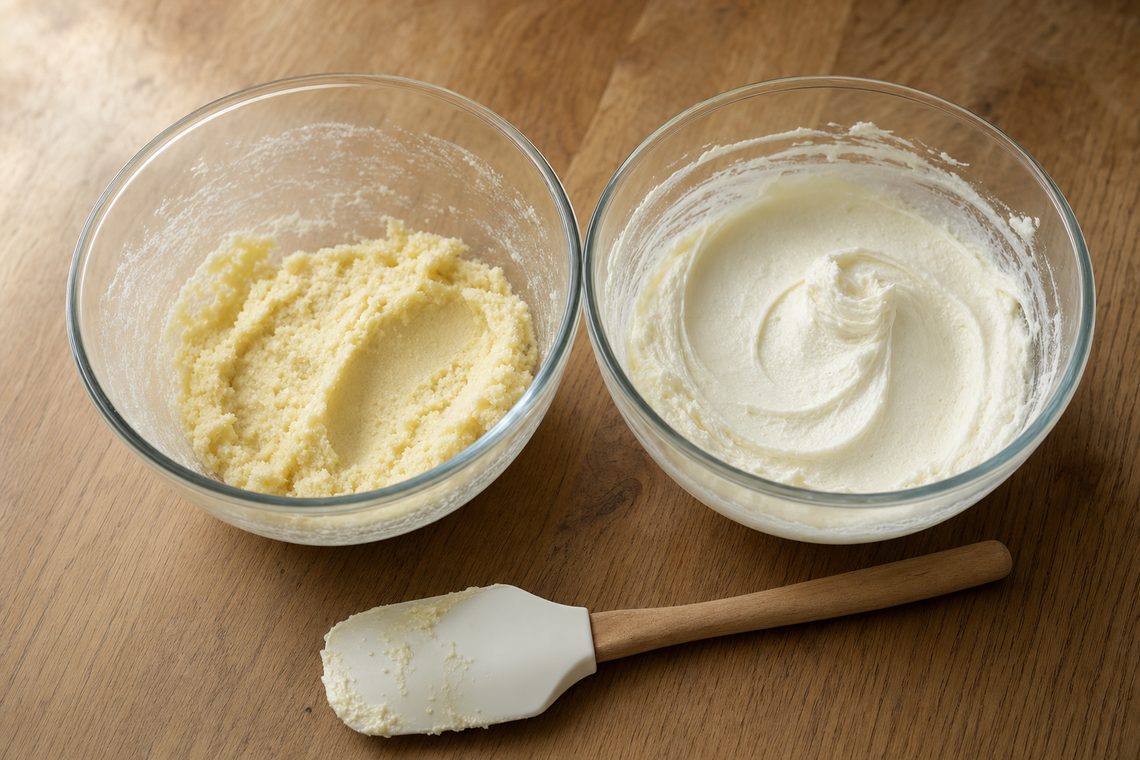
Every recipe answers this question, whether or not it says so out loud. Here is what each choice looks like and how many of the 615 recipes we hold take it.
| Handling | What it means | How many |
|---|---|---|
| Creamed | Solid butter, usually at room temperature, beaten with sugar until pale and fluffy: the traditional method, and the one that needs a mixer. We hold this as one bucket; we can't tell fridge-cold from fully softened from what these recipes tell us. | 293 recipes |
| Melted | The fat stirred in as a liquid, no creaming step, so no mixer and no wait for it to soften. A few of these recipes use room-temperature nut butter or scoopable coconut oil in place of butter, stirred in as-is and never actually melted on a stove. | 266 recipes |
| Browned | Butter cooked past melting until the milk solids toast and the water cooks off, then cooled before it goes in the dough. | 52 recipes |
| Cut in cold | Cold butter cut into the dry ingredients in small pieces, kept solid until the oven melts it: a pastry technique, rare in this corpus. | 4 recipes |
Cut-in butter is held for only 4 recipes, too few to trend, so it sits out of the comparisons below and gets an honest mention in the limits.
Creaming is the step that demands equipment. Melting removes it, and the rest of “one bowl, no mixer” follows from that single choice.
| Handling | How many | Need no mixer | Use one bowl |
|---|---|---|---|
| Creamed | 293 recipes | 30% | 12% |
| Melted | 266 recipes | 61% | 12% |
| Browned | 52 recipes | 56% | 13% |
61% of the melted-butter recipes need no mixer at all, against 30% of the creamed ones. Not one of the 293 creamed recipes uses a single bowl; 12% of the melted ones do. That is not five unrelated shortcuts: creaming needs a mixer to beat air into solid fat, a bowl of its own, and butter you remembered to take out an hour ago. Melting needs a saucepan and a spoon, and the rest of the shortcuts fall out of that one decision. See the whole picture on the page built around it.
Descriptive, not controlled: this is 81 different authors' recipes sorted into three groups and read against each other, never one batch of dough split and treated four ways. Direction and rank only, never a magnitude.
| Handling | Chew | Spread | Browning | Sweetness |
|---|---|---|---|---|
| Creamed (293) | in between | flatter and wider | in between | sweeter |
| Melted (266) | more tender | in between | paler | less sweet |
| Browned (52) | chewier | thicker | darker | in between |
Chew is the one column where browned butter stands apart: it reads chewiest, melted reads most tender, and creamed sits in between. On the other three (spread, browning, sweetness) the poles flip. Melted and creamed do the separating there, and browned lands in between on all three. That is two different patterns, not one, and neither proves this grouped comparison is causal rather than descriptive. See what else moves chew and softness for the measured levers behind it.
Separately from the groups above, the total amount of butter in a recipe is a fitted lever with real bake counts behind it: 799 bakes at its strongest. Keep this apart from handling above; the two can point in different directions at once.
| More butter makes it | Read as | Read from |
|---|---|---|
| Tang | 28 bakes | |
| Edge texture | crisper at the edge | 8 bakes |
| Chew | more tender | 799 bakes |
These three vectors track center texture, browning colour and spread, not chew, so they can't settle the chew gap between handling groups on their own. For what it's worth: by simple average, melted recipes call for the most butter of the three groups and creamed the least, with browned in between. Yet melted reads most tender on the chew score and browned reads chewiest, the reverse of what a "more butter" story alone would predict. Browning cooks off water the amount ratio cannot see, which is a live confound for the chew gap, not something we can resolve here.
Butter is 16-18% water. Cold or creamed butter locks that water in fat crystals where the flour cannot reach it; melted butter frees it, so gluten forms before baking.
Butter carries water, and where that water sits before the oven changes what the flour can do with it. That single fact is the physical reason handling is a real variable and not a style preference. It does not, on its own, tell you which group reads chewiest; that is the descriptive comparison above, and the two are worth holding separately rather than assuming one explains the other.
Melted-butter recipes skip the mixer 61% of the time and stay in one bowl 12% of the time, by far the biggest gap of any group.
They also read as the flattest, widest and palest of the three, so this is a trade rather than a free win. If tonight is about getting a cookie in the oven with the least equipment, it is the well-evidenced shortcut, and there is a whole page on the recipes built around it.
What to do: melt it, let it cool slightly, and stir it in by hand.
Creaming is what most recipes still call for, 293 of the 615 we hold, and it lands between the other two on every texture we measured.
It is the baseline every other choice is a departure from. It is also the one that needs a mixer and a wait for the butter to soften, which is the whole reason the shortcut exists.
What to do: beat softened butter and sugar until pale and fluffy before anything else goes in.
Browned-butter recipes read chewiest of the three groups, and browning is the one piece of advice in this whole category that no cook in our reviews argued against.
The catch is that browning does two things at once: it toasts the milk solids and it drives off the butter's water. Both change the cookie, they arrive together, and no page working from published recipes can tell you the split. On colour and sweetness it is melted butter, not browned, that sits at the extreme.
What to do: brown it, cool it back to solid, and expect to need a little more of it, because some cooked away.
So you know how far to trust the rest of this page.
Every comparison above sorts published recipes by how they handle the butter. Nobody baked the same dough creamed, melted, browned and cut in, so read these as patterns across authors rather than a controlled test.
We know whether a recipe creams, melts, browns or cuts in the butter. We do not know how warm the butter was. Room temperature versus straight from the fridge is a real distinction and it is not one these recipes record.
Browned butter loses water at the same moment it gains toasted flavour, so the two arrive inseparable. What we can say is that browned recipes read differently on chew, colour and sweetness. Which half of the change did it is beyond what published recipes can settle.
Only 4 of the recipes we hold cut cold butter into the flour, which is too few to compare against the other three. We describe that group rather than measuring it, and we would rather say so than quietly average it in.