Compared by formula

Beef Stew

139 recipes, read so you don't have to.

Every recipe is a different answer to the same few questions. Tell us the bowl you are after and we will hand you the closest one anyone has published, plus what to change to suit you.

139recipes read
5bowls, not one
12problems solved
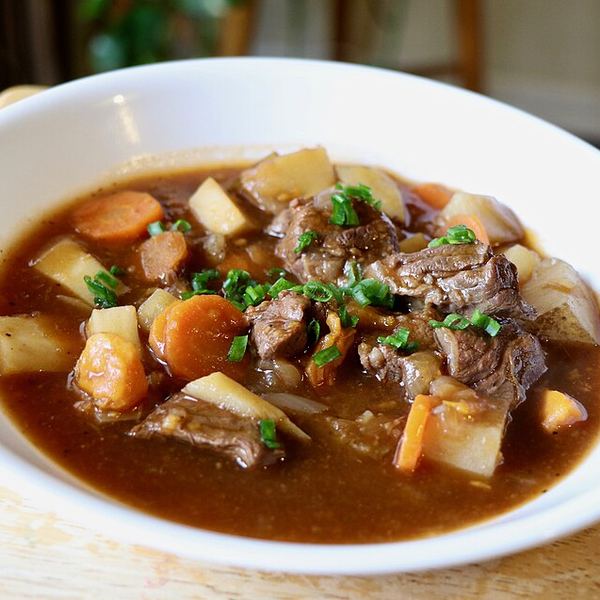
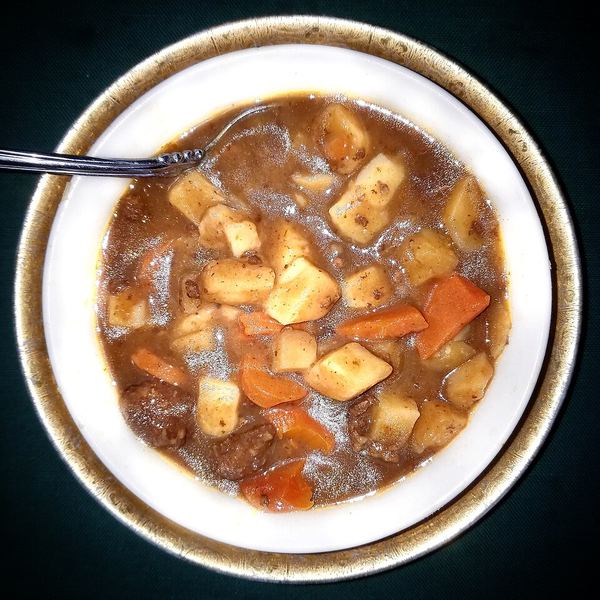
Beef Stew, as published.
A Healthier Michigan from Detroit, United States · CC BY-SA 2.0
Start here

What kind of beef stew do you want?

Five real versions, not one "best." Pick one and the recipe's right here — a published, rated one, with weights.

Any limits tonight?
Brown the beef in batches, braise it low in the oven, and add the root vegetables late so they keep their shape. The reference version.
Closest published match · of 60 oven, dutch oven recipes

The classic oven braise

Brown the beef in batches, braise it low in the oven, and add the root vegetables late so they keep their shape. The reference version.

from www.thespruceeats.com 4.1 83 cooks rated it

30 minHands on
6Makes
$2.62Each
IntermediateLevel

Ingredients

  • 2 pounds boneless beef chuck (excess fat removed and cut into 1-inch cubes)907 g
  • 1 pound waxy potatoes (peeled and cut into 1-inch chunks)454 g
  • 2 large carrots (peeled and cut into 1-inch pieces)122 g
  • 2 large celery ribs (chopped into 1-inch pieces)80 g
  • 1 medium onion (peeled roughly chopped)150 g
  • 3 cloves garlic (peeled and smashed)9 g
  • 2 tablespoons tomato paste33 g
  • 1 tablespoon Worcestershire sauce16 g
  • 2 tablespoons vegetable oil (e.g. canola)27 g
  • 3 cups beef stock (or broth)720 g
  • 1/2 cup frozen peas (thawed)72 g
  • 3 tablespoons flour22 g
  • 1 bay leaf1 g
  • 1/2 teaspoon dried thyme1 g
  • 1/2 teaspoon dried oregano1 g
  • 1 tablespoon chopped fresh parsley6 g
  • Kosher salt (to taste)
  • Freshly ground black pepper (to taste)

Method

  1. Gather the ingredients.
  2. Preheat oven to 300 F.
  3. Pat any excess moisture from the meat with clean paper towels. This will help achieve a nice dark brown sear on it.
  4. Season the meat generously with kosher salt .
  5. In a heavy, cast-iron Dutch oven or brazier, heat the oil over medium-high heat. When the oil is really hot, add the beef and brown it thoroughly on all sides. Don't overcrowd the pan. Work in batches if necessary. When a rich brown crust has developed on all sides of the beef, remove it from the pan and set it aside.
  6. Lower the heat to medium, add the onions to the pot and sauté for 5 minutes or so, or until they turn slightly soft and translucent. Add the garlic and cook for another minute.
  7. Reduce the heat to medium-low and stir in the flour to form a thin paste. Cook for a couple of minutes, stirring throughout.
  8. Now slowly pour in the stock, gently scraping the bottom of the pan to deglaze .
  9. Return the browned beef to the pot along with the tomato paste and Worcestershire sauce. Heat on the stovetop until the liquid comes to a boil, then add the bay leaf and dried herbs, cover with a tight-fitting lid and transfer the whole thing to the oven. Let the meat braise in the oven for 1 hour.
  10. Add the potatoes, carrots, and celery, recover the pot and return it to the oven for another 30 minutes or until the potatoes are tender.
  11. Transfer the pot to the stovetop. Remove the lid and simmer for another 15 minutes or until the stew is thickened.
  12. Stir in the peas, adjust seasoning with kosher salt and black pepper, and serve right away, garnished with the chopped parsley .
  13. Enjoy.

Watch out for: The temptation to sear in one batch. It is the single most reported cause of a stew that tastes flat, and it costs twenty minutes to avoid.
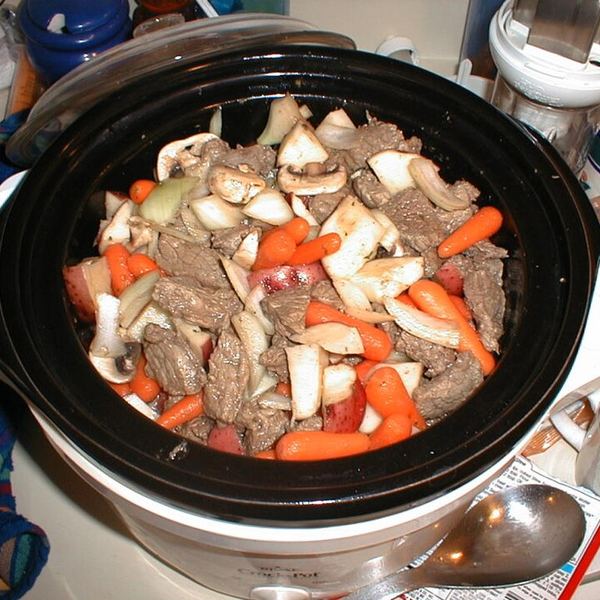
Brown the beef in a skillet first, then let the slow cooker do the rest — on low, which matters more here than anything else you choose.
Closest published match · of 36 slow cooker recipes

The slow cooker, on low

Brown the beef in a skillet first, then let the slow cooker do the rest — on low, which matters more here than anything else you choose.

from www.wellplated.com 4.88 116 cooks rated it

15 minHands on
6Makes
$3.64Each
IntermediateLevel

Ingredients

  • 2 1/2 pounds boneless chuck roast1134 g
  • 1 teaspoon kosher salt (divided)4 g
  • 1/2 teaspoon ground black pepper (divided)1 g
  • 1/4 cup white whole wheat flour (or all-purpose flour)30 g
  • 3 tablespoons extra-virgin olive oil (divided)40 g
  • 1 1/2 cups dry red wine354 g
  • 1 large yellow onion150 g
  • 3 celery stalks120 g
  • 2 cloves garlic6 g
  • 2 tablespoons tomato paste33 g
  • 1 tablespoon Worcestershire sauce16 g
  • 4 large carrots244 g
  • 2 parsnips
  • 3/4 pound red potatoes (about 2 medium)340 g
  • 1 bay leaf1 g
  • 3 sprigs fresh thyme3 g
  • 3 to 4 cups low-sodium beef broth840 g
  • 1 1/2 cups fresh or frozen peas (no need to thaw)218 g
  • Fresh parsley (optional for serving)

Method

  1. Cut the beef chuck roast into 1-inch cubes, removing any large, tough pieces of fat or gristle. I found it easiest to cut it into 1-inch-thick large, round slices, then strips, then cubes. Place the cubes in a large bowl and sprinkle with 1/2 teaspoon kosher salt and 1/4 teaspoon black pepper. Sprinkle on the flour, then toss lightly to coat.
  2. Place a large, deep Dutch oven over medium-high heat. Add 1 tablespoon of the oil. Once the oil is hot and shimmering (a drop of water should sizzle if added to the surface), add one-third to one-half of the beef. The cubes should be in a single layer and not too crowded so that they brown nicely. Let the cubes of beef cook undisturbed for 4 to 5 minutes (resist the urge to peek!), until the bottom of the cubes develop a dark-brown crust and come away from the pan easily. Turn and continue searing until dark and golden all over, about 4 to 5 additional minutes. Transfer the seared meat to a clean bowl or plate.
  3. Add another 1 tablespoon olive oil to the pot, and once hot, sear the remaining beef, working in batches and ensuring that you do not overcrowd the pieces. It may take two or three batches total depending on the size of your pan. If the pan gets too dry, add a bit more oil as needed.
  4. While the meat browns, dice the yellow onion and celery. Mince the garlic.
  5. When the last batch of beef has been seared, transfer it to a plate and reduce the heat to medium.
  6. Add the final tablespoon of olive oil to the pan. Add the onions and celery and cook until the onions are soft and translucent; about 7 minutes. Add the garlic and cook 30 seconds, until fragrant.
  7. While the onions sauté, peel and dice the carrots and parsnips. Scrub the potatoes and cut into a rough dice. Set aside.
  8. Stir in the tomato paste, Worcestershire, and remaining 1/2 teaspoon kosher salt and 1/4 teaspoon black pepper.
  9. Increase the pan heat to medium-high heat and add the wine or beer (stand back, as it will sputter). Cook, letting the wine reduce and scraping up all of the brown bits from the pan. Continue to scrape and stir until the liquid is slightly reduced and thickened, 2 to 3 minutes.
  10. Transfer the sautéed vegetables and any sauce from the pan to a 6-quart or larger slow cooker. Add the beef, carrots, parsnips, potatoes, bay leaf, and thyme.
  11. Slowly pour in 3 cups of beef broth.
  12. Stir to roughly combine.
  13. Cover and cook on low for 6 1/2 to 8 hours or high for 3 1/2 to 4 1/2 hours, until the beef is cooked through and fall-apart tender.
  14. Remove the bay leaf and thyme stems and stir in the peas. If you’d like the stew thinner, add additional broth until it reaches your desired consistency. Taste and add additional salt or pepper as desired. Serve hot, garnish with fresh parsley.

Watch out for: A thin sauce. Sealed vessels evaporate nothing, so the body you would have got from reduction has to come from a slurry or from potato starch instead. Two of three crockpot reports on sauce body were fine; one was thin at 4/10.

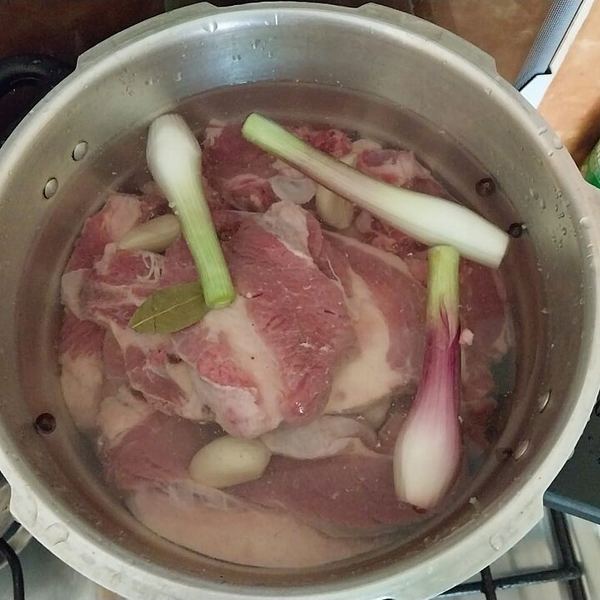
Chuck goes tender in about half an hour under pressure. Keep the pieces big, let the pressure drop on its own, and add the vegetables afterwards.
Closest published match · of 16 pressure cooker recipes

The pressure-cooker weeknight stew

Chuck goes tender in about half an hour under pressure. Keep the pieces big, let the pressure drop on its own, and add the vegetables afterwards.

from www.spendwithpennies.com 4.91 87 cooks rated it

15 minHands on
8Makes
$2.20Each
BeginnerLevel

Ingredients

  • 2 pounds stewing beef (trimmed and cubed)907 g
  • ½ teaspoon garlic powder1 g
  • ½ teaspoon salt3 g
  • ½ teaspoon black pepper1 g
  • 1 large onion (diced)150 g
  • 3 tablespoons olive oil40 g
  • 3 cups beef broth720 g
  • 1 cup red wine (or 1 more cup beef broth)236 g
  • ¼ cup tomato paste66 g
  • 1 teaspoon fresh rosemary (chopped)2 g
  • 2 sprigs fresh thyme2 g
  • 3 cups baby potatoes (cubed)450 g
  • 4 large carrots (chopped)244 g
  • 2 ribs celery (chopped, about 1 cup)80 g
  • 3 tablespoons cornstarch24 g
  • 3 tablespoons water44 g
  • ¾ cup peas (defrosted)109 g

Method

  1. Toss beef with garlic powder, salt and pepper.
  2. Turn a 6-quart Instant Pot to sauté and add half of the olive oil. Brown half of the beef, about 3-5 minutes, don’t stir too much so you get a nice crust. Repeat with remaining beef and set aside.
  3. Add onions (and a bit more oil if needed) to the Instant Pot and cook 2-3 minutes or just until slightly softened.
  4. Add beef, broth, wine, tomato paste, rosemary, thyme, and vegetables except peas (ensure ingredients do not go above fill line). Secure lid and select Meat/Stew; cook on high pressure 35 minutes.
  5. Once the timer beeps, allow for a natural-release for about 15 minutes. Release any remaining pressure.
  6. Remove lid and turn to sauté bringing broth to a boil.
  7. Create a slurry by combining cornstarch and water in a small bowl or cup.
  8. Once the broth is simmering, stir in the cornstarch to reach desired consistency (you may not need all of it). Allow to simmer 2-3 minutes or until thickened and bubbly.
  9. Stir in peas and serve.

Watch out for: Vegetables cooked under pressure alongside the beef. They are on a different clock and this vessel removes your ability to stagger them, so add them after.

No slurry at all. More liquid, reduced hard at the end, with starchy potatoes breaking down to give it body.
Closest published match · of 60 oven, dutch oven recipes

The brothy stew, deliberately unthickened

No slurry at all. More liquid, reduced hard at the end, with starchy potatoes breaking down to give it body.

from www.delish.com 4.35 102 cooks rated it

15 minHands on
1 hr 25Waiting
8Makes
$2.43Each
BeginnerLevel

Ingredients

  • 1 tbsp. (or more) vegetable oil14 g
  • 2 lb. beef chuck stew meat, cut into 1" cubes907 g
  • 1 medium yellow onion, chopped150 g
  • 2 carrots, peeled, cut into rounds122 g
  • 2 stalks celery, chopped80 g
  • Kosher salt
  • Freshly ground black pepper
  • 3 cloves garlic, finely chopped9 g
  • 1/4 c. tomato paste66 g
  • 6 c. low-sodium beef broth1440 g
  • 1 c. red wine236 g
  • 1 tbsp. Worcestershire sauce16 g
  • 2 fresh thyme sprigs2 g
  • 2 bay leaves2 g
  • 1 lb. baby potatoes, halved454 g
  • 1 c. frozen peas145 g
  • 1/4 c. chopped fresh parsley25 g

Method

  1. In a large Dutch oven or heavy pot over medium heat, heat oil. Add beef and cook, turning occasionally, until seared on all sides, about 10 minutes. Transfer beef to a plate.
  2. Coat bottom of pot with oil if needed and heat over medium-high heat. Cook onion, carrots, and celery, stirring occasionally, until softened, about 7 minutes; season with salt and pepper. Add garlic and tomato paste and cook, stirring, until garlic is fragrant and tomato paste is darkened, about 2 minutes. Return beef and any accumulated juices to pot. Add broth, wine, Worcestershire, thyme, and bay leaves. Bring to a boil, then reduce heat to medium-low and bring to a simmer; season with salt and pepper. Cover and simmer, stirring occasionally, until beef is tender, 30 to 45 minutes.
  3. Add potatoes and simmer, covered, until potatoes are tender, about 15 minutes.
  4. Remove bay leaves and thyme. Stir in peas and cook, stirring, until warmed through, about 2 minutes; season with salt and pepper.
  5. Divide stew among bowls. Top with parsley.

Watch out for: Under-reducing. Without a slurry there is no rescue at the end, so the body has to be built by evaporation while there is still time to do it.

A can of tomatoes and one savoury booster, for depth you would otherwise have to buy with another hour on the stove.
Closest published match · of 60 oven, dutch oven recipes

The umami-forward stew

A can of tomatoes and one savoury booster, for depth you would otherwise have to buy with another hour on the stove.

from www.allrecipes.com 4.7 106 cooks rated it

30 minHands on
12Makes
$1.93Each
BeginnerLevel

Ingredients

  • 3 pounds beef stew meat, cut into 1-inch pieces1361 g
  • 0.33333334326744 cup Italian salad dressing
  • 2 cups water473 g
  • 1 (14.5 ounce) can diced tomatoes, undrained411 g
  • 1 (10.5 ounce) can condensed beef broth298 g
  • 1 (8 ounce) can tomato sauce227 g
  • 2 teaspoons beef bouillon granules5 g
  • 1 bay leaf1 g
  • 1 clove garlic, minced3 g
  • 1 teaspoon dried oregano1 g
  • 1 teaspoon salt6 g
  • 0.5 teaspoon ground black pepper1 g
  • 6 small potatoes, quartered1020 g
  • 6 carrots, cut into 1-inch pieces366 g
  • 1 green bell pepper, cut into 1/2-inch dice120 g
  • 1 onion, chopped150 g
  • 3 tablespoons all-purpose flour22 g
  • 3 tablespoons cold water44 g

Method

  1. Heat a large pot or Dutch oven over medium heat; cook and stir beef and Italian dressing in the hot pot until meat is evenly browned, about 5 minutes. Stir in 2 cups water, diced tomatoes, broth, tomato sauce, bouillon, bay leaf, garlic, oregano, salt, and pepper; bring to a boil. Reduce heat to medium-low, cover, and simmer until meat is tender, about 1 1/2 hours.
  2. Add potatoes, carrots, bell pepper, and onion to the pot; cover and continue to simmer until vegetables are tender, about 45 minutes.
  3. Combine flour and 3 tablespoons cold water in a small bowl; mix until smooth. Stir into stew and bring to a boil; cook and stir until thickened, about 2 minutes. Discard bay leaf before serving.

Watch out for: Stacking boosters. The two dissents on the umami cluster are about too much rather than too little, and soy and Worcestershire and a seasoning packet together will read as salty and generic rather than deep.

Need it to fit something tonight — no wine or beer, no dairy, under 20 min hands-on? Those re-pick the recipe once JavaScript is on. With it off, you still get all 5 recipes above in full.

Why beef stew meat comes out tough

Beef stew is a pot roast cut into pieces, and almost everything that makes it harder than a pot roast comes from the cutting. Small pieces heat through fast, so the gap between tender and dry is much narrower. Small pieces also crowd a pan, so the browning step goes wrong more easily. And potatoes and carrots do not soften on beef's schedule, so one pot ends up running two clocks.

None of that is difficult to do. It is difficult to time. That is why the things cooks report going wrong are almost all about order and timing — meat crowded into one pan, vegetables added too early, a slow cooker left on high — while the ingredients themselves turn out to be close to interchangeable. Sixteen cooks changed or skipped the wine and still had a stew worth recommending.

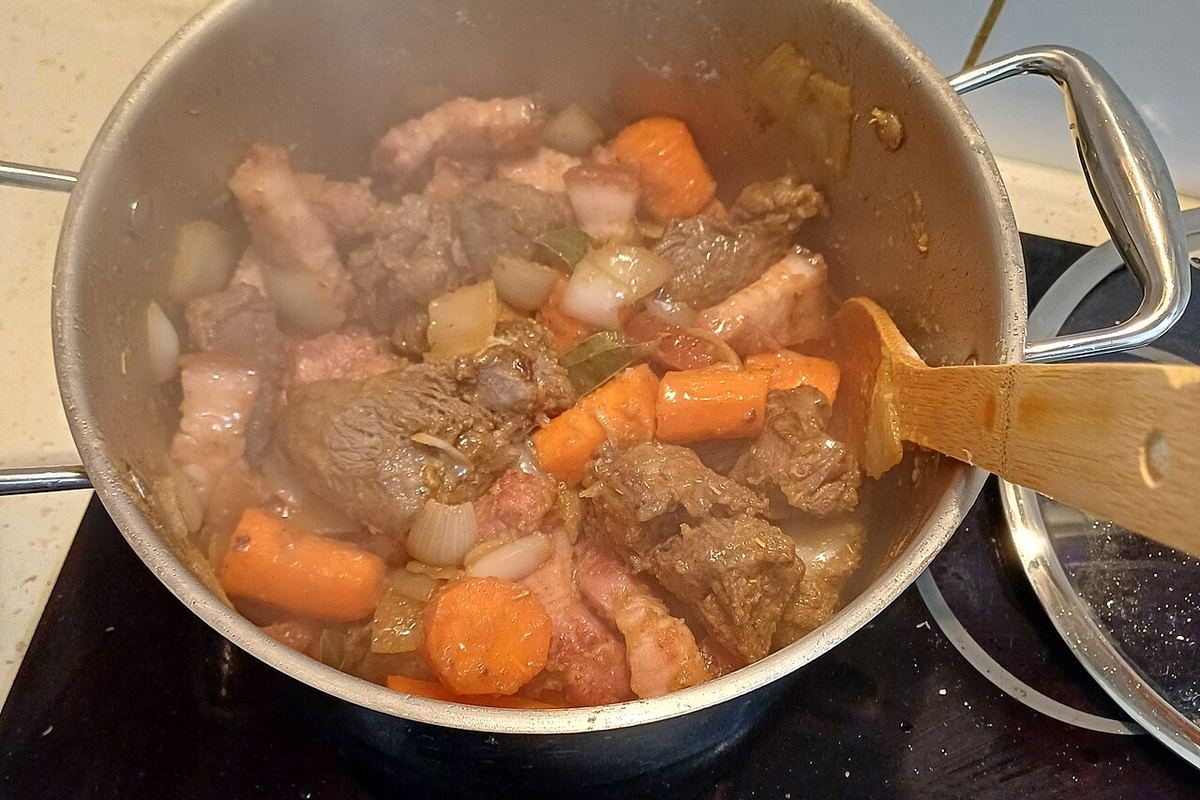
Beef and root vegetables crowded together in one deep pot on a hob, part-way through cooking.
One pot, two clocks — and a pan full enough that some of the beef browned and some of it steamed.

Time

The beef wants hours and the vegetables want about forty minutes. Everything awkward about this dish comes back to one pot having to serve both.

Pan space

Browning is bought with an empty pan, not with a hotter one. Seven cooks say the same thing and none disagree: smaller batches, and stop stirring. Crowd the pan and the meat steams instead.

Starch

Flour on the meat, potatoes in the pot, a slurry at the end. Three ways to thicken a stew, and the cooks genuinely disagree about whether you should use the third one at all.

Three things decide it. Every change on this page works by moving one of them.

What it costs

Beef stew: what each choice costs you

You cannot have all of it at once. These are the five real trades. Knowing which one you are making is most of the skill.

A sauce that clings, or a broth that tastes of itself

This is the one thing cooks here genuinely argue about, and we are not going to settle it for you. Eleven say a slurry at the end makes it better; five say it makes it pasty and mutes the flavour. Four skipped thickening altogether and were happy. It is a question about what you want a stew to be, not about who is right.

Small pieces, or big ones

Small cubes cook faster and give you more browned surface. Big pieces give you more margin before they dry out. Cooks report both working, which is the honest answer: you are choosing which mistake you would rather be able to make.

Browning worth having, or dinner on time

Cutting the meat up is what gives you all that surface to brown, and it is also what makes browning it a nuisance — the pieces crowd the pan and steam. Seven cooks give the same fix and none disagree: brown in smaller batches and leave it alone. It costs twenty minutes.

Vegetables with their shape, or vegetables that taste of the stew

Add them late and they stay intact but still taste like carrots and potatoes. Add them early and they take on the braise and give it body, but their edges go. There is no setting where you get both, and the cooks are honest about finding that unsatisfying.

What you buy, or when you do things

Sixteen cooks changed the wine — for beer, sherry, brandy or nothing — and it was still good. Nine changed the cut. Four changed the vegetables. Almost nothing here rests on shopping. Nearly every reported failure is about sequence instead.

Change your bowl recipe

Each one is measured across all 139 recipes and then converted into this recipe's own amounts. Every edit costs something. The cost is on the card.

Make it thicker

More braising liquid went with bowls that came out thicker, across 25 versions. An open braise evaporates and concentrates; a sealed one does not. That single difference is most of what separates a Dutch oven from a slow cooker.

Costs you: Nothing else moved that we can measure. We only detect 7 of the 60 changes cooks describe, so read that as unmeasured rather than free.

thin evidence — treat as a hint · 25 versions

Common beef stew problems, and how to fix them

The 12 problems cooks actually report, and what to do about each one. Open the one that sounds like yours.

The sauce

The sauce is too thin

Reduce it first — take the lid off and let it boil down. If it still needs help, add a slurry a little at a time. The cooks who dislike slurries are objecting to too much of one, so undershoot. Remember the flour on the beef and the potatoes have already done some of this.

I thickened it and now it tastes pasty and dull

That is a real objection, not something you did wrong — five cooks make exactly this complaint. Loosen it with stock rather than water so you are not diluting the flavour as well. Next time try it unthickened; four cooks skipped that step and preferred it.

I added liquid to loosen it and now it tastes weak

Salt it before you do anything else. Three cooks report that extra liquid reliably makes it taste under-salted. And fix thickness by boiling it down rather than by adding more liquid — that direction is the one all the evidence agrees on.

It needs more depth and I do not want to cook it any longer

Add tomato before you reach for soy sauce or Worcestershire. Crushed tomato gave five cooks a fuller sauce and three of them rated the richness 8 out of 10. The savoury boosters are more divided — seven for, two against — and the complaints are about using several at once.

The beef

It tastes flat and broth-like even though I cooked it for ages

The browning step went wrong, and more simmering will not bring it back. Next time brown the beef in two or three batches instead of one, and leave each batch alone until it releases from the pan. Seven cooks say this and nobody disagrees.

The beef still will not come apart

Keep cooking. In this dish tough means undercooked. Four cooks went well past the time the recipe gave them and it got better, and seven more just simmered it longer. You have a lot of room on that side.

My slow cooker beef came out tough

Check whether it was on high. Both cooks who tried high rated the beef 2 out of 10. Six who used low got reliably tender beef. This is the biggest single failure anyone reports in this dish, and it is a setting most people treat as a timing convenience.

The vegetables

The vegetables turned to mush

Add them later next time, in the last stretch rather than at the start. And use pearl onions instead of chopped ones — both cooks who did rated the gravy 8 out of 10, because pearl onions survive a braise that dissolves chopped onion.

I want the vegetables whole but the stew still needs body

Let the potatoes do both jobs. Cut some of them small enough to fall apart and leave the rest in big pieces. One cook cut the liquid and let the potato starch do the thickening and rated the body 6 out of 10 with no slurry at all.

Vessels, wine and cooking ahead

I do not have any wine

Skip it. Sixteen cooks swapped the wine for beer, sherry or brandy and four left it out entirely for broth or water. All of them had a stew worth writing about. It is the least important ingredient in the dish.

I am using a pressure cooker

Cut the beef into bigger pieces than usual, cook about thirty minutes, and let the pressure drop on its own rather than venting it. Add the vegetables after it opens — under pressure they are on a completely different clock from the beef and you cannot stagger them.

I am making it the day before

Leave it a little looser than you want it. This is the one dish here with real gelatin in the sauce, so it sets overnight — a stew that is right tonight will be stiff tomorrow.

The complete design space

Every bowl recipe we measured

The five above are the ones we would point you to. This is every recipe we measured, if you would rather look yourself.

What we do not know about beef stew

Where our evidence is thin, so you know which parts of this page to lean on and which to treat as a starting point.

Our numbers and our cooks disagree about liquid, and we have not fixed it

Our measurements say more liquid goes with a thicker sauce, and they say it two different ways that should not both be wrong. Six cooks say flatly that adding liquid thinned their stew. We have left the disagreement on the page instead of picking the answer we like. A controlled test would settle it in an afternoon, and it is the most useful test anybody could run on this dish.

We deliberately do not tell you whether to thicken it

Eleven cooks for and five against on slurries generally, eight and five on cornstarch, seven and two on flour, and four who skipped it and were happy. Reporting the majority as the answer would be pretending a preference is a fact.

Most of our statistics came back empty

Three of the four things we measured found nothing at all. No advice on this page rests on any of them; the two liquid results are quoted only to describe the disagreement above.