Compared by formula

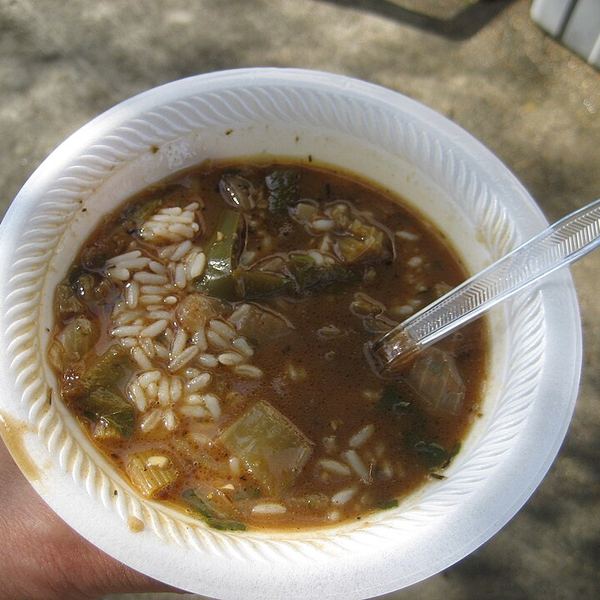
Gumbo

122 recipes, read so you don't have to.

Every recipe is a different answer to the same few questions. Tell us the bowl you are after and we will hand you the closest one anyone has published, plus what to change to suit you.

122recipes read
5bowls, not one
10problems solved
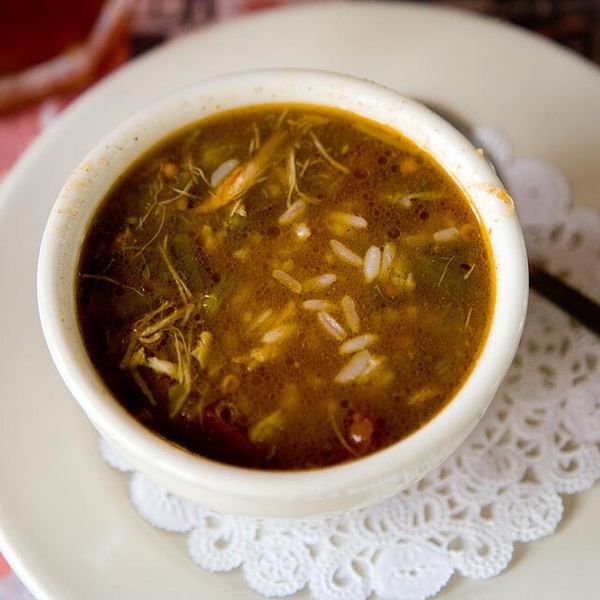
Gumbo, as published.
Raymond Bucko, SJ · CC BY 2.0
Start here

What kind of gumbo do you want?

Five real versions, not one "best." Pick one and the recipe's right here — a published, rated one, with weights.

Any limits tonight?
Chicken and sausage, a chocolate-dark roux, no tomato. The deepest-tasting version, and the most work.
Closest published match · of 49 stovetop, in the pot recipes

The dark-roux Cajun chicken-and-sausage

Chicken and sausage, a chocolate-dark roux, no tomato. The deepest-tasting version, and the most work.

from www.allrecipes.com 4.7 661 cooks rated it

45 minHands on
10Makes
$2.38Each
BeginnerLevel

Ingredients

  • 1 cup vegetable oil218 g
  • 1 cup all-purpose flour120 g
  • 1 pound andouille or smoked sausage, sliced 1/4 inch thick454 g
  • 2 celery stalks, chopped80 g
  • 1 large green bell pepper, chopped120 g
  • 1 large onion, chopped150 g
  • 4 cloves garlic, minced12 g
  • salt and pepper to taste
  • 1 pinch Creole seasoning, or to taste
  • 6 cups chicken broth1440 g
  • 1 bay leaf1 g
  • 1 rotisserie chicken, boned and shredded1800 g

Method

  1. Gather all ingredients.
  2. Heat oil in a stockpot over medium heat; whisk in flour until roux is smooth and has cooked to the color of chocolate milk, about 8 to 10 minutes. Be careful not to burn the roux. If you see black specks in the mixture, it's best to start over.
  3. Add sausage, celery, bell pepper, and onion into the roux; cook and stir 5 minutes. Add garlic; continue to cook and stir another 5 minutes.
  4. Season with salt, pepper, and Creole seasoning; stir well to blend. Pour in chicken broth and add bay leaf. Bring to a boil over high heat; reduce heat to medium-low and simmer, uncovered, for 1 hour, stirring occasionally.
  5. Stir in the chicken and simmer 1 hour more. Skim off any foam that floats to the top during this time.
  6. Serve and enjoy!

Watch out for: The blend carries the salt — commercial Cajun seasonings pushed saltiness to 8-9/10 with no added salt (4 cooks). Season at the end, from a low-sodium base.
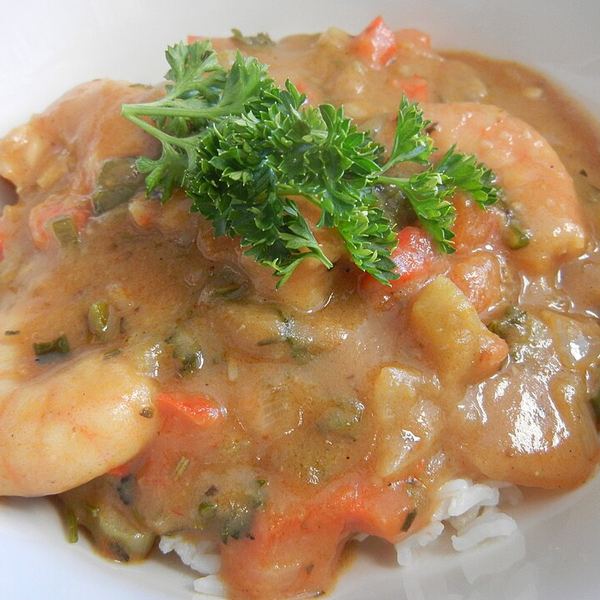
Shrimp and crab with a lighter roux and tomato in the pot. The New Orleans version, where the stock does the heavy lifting.
Closest published match · of 49 stovetop, in the pot recipes

The Creole seafood gumbo

Shrimp and crab with a lighter roux and tomato in the pot. The New Orleans version, where the stock does the heavy lifting.

from www.delish.com 4.53 167 cooks rated it

20 minHands on
1 hrWaiting
4Makes
$3.85Each
BeginnerLevel

Ingredients

  • 4 tbsp. unsalted butter57 g
  • 1/4 c. all-purpose flour30 g
  • 1 small yellow onion, chopped150 g
  • 1 medium green bell pepper, seeds and ribs removed, chopped120 g
  • 2 stalks celery, finely sliced80 g
  • 12 oz. andouille sausage, sliced into 1/2" rounds340 g
  • 2 cloves garlic, finely chopped6 g
  • 1 tbsp. Cajun seasoning (without salt)8 g
  • Kosher salt
  • Freshly ground black pepper
  • 4 c. low-sodium chicken broth960 g
  • 1 (15-oz.) can fire-roasted diced tomatoes425 g
  • 1 bay leaf1 g
  • 1 lb. medium shrimp, peeled, deveined454 g
  • 3 scallions, sliced
  • Cooked white rice, for serving

Method

  1. In a large, deep skillet over medium-low heat, melt butter, then add flour. Cook, stirring constantly, until roux is dark caramel colored, 12 to 15 minutes.
  2. Add onions, peppers, and celery and cook, stirring, until softened, about 8 minutes. Stir in sausage, garlic, and Cajun seasoning; season with salt and pepper. Stir in broth, tomatoes, and bay leaf and bring to a boil. Reduce heat to low and simmer, stirring occasionally, until thickened, about 1 hour.
  3. In the last 6 minutes of cooking, add shrimp. Once shrimp is pink and cooked through, taste and adjust seasonings. Stir in scallions, reserving some for serving.
  4. Divide rice among bowls. Spoon gumbo over. Top with reserved scallions.

Watch out for: The seafood clock is minutes, not hours — every rubbery-shrimp report we have came from seafood cooked on the chicken's schedule. And tomato is identity, not mechanism: it thins and brightens, it does not thicken.

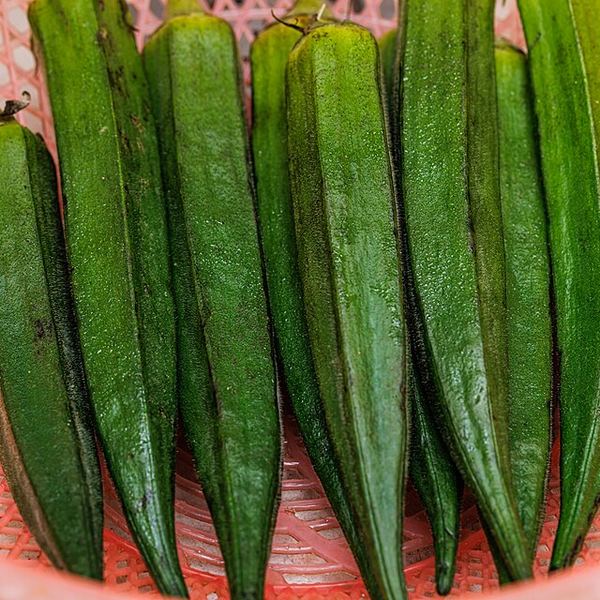
Okra doing most of the thickening, so the roux can stay light or sit out entirely.
Closest published match · of 49 stovetop, in the pot recipes

The okra-thickened summer gumbo

Okra doing most of the thickening, so the roux can stay light or sit out entirely.

from www.allrecipes.com 4.7 64 cooks rated it

20 minHands on
6Makes
$1.72Each
BeginnerLevel

Ingredients

  • 1 (14 ounce) package Hillshire Farm® Smoked Sausage397 g
  • 0.25 cup cooking oil54 g
  • 0.25 cup flour30 g
  • 1 onion, chopped150 g
  • 1 green bell pepper, seeded, chopped120 g
  • 1 red bell pepper, seeded, chopped120 g
  • 1 cup chopped celery101 g
  • 1 cup frozen sliced okra
  • 2 cloves garlic, chopped6 g
  • 2 teaspoons Cajun seasoning5 g
  • 2 cups chicken broth480 g
  • 0.5 teaspoon hot pepper sauce1 g
  • 0.5 teaspoon ground black pepper1 g
  • Salt to taste
  • 0.5 pound large raw shrimp, peeled, deveined227 g
  • 3 cups hot cooked long-grain white rice555 g

Method

  1. Cut sausage into 1/2-inch slices; set aside.
  2. Combine oil and flour in a 4-quart heavy saucepan; mix until smooth. Cook and stir over medium-high heat for 3 minutes. Reduce heat to medium; cook and stir until roux is a dark reddish brown, 6 to 8 minutes.
  3. Stir in onion, bell peppers, celery, okra and garlic; cook and stir until vegetables are tender, 8 to 10 minutes. Stir in Cajun seasoning.
  4. Pour in broth; bring to a boil. Cook and stir for 1 minute. Reduce heat to low; add sausage, pepper sauce, black pepper and salt. Cover and simmer for 15 minutes.
  5. Remove the lid and bring to a boil; add shrimp and cook until shrimp turn pink, about 3 minutes.
  6. Portion rice into bowls. Ladle gumbo over rice.

Watch out for: The slime and the body are the same molecule — you cannot eliminate one and keep the other entirely. Dry heat moderates; it does not switch mucilage off.

A moderate roux for flavour and filé stirred in at the end, off the heat, for the body.
Closest published match · of 62 oven roux, stovetop pot recipes

The filé-finished gumbo

A moderate roux for flavour and filé stirred in at the end, off the heat, for the body.

from www.africanbites.com 4.92 167 cooks rated it

15 minHands on
10Makes
$2.48Each
IntermediateLevel

Ingredients

  • 2 pounds (900g) skinless chicken thighs900 g
  • salt and pepper (to taste (see notes))
  • 1 tablespoon (12g) Creole seasoning (or to taste)12 g
  • 2 tablespoons (30ml) canola oil27 g
  • 8 ounces (250g) smoked sausage (andouille, kielbasa, and Polish sausage work well)250 g
  • ¼ cup (60g) unsalted butter60 g
  • ½ cup (60g) flour60 g
  • 1 medium onion, (diced)150 g
  • 2 teaspoons (10g) minced garlic10 g
  • 1 medium green bell pepper, (diced)120 g
  • 1 cup (120g) chopped celery (about 3 stalks)120 g
  • ½ pound (250g) crab legs250 g
  • 1 tablespoon (12g) Creole seasoning12 g
  • 1 tablespoon (10g) chicken bouillon powder (1 cube)10 g
  • ½ tablespoon (4-5g) smoked paprika3 g
  • 1 tablespoon (6g) thyme (fresh or dried)6 g
  • 2 bay leaves2 g
  • 1 14-ounce can tomatoes, (chopped (optional))397 g
  • 6 cups (1.5l) chicken stock (or 6 cups water and 6 teaspoons of bouillon)1440 g
  • 1 pound (450g) shrimp, (peeled and deveined)450 g
  • 1 tablespoon (6g) gumbo filé6 g
  • 2 green onions, (chopped)300 g
  • ¼ cup (15g) chopped parsley15 g

Method

  1. Lightly season the chicken with salt, pepper, and Creole seasoning.
  2. Heat the oil over medium heat in a heavy-bottomed Dutch oven. Then cook the chicken until browned on both sides, remove it, and set it aside.
  3. Brown the sausage, and set it aside.
  4. Melt the butter with the oil in the same pan, then sprinkle in the flour and stir until smooth.
  5. Cook on medium heat, stirring continuously, for about 20-30 minutes or until it turns a rich dark brown color, just like chocolate. Please don't walk away from the stove during this process, or it could burn. The time it takes is so worth it.
  6. When you have achieved your desired color, remove the Dutch oven from the heat and let it cool slightly.
  7. Return it to the heat. Add the onion, garlic, green pepper, and celery, and cook for 8-10 minutes, stirring frequently.
  8. Then add chicken, sausage, crab legs, Creole seasoning, chicken bouillon or cubes, paprika, thyme, and bay leaves, and let it cook for 5 minutes.
  9. Follow with the tomatoes (if using) and about 6 cups of chicken stock, then bring to a boil and simmer for 45-50 minutes. After that, add the shrimp and simmer for 5 more minutes.
  10. Stir in filé powder, green onions, and parsley. Adjust the soup's thickness and flavor to preferences.

Watch out for: Table-side is the zero-risk play — individual bowls, no reboil possible. The 'never filé AND okra' rule has no chemical basis found in the audit; treat it as regional identity, not physics.

The version most people actually cook: a faster roux, boneless thighs and smoked sausage.
Closest published match · of 8 slow cooker recipes

The weeknight shortcut gumbo

The version most people actually cook: a faster roux, boneless thighs and smoked sausage.

from www.thespruceeats.com 4.4 66 cooks rated it

25 minHands on
6Makes
$1.46Each
BeginnerLevel

Ingredients

  • 1/3 cup all-purpose flour40 g
  • 1/3 cup cooking oil (a neutral-flavor oil, such as corn oil or canola)73 g
  • 3 cups chicken broth720 g
  • 12 to 16 ounces smoked sausage (spicy sausage, such as andouille), sliced about 1/2-inch thick397 g
  • 2 to 3 cups diced cooked chicken350 g
  • 1 1/2 cups sliced okra
  • 1 cup chopped onion160 g
  • 1/2 cup chopped green pepper74 g
  • 1/2 cup chopped celery50 g
  • 4 cloves garlic, minced12 g
  • Dash of salt, to taste
  • 1/2 teaspoon freshly ground black pepper1 g
  • 1/4 teaspoon ground red pepper1 g

Method

  1. In a heavy 2-quart saucepan stir together flour and oil until smooth.
  2. Cook over medium-high heat for 4 minutes, stirring constantly.
  3. Reduce heat to medium.
  4. Continue to cook, stirring constantly, for about 15 minutes more or until roux is dark reddish brown.
  5. Let the roux cool.
  6. Add chicken broth to a 3 1/2- to 6-quart slow cooker. Stir in the roux.
  7. Add sausage, chicken, okra , onion, green pepper, celery, garlic, salt, pepper, and red pepper.
  8. Cover and cook on low for 7 to 9 hours, or on high for 4 to 5 hours.
  9. Skim off fat. Serve and enjoy.

Watch out for: Margarine and low-fat spreads are the documented roux killers — Smart Balance capped browning at 3/10 (1 cook), and a doubled margarine roux is the only broken gravy anyone reported (1 cook, 1/10). Use real fat.

Need it to fit something tonight — no wine or beer, no dairy, no gluten? Those re-pick the recipe once JavaScript is on. With it off, you still get all 5 recipes above in full.

How dark to take a gumbo roux

Gumbo starts with flour cooked in fat, and that one pan is doing two jobs that pull against each other. The browning is where the deep, toasty flavour comes from — and the same heat that browns the flour breaks up the starch that does the thickening. A chocolate-coloured roux is generally reckoned to thicken about a quarter as well as a pale one. You are buying flavour and body out of the same bag of flour, and past a certain point every minute you spend on one costs you the other.

Which is why this dish keeps three separate thickeners on the bench instead of one. Roux, okra and filé work in completely different ways, so a gumbo that spent its flour on colour can get its body back from somewhere else. That is the single most useful thing to know here, and it is why a thin gumbo is an easy fix rather than a ruined pot.

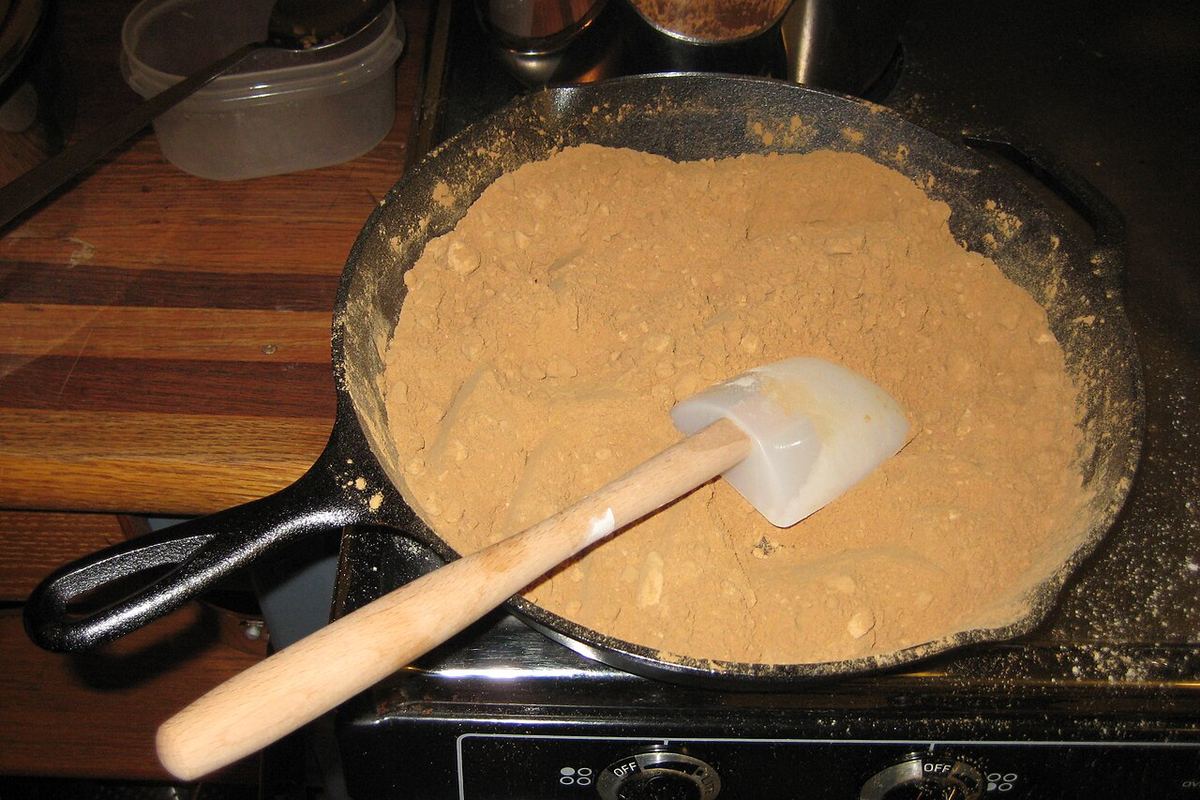
A cast-iron skillet on a hob holding a flat bed of toasted flour at peanut-butter colour, with a rubber spatula laid across it.
A roux at peanut-butter colour. Every minute past this buys flavour and spends thickening.

The roux

Flavour and body from the same pan, moving in opposite directions. Take it dark for depth and plan to get the thickness from somewhere else — or use more flour.

Okra and filé

The other two thickeners, and neither one needs browning. Okra goes in during the simmer; filé goes in at the very end, off the heat. Each brings its own way of going wrong.

Time at the stove

A dark roux is bought at the edge of burning, and there is no coming back from burnt — one set of black specks and the batch is bitter. The oven is the safer way to spend this.

Three things decide it. Every change on this page works by moving one of them.

What it costs

Gumbo: what each choice costs you

You cannot have all of it at once. These are the five real trades. Knowing which one you are making is most of the skill.

A dark roux, or a thick gumbo

One pan, two jobs, and they run in opposite directions: the browning that builds the flavour is the same heat that breaks down the starch. You cannot simply use more flour to get both — one cook doubled the roux and the gravy broke outright. Take it dark and get your body from okra, filé, or a spoonful of cornstarch at the end.

More body, or a cleaner texture

Each of the three thickeners has its own way of going wrong, so buying body means choosing which complaint you would rather risk. Okra's slime is the same substance as the thickening it gives you. Filé goes stringy if the pot boils after it goes in. Too much roux turns gluey. Nine cooks say any of them works — the choice is about which failure you can live with.

Every protein at its best, or one pot you walk away from

Chicken and sausage want 45 to 90 minutes; shrimp and oysters want three to five. Any schedule that suits one betrays the other, so the one-pot convenience is partly an illusion. Two cooks pressure-cooked shrimp with the chicken for the full 20 minutes — and were much less happy than the tenderness score suggested, because rubbery shrimp does not read as tough.

Chocolate-dark, or not burnt

Darkness is bought at the edge of ruin, and there is no rescue: one cook who burnt a roux and microwaved a replacement got no further than peanut-butter colour, and bottled browning sauce as a shortcut scored 3 out of 10. Seven cooks make their roux in the oven instead and reach the same darkness with far less risk of losing it.

The full Cajun voice, or controlled salt

Heat and salt arrive in the same jar. Twelve cooks report that adding cayenne, chilli flakes or hot sauce reliably turns the heat up and they liked it. But four found that a commercial Cajun blend pushed the saltiness to 8 or 9 out of 10 with no added salt at all. If you want more heat without more salt, buy them separately.

Change your bowl recipe

Each one is measured across all 122 recipes and then converted into this recipe's own amounts. Every edit costs something. The cost is on the card.

Make it thinner

More braising liquid went with bowls that came out thinner, across 615 versions.

Costs you: Nothing else moved that we can measure. We only detect 7 of the 60 changes cooks describe, so read that as unmeasured rather than free.

measured across many versions · 615 versions

Make it thicker

More vegetables went with bowls that came out thicker, across 35 versions.

Costs you: Nothing else moved that we can measure. We only detect 7 of the 60 changes cooks describe, so read that as unmeasured rather than free.

thin evidence — treat as a hint · 35 versions

Common gumbo problems, and how to fix them

The 10 problems cooks actually report, and what to do about each one. Open the one that sounds like yours.

The roux

I took the roux dark and now the gumbo is thin

That is the trade working as expected, not a mistake. You spent the flour's thickening power on flavour. Get the body back from one of the other two systems — okra into the simmer, filé off the heat, or about two tablespoons of cornstarch, which two cooks rated 7 to 8 out of 10. Do not just double the roux; one cook who did broke the gravy.

My roux burnt — black specks and a sharp smell

Start again. Ten minutes of flour and oil is the cheapest thing in the pot, and burnt roux is bitter all the way through. Every recovery anyone reports capped out low: a microwaved replacement only reached peanut-butter colour, and bottled browning sauce scored 3 out of 10.

Too thin, too thick

It is too thin and I am about to serve it

Add a thickener, and be generous. Nine cooks report that any of the traditional ones works — more roux, okra, filé off the heat, or cornstarch — landing between 5.5 and 9 out of 10. What you should not do is use less liquid next time: the under-filled batches scored the worst of anything in our reading.

It is too thick

Thin it with something that tastes of something. One cook who loosened an over-thick gumbo with tomato and broth recovered a body of 8.5 out of 10; plain water managed 2. You are replacing volume you lost, so replace it with stock.

Slimy, stringy, rubbery

It came out slimy

That is the okra, and the slime is chemically the same stuff as the body it gave you. Tonight, simmer it longer — the mucilage disperses and mellows. Next time, give the okra dry heat before it meets the liquid: sliced thin straight into the hot roux to steam it out first, which one cook rated 7 out of 10 for body.

The filé went stringy and gummy

The pot boiled after the filé went in, and it does not un-seize. Serve it tonight without reheating and let the rice absorb the worst of it. From now on the filé goes in with the heat off, or is passed round at the table — which is how it is traditionally done anyway.

The shrimp came out rubbery

It cooked on the chicken's schedule. Shrimp and oysters are done in three to five minutes and no amount of extra simmering softens them again. Next time they go in at the very end, after everything else is finished. Tonight, chop them small and stir them through so the texture is less obvious.

Seasoning and richness

It is too salty

It was almost certainly the seasoning blend rather than the salt you added. Four cooks found that a commercial Cajun or Creole blend, or a homemade one built to taste salty, pushed the saltiness to 8 or 9 out of 10 with no added salt at all. Tonight, dilute with unsalted stock and re-thicken.

It is too spicy

Stir in half-and-half after cooking. The one cook who did brought the heat down to a moderate 5.5 out of 10 and was happy with it, and it pushed the richness up to 7.5 as a side effect. Next batch, halve the cayenne rather than the seasoning blend, or you will lose the flavour with the heat.

It tastes flat and thin, like it is missing something

Richness has several doors here and nine cooks between them tried most of them, all landing around 7 to 8 out of 10. Adding shrimp is the most consistent single change five cooks made. After that: build the stock from shrimp shells rather than water, or switch to beef or fish stock, or simply use better butter and better stock.

The complete design space

Every bowl recipe we measured

The five above are the ones we would point you to. This is every recipe we measured, if you would rather look yourself.

What we do not know about gumbo

Where our evidence is thin, so you know which parts of this page to lean on and which to treat as a starting point.

Our statistics found nothing here at all

Five things were measured on this dish and every one came back null. Worse, the instrument never even ran its own sanity check — the one test we use to prove the method works on a dish was not performed for gumbo. So nothing on this page rests on a number our model produced. It runs on chemistry, on how common something is, and on what cooks reported.

The headline number is not a measurement

"A dark roux thickens about a quarter as well as a pale one" traces back to Alton Brown by way of Wikipedia, not to anybody weighing anything. The direction of the trade is not in doubt and the precision is not ours to give. There is also a very exact-sounding figure circulating about this — a 35% thickening loss measured by lab equipment — which appears to be invented, and we will not repeat it.

One node is deep and the rest are two cooks

161 recipes and 3,299 reviews, and the roux has 33 cooks behind it — genuinely well covered. The thickener, richness, heat and salt clusters have real support too. Every okra-preparation and filé-timing report we have is one or two cooks deep. Where this page says "one cook", read it as one person's experience with a name attached.