Almost always one answer

Why is my beef stew meat still tough?

Because it is not finished. In this dish the margin on the long side is generous and the margin on the short side is not, and no cook in our corpus reports a long braise making the beef tough.

We compared 162 published beef stew recipes and read 3,347 reviews. 98 of those reviewers scored the meat, and the reassuring thing about that number is how high it sits: the median is 8 out of 10 and so is the bottom quarter. Most people get there. If you have not, the evidence points at one thing far more often than at anything else.

162Recipes compared
3,347Reviews read
98Tenderness ratings
0Blame a long cook

Read against 162 published beef stew recipes and 3,347 reports from cooks who changed one thing.

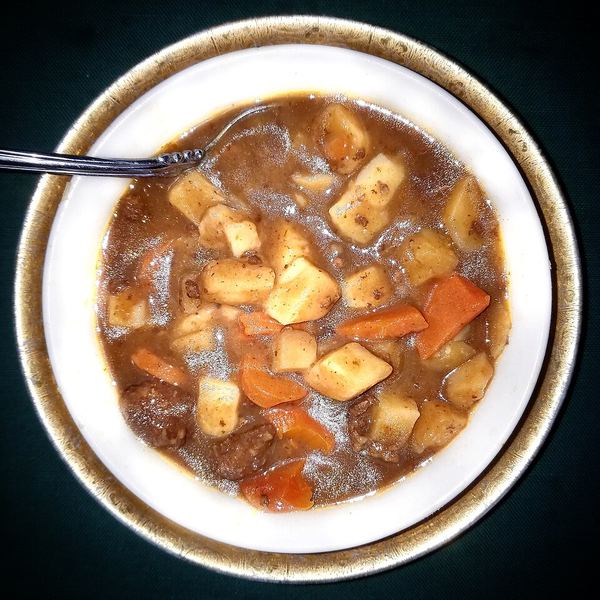
A bowl of beef stew with tender chunks of beef, potato and carrot in a thick brown sauce.
Where it is going: beef that gives to the side of a spoon. Daderot · CC0
The answer, first

Put the lid back on and give it another hour

Two findings, and the second one is the only way this really goes wrong.

The fix 11 cooks, no dissent

Tough means undercooked, and you have room

Extending the simmer time meaningfully past the recipe's stated duration -- including delaying the potatoes to let the meat go longer first -- improves tenderness.

Chuck is full of connective tissue, and connective tissue is the point — it is what turns into the gelatin that makes a stew feel like a stew. But it converts slowly, and it converts on its own schedule rather than the recipe's. A piece of beef that is chewy at two hours is chewy because the conversion is not finished, and the only thing that finishes it is more time at a low temperature.

Cooking well past the recipe's stated time -- a substantially longer simmer before adding potatoes, an extra 30 minutes, simmering longer than called for, or baking 5.5 hours -- consistently landed in the good-to-excellent tenderness range (5-9/10), with the single lowest score in this group (5/10) still coming from the shortest of these extensions.

What to do: another 45 to 60 minutes, covered, at a bare simmer. If the potatoes are already in and threatening to disintegrate, fish them out and put them back at the end — two cooks did exactly that and rated the result 8 and 9.

The one real trap 2 out of 10, in both reports

A slow cooker on high is not a faster low

Cooking on the slow cooker's high setting instead of low badly hurt tenderness (2/10 in both reports that tried it) -- low-and-slow is not interchangeable with high-and-fast for this dish.

This is the largest single failure documented anywhere in this dish, and it comes from a switch most people read as a way to eat sooner. Six cooks using the low setting rated the beef 8 or 9 out of 10. The two who used high rated it 2. Collagen conversion wants time at a moderate temperature; running hotter makes the muscle fibres contract and squeeze out moisture faster than the connective tissue softens, so you arrive at dinner with meat that is both tough and dry.

What to do: low, and start earlier. If you are already committed and it is on high, turn it down — the extra hours will still do their work.

The honest negative

It is almost certainly not the cut, and it is not the cube size

Two things people blame that our corpus will not support.

Swapping the roast for a different cut or prep -- bone-in shank with chicken stock, a small roast hand-cut into pieces, or a chuck roast cut up with the tomato paste omitted -- still produces tender meat.

9 cooks report this

Nine cooks changed the cut and all nine still got tender meat. That is not a claim that every cut is equal — a lean, collagen-poor cut like round really is a worse choice, and the family's own mechanism notes say so. It is a claim about what is actually going wrong in real kitchens. Nobody in 3,347 reviews reports buying the right beef and still failing on it, and quite a lot of people report changing the beef and being fine.

Cube size cuts both ways, which is the finding

Cutting the meat into smaller bite-size pieces (a small roast cut up at home, or explicitly cubed) consistently produced very good tenderness (8-9/10).

3 cooks report this

Leaving the meat in larger pieces -- two big pieces instead of many small ones, or whole uncut chuck -- also produced very good tenderness (7-9/10), showing this corpus's cube-size range didn't clearly separate tender from tough on its own.

2 cooks report this

Small pieces and large pieces both produced very good tenderness in this corpus. That is not a contradiction; it is a description of the trade. Small cubes heat through faster and give you more browned surface, and they also give you less margin before they go dry. Big pieces are slower and more forgiving. Neither separates tender from tough on its own, so if your beef is chewy, the size you cut it is not the reason.

One thing that does help, on two reports

Using a bone-in chuck roast and browning the bone with the meat gave excellent tenderness (9/10) in both reports that tried it -- consistent with bone marrow/connective tissue contributing extra gelatin beyond what the meat alone provides.

2 cooks report this · thin evidence — treat as a hint

A bone brings marrow and its own connective tissue, and both dissolve into the braise as extra gelatin. The mechanism is sound and two reports are two reports; take the direction and not the number.
The measured layer

Every vessel gets you there

98 reviewer scores, split by what the recipe was cooked in.

Mean tenderness rating by cooking vessel, from 98 reviewer scores out of 10.

The whole range is 7.5 to 8.0 out of 10. Compare that with the same reviewers on sauce body, where the vessels sit almost two points apart, and the shape of this dish comes into focus: the vessel is a decision about your sauce and your schedule, not about your meat. Pick the one that fits your day.

Means from published-recipe reviews, not a controlled test. Oven recipes and slow-cooker recipes differ in more than their vessel.

Where we would be guessing

What this page does not know

  • Nothing here is a fitted result. No statistical model in this project finds anything on tenderness at all. Every number above is a count of cooks or a score somebody typed into a review.
  • Most people never have this problem. The median tenderness score is 8 out of 10 and so is the bottom quarter, on 98 ratings. This page is written for a minority, and the advice is shaped by the reports of people who struggled rather than by the crowd who did not.
  • The slow-cooker-on-high finding rests on two reports. They agree exactly, the mechanism explains them, and it is still two people. We report it prominently because the cost of being wrong about it is low — nobody is harmed by using the low setting.
  • We tell you to cut your own meat and we have not tested it. Several cooks mention buying a roast and cutting it up, but nobody compares that against pre-cut supermarket stew meat. The advice is about controlling the piece size, not about the meat being better.
  • We cannot see temperature. "Low simmer" means different things on different hobs, and no reviewer records a number. Where we say low and slow, we are repeating what worked for people, not a measurement.