Compared by formula

Chicken Curry

168 recipes, read so you don't have to.

Every recipe is a different answer to the same few questions. Tell us the curry you are after and we will hand you the closest one anyone has published, plus what to change to suit you.

168recipes read
5curries, not one
10problems solved
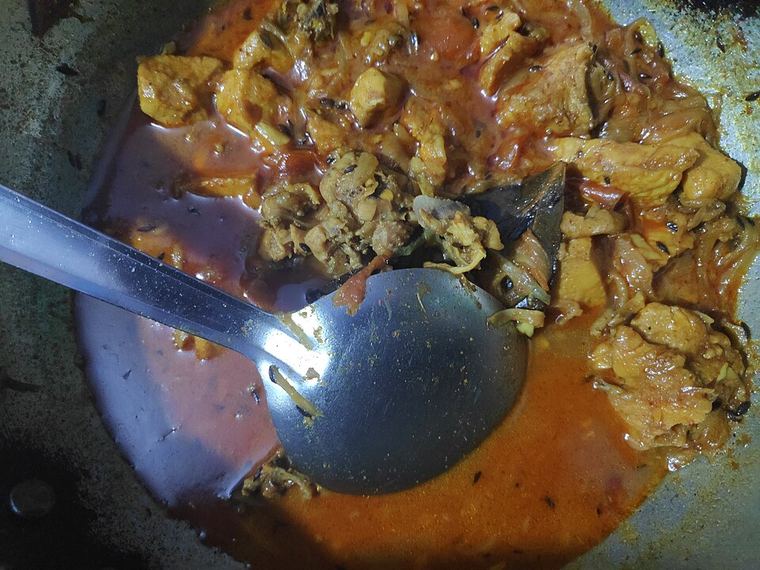
Chicken Curry, as published.
Gaurav Dhwaj Khadka · CC BY-SA 4.0
Start here

What kind of chicken curry do you want?

Five real versions, not one "best." Pick one and the recipe's right here — a published, rated one, with weights.

Any limits tonight?
Closest published match · of 92 stovetop, pot or kadai recipes

The stovetop reference

One pan, lid off at the end. The version you can steer while it cooks.

from www.cookingclassy.com 4.88 170 cooks rated it

20 minHands on
4Makes
$2.09Each
IntermediateLevel

Ingredients

  • 1 1/2 tsp ground coriander3 g
  • 1 tsp ground cumin2 g
  • 1/2 tsp turmeric1 g
  • 1/2 tsp fennel seeds, (crushed in a small bag with a meat mallet)1 g
  • 1/2 tsp ground cinnamon1 g
  • 1/2 tsp ground black pepper1 g
  • 1/4 tsp ground mustard1 g
  • 1/4 tsp ground cloves
  • 2 Tbsp olive oil27 g
  • 1 small yellow onion, (chopped (1 cup))150 g
  • 4 garlic cloves, (minced (1 1/2 Tbsp))12 g
  • 1 Tbsp peeled and minced fresh ginger6 g
  • 1 cup low-sodium chicken broth240 g
  • 3/4 cup drained canned diced tomatoes or peeled, seeded, diced fresh tomatoes182 g
  • Salt
  • Cayenne pepper, (to taste)
  • 1 1/2 lbs boneless skinless chicken breasts, (diced into 1 1/4-inch cubes)680 g
  • 1 tsp cornstarch mixed with 2 tsp water (optional)3 g
  • 1/3 cup heavy cream79 g
  • 2 Tbsp chopped cilantro12 g

Method

  1. In a small mixing bowl whisk together all of the spices in the spice blend, set aside.
  2. Heat olive oil in a 12-inch non-stick skillet over medium-high heat.
  3. Add in onion and saute until slightly golden brown, about 4 - 6 minutes.
  4. Add in garlic and ginger, saute 30 seconds more then add in spice blend and saute 30 seconds.
  5. Pour in chicken broth and tomatoes and bring to a boil, then reduce heat to medium-low, cover and simmer 5 minutes.
  6. Pour mixture into a blender then cover with lid and remove lid insert, cover opening with a clean folded kitchen rag.
  7. Blend mixture until well pureed and smooth then return to skillet and heat skillet over medium-high heat.
  8. Season sauce with salt and cayenne pepper (start with about 1/2 tsp salt and a few dashes cayenne then add more to taste) then add in chicken.
  9. Bring to a simmer then reduce heat to medium-low, cover skillet with lid and simmer until chicken has cooked through, stirring occasionally, about 8 - 12 minutes.
  10. During the last minute of cooking stir in the cornstarch and water slurry if desired, to thicken sauce slightly (or if needed thin with a little chicken broth).
  11. Stir in cream then serve warm with cilantro over basmati rice.

Watch out for: Tasting for heat before the fat is fully in. The dish gets milder as the coconut milk goes in, so a sauce judged perfect early lands flat at the table.

Closest published match · of 92 stovetop, pot or kadai recipes

Rich and rounded

Fat-forward and rounded — what most people mean by a restaurant curry.

from www.indianhealthyrecipes.com 4.98 971 cooks rated it

15 minHands on
3Makes
$2.11Each
IntermediateLevel

Ingredients

  • ½ kg (1.1 lbs.) chicken (preferably bone-in, boneless is okay)499 g
  • 2 to 3 tablespoons oil34 g
  • 1 cup (3 medium) onions (fine chopped)160 g
  • 1 to 2 green chilies (slit, omit for less spicy, Thai or Indian chili peppers or serrano peppers)22 g
  • 1 tablespoon ginger garlic paste (or ¾ inch ginger, 3 cloves garlic minced)8 g
  • ½ cup (2 medium) tomatoes (pureed or finely chopped)121 g
  • ¼ cup yogurt (or 1½ tbsp cashew butter or 12 cashews powdered & pureed with ¼ cup water, refer notes)61 g
  • ½ to ¾ teaspoon salt (adjust as needed)4 g
  • ½ to 1 cup hot water (or light coconut milk)177 g
  • 2 tablespoons coriander leaves (or mint leaves finely chopped)12 g
  • ¼ teaspoon turmeric powder0 g
  • 1 teaspoon Kashmiri red chili powder (or smoked paprika (½ tsp for less spicy))3 g
  • 1 teaspoon garam masala (½ tsp more if needed, adjust to taste)2 g
  • 1 teaspoon coriander powder2 g
  • 1 bay leaf (or 1 sprig curry leaves)1 g
  • 4 cloves
  • 2 inch cinnamon piece
  • 3 green cardamom3 g

Method

  1. On a medium flame, heat oil in a deep pan. Add the whole spices - bay leaf, cinnamon, cloves & green cardamoms.
  2. Stir in the chopped onions and chilies. Saute until deep golden in color, for 7 to 8 mins.
  3. Add ginger garlic paste and saute till you get a nice aroma, for about a minute.
  4. Then add tomatoes, turmeric and salt. Mix well and cook until the tomatoes turn soft & mushy.
  5. Turn down the heat to low, Stir in the yogurt (or cashew paste), red chili powder, garam masala & coriander powder.
  6. Cook on low heat, until the mixture smells good and aromatic.
  7. Add chicken and coriander leaves. Fry on a medium heat till the chicken turns white or pale in color. This takes around 3 mins.
  8. Cover and cook on a low heat for 3 to 4 minutes. This step is very important as the chicken absorbs all the flavors of the spices.
  9. Meanwhile in a separate pot, heat up 1 cup water. Using cold water most times toughens the chicken so it is good to use hot water.
  10. Pour hot water just enough (about ½ cup) to make a thick gravy. As you cook, chicken lets out plenty of moisture, depending on that add more water. Check the pictures in the post for consistency.
  11. Cover and cook on a medium flame till the chicken is soft cooked and the curry/gravy turns thick. When the chicken is cooked completely it will fall off the bone easily.
  12. Taste the curry & add more salt if needed. You can also add another ½ tsp garam masala at this stage if you feel it is less in flavors.
  13. Lastly garnish with coriander leaves, cover and off the heat. Serve chicken curry with butter naan or jeera rice.

Watch out for: Yogurt. It is acidic and will curdle if it goes in over heat — temper it or add it off the heat.

Closest published match

Genuinely hot

Built to bite. Starts from a hot paste rather than a bigger spoonful of a mild one.

from www.jocooks.com 4.53 855 cooks rated it

5 minHands on
6Makes
$1.71Each
BeginnerLevel

Ingredients

  • 2 tablespoon olive oil27 g
  • 2 pounds chicken breasts (skinless and boneless, cut into bite size pieces)907 g
  • ½ teaspoon salt (or to taste)3 g
  • ½ teaspoon pepper (or to taste)1 g
  • 1 small onion (chopped)150 g
  • 3 cloves garlic (minced)9 g
  • 2 tablespoon curry powder12 g
  • 1 cup chicken broth (low sodium)240 g
  • 14 ounce coconut milk (1 can)397 g
  • 14.5 ounce diced tomatoes (1 can)411 g
  • 2 tablespoon tomato paste33 g
  • 2 tablespoon sugar25 g
  • 2 tablespoon parsley (chopped)12 g

Method

  1. Cook the chicken: Heat the olive oil in a large skillet or Dutch oven. Add the chicken to the Dutch oven and season with salt and pepper. Cook for about 5 minutes or until the chicken is no longer pink.
  2. Finish the dish: Add the onion, garlic, curry powder and stir. Cook for 2 more minutes then add the chicken broth, coconut milk, tomatoes, tomato paste and sugar. Stir everything together, bring to a boil then cover with a lid. Turn the heat down and simmer for another 15 to 20 minutes.
  3. Garnish and serve: Garnish with parsley and serve over rice.

Watch out for: Salt. Paste carries a lot of it, so reaching for heat by the jarful oversalts the dish before it gets hot.

Closest published match

Slow cooker, honestly

Walk away from it, then thicken it at the end. Less liquid up front than any recipe tells you.

from www.halfbakedharvest.com 3.61 28 cooks rated it

20 minHands on
6Makes
$1.78Each
BeginnerLevel

Ingredients

  • 2 tablespoons salted butter28 g
  • 2 pounds mixed chicken breasts and thighs907 g
  • 1 yellow onion, chopped150 g
  • 1 tablespoon fresh garlic, chopped8 g
  • 2 teaspoons ground ginger4 g
  • 2 teaspoons cumin4 g
  • 2 teaspoons turmeric4 g
  • 1 teaspoon cayenne pepper2 g
  • 1 can (14 ounce) coconut milk397 g
  • 1 can (14 ounce) crushed tomatoes397 g
  • cinnamon stick or star anise (optional)
  • salt
  • 1/2 cup fresh cilantro50 g
  • rice and naan for serving

Method

  1. 1. In a large Dutch oven, add the butter, the chicken, onions, garlic, ginger, cumin, turmeric, cayenne, and season with salt. Cook until the chicken is seared and the spices are fragrant, 5-8 minutes.2. Pour over the coconut milk and tomatoes. If using, add the cinnamon and/or star anise. Stir to combine, bring the sauce to a simmer, and cook for 10-15 minutes until the sauce has thickened. At this point, you can cook the curry on low, up to all day. Add water if the sauce is too thick. Stir in half of the cilantro.3. Serve the chicken and sauce over bowls of rice with fresh naan. Top with extra cilantro. Enjoy!

Watch out for: Treating thin sauce as a failure. It is the lid, it is predictable, and it is the price of the convenience.

Closest published match · of 92 stovetop, pot or kadai recipes

Pressure cooker

Fastest route to tender. Brown it first, because nothing browns under a lid.

from tastesbetterfromscratch.com 4.96 802 cooks rated it

15 minHands on
5Makes
$2.44Each
BeginnerLevel

Ingredients

  • 1 tablespoon oil14 g
  • 2 tablespoons Panang curry paste (*)31 g
  • 1 tablespoon peanut butter16 g
  • 2 pounds chicken breasts (cut into pieces against the grain)907 g
  • 1 small onion (sliced)150 g
  • 1 green bell pepper (thinly sliced)120 g
  • 1 red bell pepper (thinly sliced)120 g
  • 2 teaspoons freshly grated ginger4 g
  • 4 garlic cloves (minced)12 g
  • 2 14 oz cans coconut milk (Chaokoh brand is my favorite)397 g
  • 2 teaspoons cornstarch5 g
  • 1/4 cup light brown sugar (packed)53 g
  • 1 tablespoons fish sauce17 g
  • 1 tablespoon lime juice15 g
  • 1 cup loosely packed basil leaves (roughly chopped)100 g
  • Hot cooked rice (white, brown or jasmine)

Method

  1. Heat oil over medium-high heat in large non-stick skillet. Saute onions for 2 minutes, then add bell peppers, garlic and ginger and saute for 2 minutes more.
  2. Add curry paste and peanut butter and saute for 1 minute. Add 1 ½ cans of coconut milk. Whisk cornstarch into remaining 1/2 can coconut milk then add to the pan. Stir well.
  3. Add chicken, stirring to coat. Simmer for 10-15 minutes or just until chicken is no longer pink and sauce begins to thicken.
  4. Stir in sugar, fish sauce, lime juice, and basil. Simmer for 5 minutes. Season with salt and pepper, to taste.
  5. Serve over hot cooked rice.

Watch out for: Skipping the sear. Nothing browns under pressure, so the colour and the roasted note have to be built before the lid goes on.

Need it to fit something tonight — no wine or beer, no dairy, no gluten? Those re-pick the recipe once JavaScript is on. With it off, you still get all 5 recipes above in full.

Why curry comes out bland, or too hot to eat

Almost every curry that disappoints has one of two dials set wrong, and neither of them is the one recipes talk about.

Heat is not a dose. It is three things at once: how hot your paste already is, how much of it you used, and how much fat is in the pot. The fat matters more than anyone expects — chilli compounds dissolve in fat, not water, so the coconut milk both carries the heat through the sauce and hides it from your tongue. That is why adding coconut milk rescues a curry that is too hot, and why switching to a light one makes the dish hotter without a grain of extra chilli.

The second dial is simpler. Sauce body is a water budget: water comes in with the liquid you pour, with the chicken, and with the vegetables, and it only leaves by evaporating — which means only with the lid off. A slow cooker cannot evaporate anything, so it makes a thin curry every time and has done nothing wrong.

Which paste, before how much

Brand and style do more than the spoonful does. Seventeen cooks changed nothing but the type of paste or powder and landed anywhere from barely warm to properly hot. Doubling a mild paste mostly dilutes the rest of the dish — several cooks doubled or even quadrupled it and still came out mild.

Fat

Buys richness, and quietly spends your heat. A full-fat coconut curry is carrying more chilli than a light one and tasting less of it. Swap to a lighter milk and you get two changes you did not ask for: a thinner sauce and a hotter one.

The lid

Decides whether the sauce can ever thicken. Off, and water leaves and the sauce concentrates. On — or sealed in a slow cooker or pressure cooker — and every drop you poured in is still there at the end.

The cut, but only for juiciness

The surprise of this dish. Ten cooks found breast, thigh and mixes all came out tender, because the meat sits under liquid the whole time. Dark meat is still juicier — all seven cooks who swapped said so — but breast is fine here in a way it never is in a roast.

Four things decide it. Every change on this page works by moving one of them.

What it costs

Chicken curry: what each choice costs you

You cannot have all of it at once. These are the five real trades. Knowing which one you are making is most of the skill.

Rich, or actually spicy

These fight, and it surprises people. Chilli dissolves in fat, so the coconut milk pulls the heat out of the paste — and then keeps it away from your tongue. A rich curry is carrying more chilli than a lean one and tasting milder. You are not choosing a spice level; you are choosing a ratio between the two.

Enough sauce, or sauce that clings

More sauce is thinner sauce unless you add something to carry it. Cutting the liquid at the start is the reliable way to keep it thick — nine cooks did it and held. Adding liquid to get more sauce is the least predictable move in the dish: eight cooks tried it and got everything from watery to perfect, depending entirely on whether they let it cook back down.

Hands off, or a sauce that reduced

A sealed pot cannot evaporate, so a slow cooker or pressure cooker gives you back every drop you put in. That is not a bad machine, it is what a lid does. The trade is worth taking on a weeknight — you just pay for it at the end with an uncovered simmer or a spoon of cornflour.

Thigh, or whatever is in the fridge

Not the decision it is in a roast. Because the meat is submerged, ten cooks found the cut barely changed how tender it came out. What it does change is juiciness, and there the answer is clean: every one of the seven cooks who switched to dark meat said it was juicier. Breast is fine here. Thigh is better.

A jar of paste, or your own spice

They look interchangeable and are not. Paste brings fat, fresh aromatics and a lot of salt; dry powder brings none of those. Swapping one for the other moves the heat, the seasoning and the thickness of the sauce all at once — which is also why 'add more salt' means nothing here until you say which you used.

Change your curry recipe

Each one is measured across all 168 recipes and then converted into this recipe's own amounts. Every edit costs something. The cost is on the card.

Make it thicker

More vegetables went with curries that came out thicker, across 48 versions.

Costs you: Nothing else moved that we can measure. We only detect 7 of the 60 changes cooks describe, so read that as unmeasured rather than free.

measured, on a smaller set · 48 versions

Make it saltier

More salt went with curries that came out saltier, across 27 versions.

Costs you: Nothing else moved that we can measure. We only detect 7 of the 60 changes cooks describe, so read that as unmeasured rather than free.

thin evidence — treat as a hint · 27 versions

Make it richer

More braising liquid went with curries that came out richer, across 24 versions.

Costs you: Nothing else moved that we can measure. We only detect 7 of the 60 changes cooks describe, so read that as unmeasured rather than free.

thin evidence — treat as a hint · 24 versions

Common chicken curry problems, and how to fix them

The 10 problems cooks actually report, and what to do about each one. Open the one that sounds like yours.

The chicken and the colour

The sauce is thin

Take the lid off and let it simmer down, or stir in a spoon of cornflour slaked in cold water. This is the most-reported fix in the dish — 31 cooks — and it works by almost any route: a slurry, pureed nuts or beans, mashed vegetables, tomato paste, or a potato cooked in until it collapses. Add a slurry while it is still properly simmering. Cooks who stirred one in late, after a long hard boil, got much less out of it.

It came out of the slow cooker thin

Expected, and not your fault. A sealed pot cannot evaporate, so every drop you poured in is still there. Finish it uncovered on the hob for a few minutes, and next time start with noticeably less liquid than the recipe says — that is the fix that actually works, rather than the one that rescues.

It is too hot to eat

Add fat — full-fat coconut milk or cream. It genuinely works, because the fat takes the chilli compounds out of contact with your tongue. But it pulls the heat back to bearable rather than to mild, and it makes more sauce, so expect to reduce it again afterwards.

It tastes flat, not spicy-flat — just dull

Check the salt before you reach for more chilli. Fourteen cooks adjusted it and the lesson was precision: a vague shake usually undershot, a measured amount added near the end landed well. Remember the paste and any fish sauce have already salted the dish, so taste before you assume it needs more.

It is still not hot and I have already doubled the paste

Stop adding paste. More of a mild paste dilutes the dish as much as it heats it — several cooks doubled or quadrupled and still finished mild. Add a direct chilli source instead: fresh chillies, cayenne or flakes. Next time start from a hotter paste, because brand does more than quantity.

The chicken is dry

Use dark meat next time — every one of the seven cooks who swapped reported it juicier. If you are using breast, cut it into smaller pieces and give it less time, not more: the one place extra time hurt was large pieces of breast, which fell to barely edible after a couple of hours.

The sauce split, or looks greasy

That is the coconut milk's emulsion breaking under heat or acid, not a spoiled dish. Take it off the boil. Yogurt and cream should go in off the heat rather than into a simmer — yogurt in particular will curdle if you add it while the pot is bubbling.

It is pale and tastes stewed

Nothing browned. Sear the chicken properly, or cook the paste harder in the fat before the liquid goes in — cooks who browned deliberately got real depth, and it scaled with how far they pushed it. Once the liquid is in, nothing browns at all, and under a lid nothing browns ever.

I doubled the recipe and the sauce is thin

A bigger batch holds more water and has the same surface area to lose it from, so it needs longer uncovered than feels reasonable. Either reduce it well past the stated time, or cut the added liquid when you scale up rather than doubling that too.

It smelled wonderful and tastes muted

The bright things went in too early. Lime, coriander leaf and fresh chilli's fruitier notes are volatile and simmer away. Keep the foundation in early and add the fresh half off the heat, right at the end.

The complete design space

Every curry recipe we measured

The five above are the ones we would point you to. This is every recipe we measured, if you would rather look yourself.

What we do not know about chicken curry

Where our evidence is thin, so you know which parts of this page to lean on and which to treat as a starting point.

We cannot see which paste you are holding

This is the biggest gap in the dish and we would rather say so. Brand and style move the heat more than the amount does — seventeen cooks changed only that and swung from barely warm to properly hot — and almost nobody writes down which jar they used. So every number here about how much paste to use is averaging over something larger than the thing it is measuring.

Nobody says whether they fried the paste

Cooking the spice in fat before the liquid should matter a great deal, because the flavours that matter dissolve in fat and not in water. We believe it and we cannot show it: reviewers almost never mention whether they fried the paste or tipped it into the pot. We have left it as reasoning rather than dressing it up as evidence.

Our numbers are counts of cooks, not proof

Nothing here is a statistical result. When we say 31 cooks thickened a thin sauce and it worked, that is exactly what it means — people who wrote a review, which skews toward those who changed something and were pleased. It is real evidence and it is not a controlled test.

One tradition is under-counted

Indian-style curries build their sauce from onions, tomato and yogurt rather than from poured-in stock or coconut milk. Our ingredient reader does not count those as liquid, so those recipes look drier on our charts than they are on the plate.