Compared by formula

Oatmeal Cookies

187 recipes, read so you don't have to.

Every recipe is a different answer to the same few questions. Tell us the cookie you are after and we will hand you the closest one anyone has published, plus what to change to suit you.

187recipes read
5cookies, not one
5problems solved
Oatmeal Cookies, as published.
Grammy's Kitchen · illustration
Start here

What kind of oatmeal cookies do you want?

Five real versions, not one "best." Pick one and the recipe's right here — a published, rated one, with weights.

Any limits tonight?
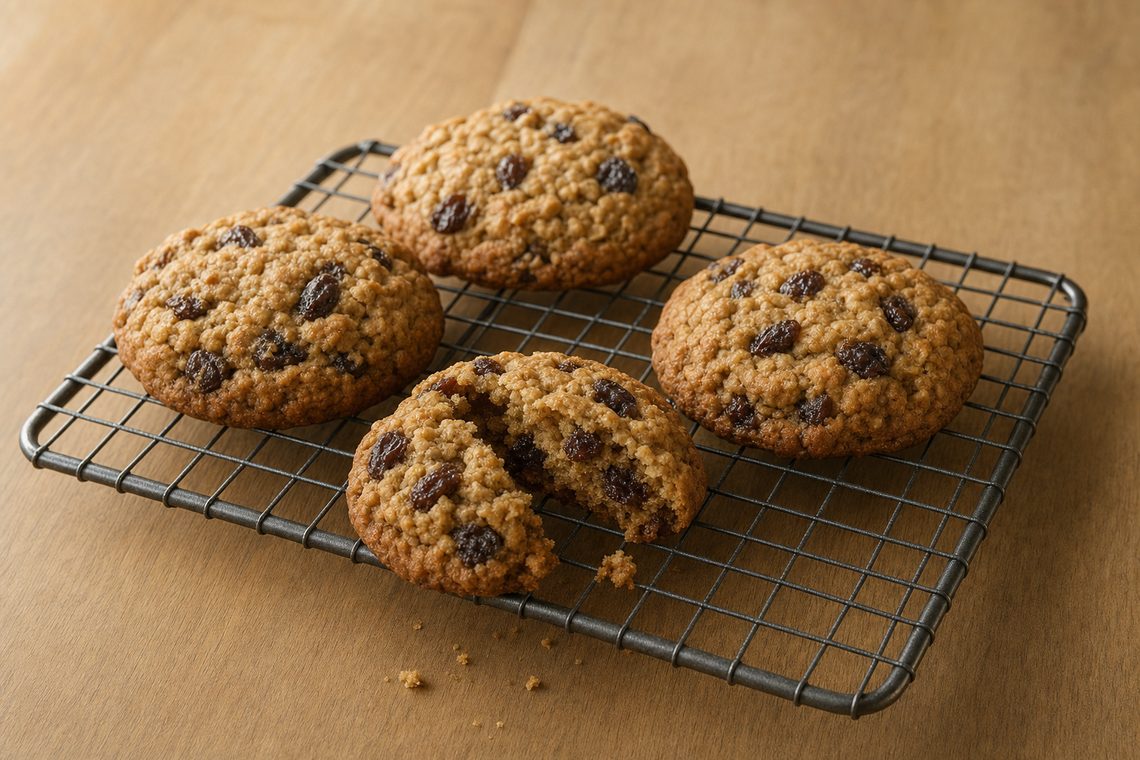
The middle of 187 recipes on every measure — the oatmeal cookie almost everybody is actually making.
Closest published match · of 60 crispy recipes

The standard oatmeal cookie

The middle of 187 recipes on every measure — the oatmeal cookie almost everybody is actually making.

from www.tasteofhome.com 4.52 67 cooks rated it

20 minHands on
15 minWaiting
60Makes
$0.14Each
IntermediateLevel

Ingredients

  • 1 cup butter, softened227 g
  • 1 cup sugar200 g
  • 1 cup packed brown sugar213 g
  • 2 large eggs, room temperature100 g
  • 1 tablespoon molasses21 g
  • 2 teaspoons vanilla extract9 g
  • 2 cups all-purpose flour240 g
  • 2 cups quick-cooking oats160 g
  • 1-1/2 teaspoons baking soda7 g
  • 1 teaspoon ground cinnamon3 g
  • 1/2 teaspoon salt3 g
  • 1 cup each raisins and chopped pecans109 g
  • 1 cup semisweet chocolate chips170 g

Method

  1. Like with most drop cookies, you're going to start by creaming together the softened butter and sugars. Once well combined, add the two eggs, molasses and vanilla and beat, beat, beat. This should take about five minutes. You really want it light and fluffy!
  2. In another bowl, whisk together the flour, oats, salt, baking soda and cinnamon. Just a quick stir to combine these ingredients will ensure they are evenly distributed in the cookie dough. Editor's Tip: Any type of cinnamon can be used in this recipe. If you're a big fan of spicy cinnamon, look for Indonesian or Korintje cinnamon—it packs the most punch. If you prefer a more mild flavor, stick with traditional Ceylon cinnamon.
  3. Next, add the dry ingredients to your creamed mixture in a few batches. Beat until just combined—and don't forget to scrape down the sides of the bowl halfway through. This is a pretty big batch of cookie dough, so have patience. It will take a bit of time to get all the oats, flour, butter and more fully incorporated. Editor's Tip: Be careful not to overmix at this stage. Too much mixing here can lead to tough cookies.
  4. It's time to add in all the tasty mix-ins; this recipe has a whopping 3 cups! Use a spatula or wooden spoon to stir the chocolate chips, raisins and chopped pecans in by hand. Editor's Tip: Consider toasting the nuts before adding them to the cookie dough. This helps develop the flavor of the pecans. And if you don't have pecans on hand, walnuts, almonds (OK, any type of nut) work well as a substitute.
  5. Use a cookie scoop to portion out cookies onto a parchment-lined baking sheet. Be sure to leave about 2 inches between each cookie since they do spread a good bit in the oven. Bake at 350ºF for 8 to 10 minutes—until the edges start to turn golden brown. Once baked, remove from the oven and cool on a wire rack.

Watch out for: Spread complaints usually trace to the formula (wet, sugar-heavy) or a skipped hydration chill — not the oven.

Needs:a hand mixerNordic Ware half sheetparchment papera cookie scoopAs an Amazon Associate we earn from qualifying purchases
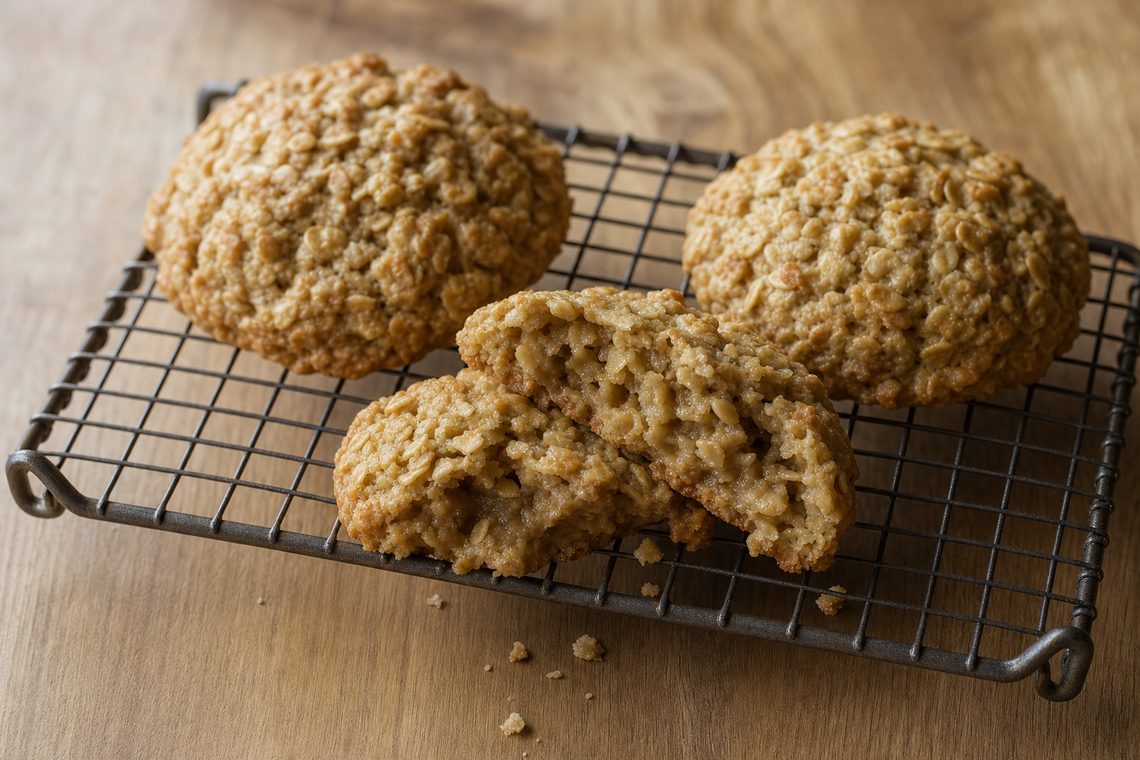
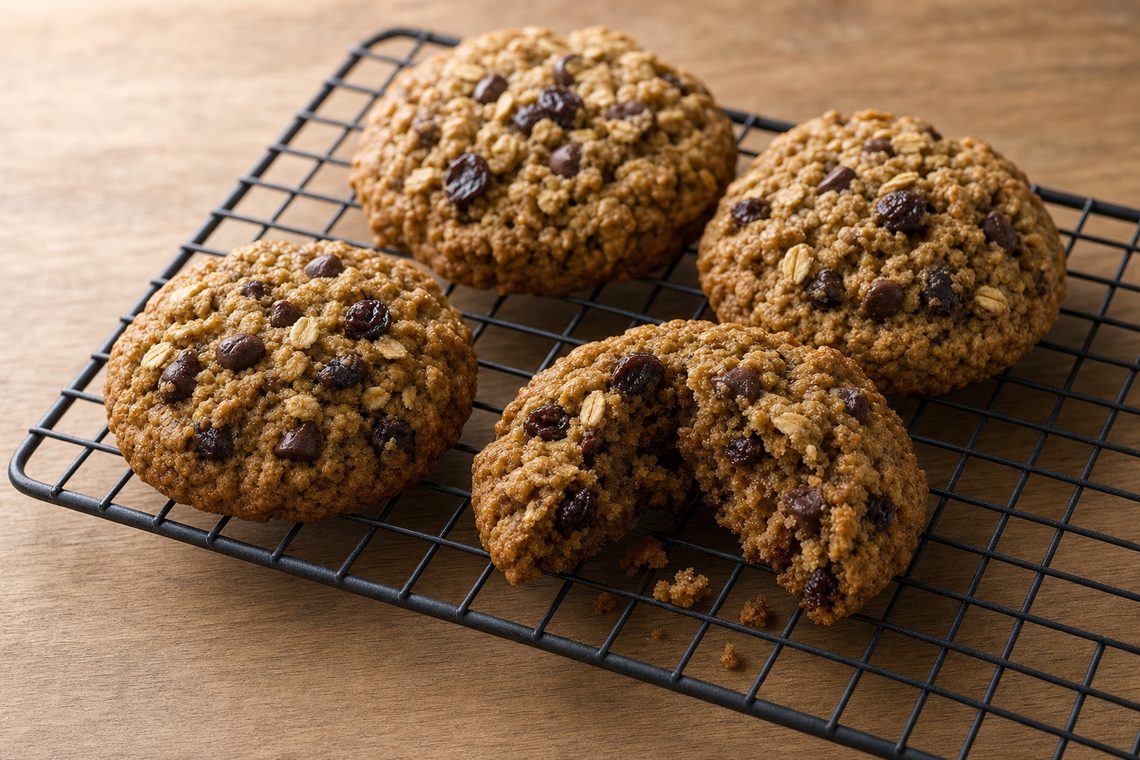
More oats and more egg, pushed as far as the dough will take before it stops holding together.
Closest published match · of 120 chewy recipes

As chewy as it gets

More oats and more egg, pushed as far as the dough will take before it stops holding together.

from sugarspunrun.com 4.9 451 cooks rated it

Ingredients

  • 1 cup unsalted butter (softened )
  • 1 cup light brown sugar (firmly packed )
  • ½ cup granulated sugar
  • 2 large eggs (room temperature preferred)
  • 1 ½ teaspoon vanilla extract
  • 1 ¾ cup all-purpose flour
  • 2 teaspoons cornstarch (cornflour in UK)
  • 1 teaspoon baking soda
  • ¾ teaspoon table salt
  • ¾ teaspoon ground cinnamon
  • 3 cups old-fashioned rolled oats
  • 1 ½ cups chocolate chips, chopped nuts, or raisins (optional!)

Method

  1. Beat butter in the bowl of a stand mixer (or using an electric beater) for about 30 seconds.
  2. Add sugars and beat until light and fluffy (pause to scrape down sides and bottom of bowl, if needed).
  3. Add eggs, one at a time, beating until combined.
  4. Stir in vanilla extract.
  5. In a separate bowl, whisk together flour, cornstarch, baking soda, salt, and cinnamon.
  6. Gradually add flour mixture to butter mixture until completely combined. Be sure to scrape the sides and bottom of the bowl so ingredients are well-mixed.
  7. Gradually stir in oats until completely combined. If using raisins or chocolate chips, stir them in at this point.
  8. Cover dough with plastic wrap and place in the refrigerator to chill for at least 30 minutes and up to 3 days.
  9. Preheat oven to 375F (190C) and prepare cookie sheets by lining with parchment paper.
  10. Drop cookie dough by rounded 2 Tablespoon-sized balls onto parchment paper, spacing at least 2" apart. If desired, roll cookies between your palms to make a smooth ball, which will give you more uniform cookies.
  11. Bake on 375F (190C) for 10-12 minutes (edges should be slightly browned, centers may still be slightly underbaked but shouldn't be raw, they'll bake completely as they cool).
  12. Allow cookies to cool completely on cookie sheet before serving and enjoying.

Watch out for: This formula is one enthusiastic half-cup from the cliff: 'grainy, loose, hand-molded' is the symptom that you crossed it. Edges will read soft; that is the price of the position.

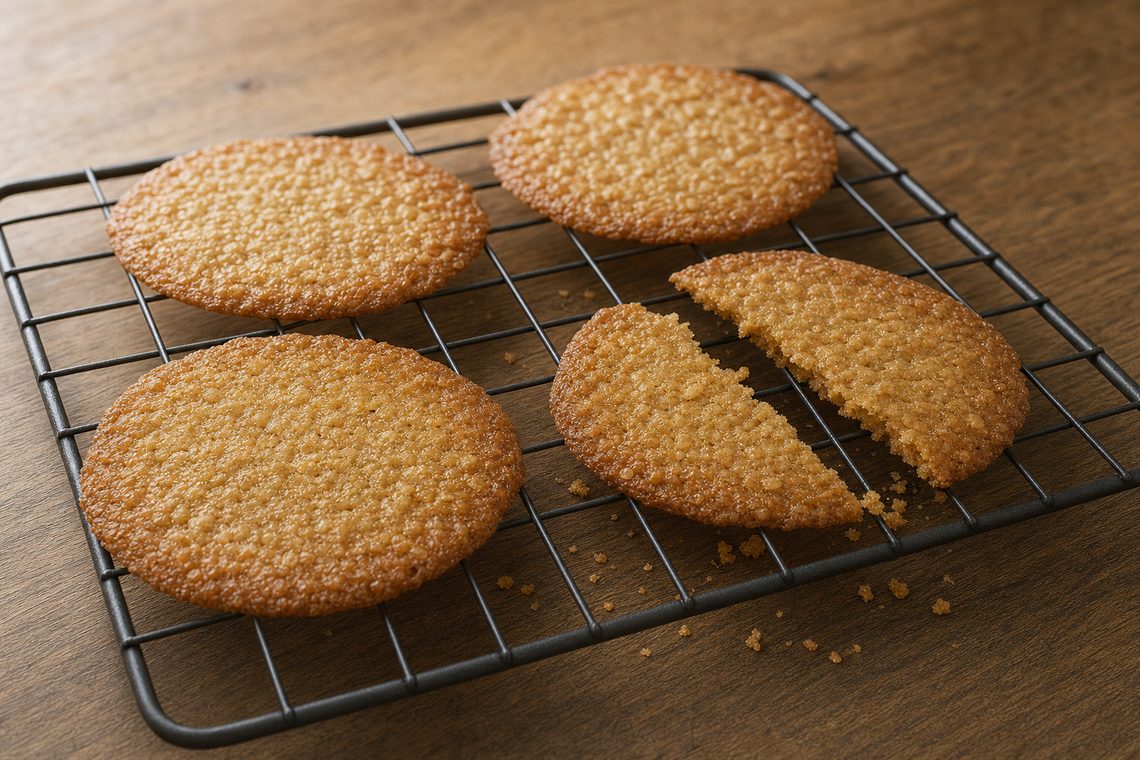
White sugar instead of brown, more butter, fewer oats. Everything aimed at spreading thin and crisping.
Our formula · nobody has published this one

Thin, crisp and lacy

White sugar instead of brown, more butter, fewer oats. Everything aimed at spreading thin and crisping.

No recipe in the 187 lands close enough to call it a match, so this one is ours, built on 250 g of all-purpose flour from where the published recipes agree.

Ingredients

  • All-purpose flour (2 cups)250 g
  • Brown sugar (3/4 cup (packed))135 g
  • White sugar (1 1/2 cups)315 g
  • Butter (3 sticks)312 g
  • Egg (2 large eggs)100 g
  • Baking soda (1 3/4 tsp)9 g
  • Salt (3/4 tsp)4 g

Method

  1. Mix: cream; white-led sugar split
  2. Dry: light oat load (90%), generous leavener
  3. Chill: none — spread is the point
  4. Shape: slight flatten
  5. Bake: 375F for early color, watch by the minute
  6. Rest: cool on sheet until set

Watch out for: The 375F color comes fast; a minute past first deep gold is dead chew. Margarine-based fats at this fat level flirt with structural failure.

The diner oatmeal-raisin, with the raisins soaked and drained first — the one prep step that measurably changes the cookie.
Closest published match · of 120 chewy recipes

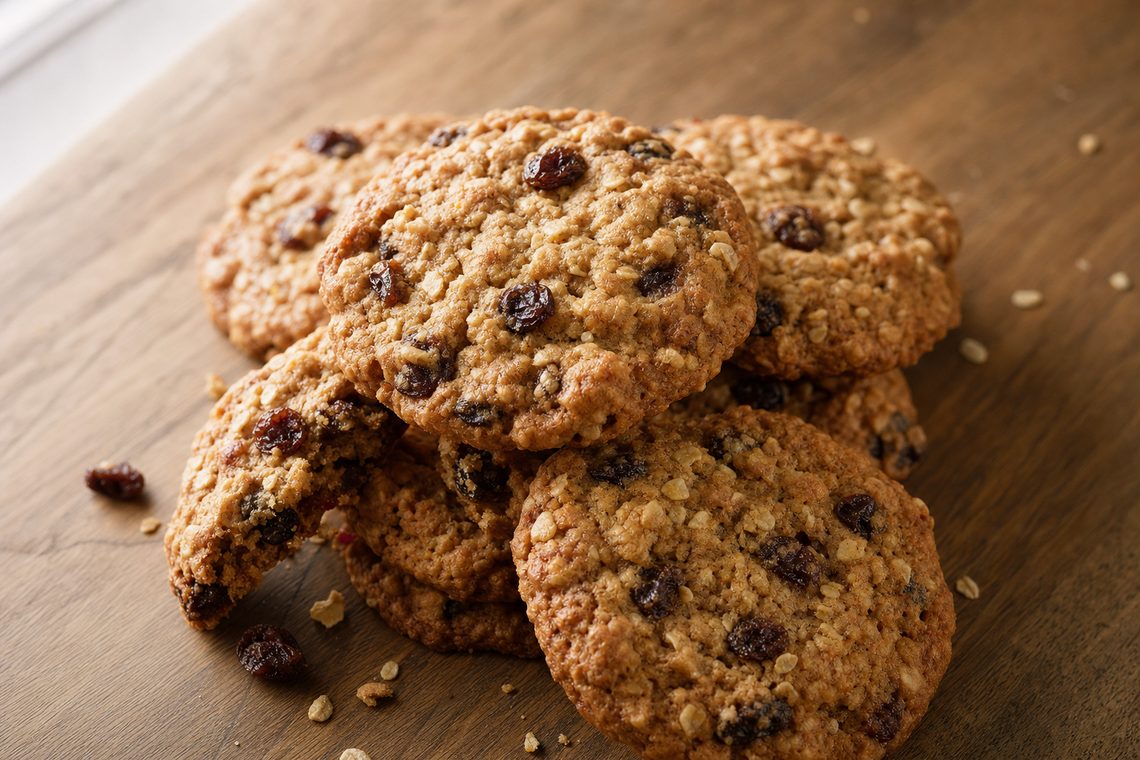
Oatmeal raisin, done properly

The diner oatmeal-raisin, with the raisins soaked and drained first — the one prep step that measurably changes the cookie.

from sugarspunrun.com 5 83 cooks rated it

Ingredients

  • 1 cup unsalted butter (melted and cooled until no longer warm to the touch)
  • 1 cup dark brown sugar (firmly packed )
  • ½ cup granulated sugar
  • ¾ teaspoon ground cinnamon
  • 2 large eggs (room temperature preferred)
  • 1 Tablespoon molasses (use a molasses that says “unsulphured” on the label, I like “Grandmas” and “Brer Rabbit” brand)
  • 1 Tablespoon vanilla extract
  • 2 cups all-purpose flour
  • 1 Tablespoon cornstarch
  • 1 teaspoon baking soda
  • ¾ teaspoon table salt
  • 3 cups old-fashioned rolled oats
  • 1 ½ cups raisins

Method

  1. In a large mixing bowl, combine melted, cooled butter, sugars, and cinnamon and stir until well-combined.
  2. Add eggs and stir well, then stir in molasses and vanilla extract until completely combined.
  3. In a separate mixing bowl, whisk together flour, cornstarch, baking soda and salt.
  4. Gradually stir dry ingredients into butter mixture until completely combined.
  5. Add oats and raisins and stir until oats and raisins are uniformly distributed.
  6. Cover dough with plastic wrap and refrigerate for 30-60 minutes before baking (see note if you would like to chill longer).
  7. Once dough is nearly finished chilling, preheat oven to 350F (175C) and line a baking sheet with parchment paper.
  8. Once dough has finished chilling, remove from refrigerator and scoop into rounded 1 1/2-Tablespoon sized scoops. Drop scoops onto prepared baking sheet, spacing cookies at least 2” (5cm) apart.
  9. Bake on 350F (175C) for 10-12 minutes. The centers will look slightly underbaked still but allow the cookies to cool completely on the baking sheet and they will finish cooking to perfection, leaving you with soft, chewy cookies.

Watch out for: The soak's documented cost: a measured hit to structural integrity in the fullest test. If the cookie matters more than the raisin, skip the soak.

Built to survive substitutions. What this dish forgives is generous; what it does not forgive is specific.
Closest published match · of 60 crispy recipes

When you are missing something

Built to survive substitutions. What this dish forgives is generous; what it does not forgive is specific.

from cookingclassy.com 4.94 260 cooks rated it

20 minHands on
22 minWaiting
32Makes
$0.21Each
BeginnerLevel

Ingredients

  • 1 1/2 cups (212g) all-purpose flour (scoop and level to measure)212 g
  • 1 tsp ground cinnamon3 g
  • 1/2 tsp baking soda2 g
  • 1/2 tsp baking powder2 g
  • 1/2 tsp salt3 g
  • 1 cup (226g) unsalted butter, (softened slightly (it should still be somewhat cold and firm))226 g
  • 1 cup (200g) packed light brown sugar200 g
  • 1/2 cup (100g) granulated sugar100 g
  • 2 large eggs100 g
  • 1 1/2 tsp vanilla extract6 g
  • 3 cups (260g) rolled old fashioned oats*260 g
  • 1 cup (153g) raisins** (preferably from a freshly opened package)153 g
  • 1 cup (118g) chopped walnuts118 g

Method

  1. Preheat oven to 350 degrees. Line rimmed 18 by 13-inch baking sheets with parchment paper or silicone baking mats.
  2. In a mixing bowl whisk together flour, cinnamon, baking soda, baking powder and salt for 20 seconds, set aside.
  3. In the bowl of an electric stand mixer fitted with the paddle attachment cream together butter, brown sugar, and granulated sugar until combined.
  4. Mix in one egg, then blend in second egg and vanilla.
  5. Add flour mixture and mix just until combined then mix in oats, raisins and walnuts.
  6. Scoop dough out and shape into 1 1/2-inch balls (or 40 grams each), transfer to prepared baking sheet fitting 12 per sheet and spacing 2-inches apart.
  7. Bake in preheated oven until golden brown on edges and nearly set (center should look under-baked), about 12 - 14 minutes.
  8. Let cool on baking sheet for a few minutes then transfer to a wire rack to cool completely. Repeat with remaining dough.
  9. Store in an airtight container at room temperature.

Watch out for: Margarine-for-SHORTENING is oddly low-risk while margarine-for-BUTTER is the disaster — the reports separate the two cleanly, so read your recipe's baseline fat before swapping.

Needs:KitchenAid Artisan 5-qtNordic Ware half sheetparchment papera cookie scoopAs an Amazon Associate we earn from qualifying purchases

Need it to fit something tonight — no mixer, no long wait, no dairy? Those re-pick the recipe once JavaScript is on. With it off, you still get all 5 recipes above in full.

Why oatmeal cookies come out dry or crumbly

An oatmeal cookie is a chocolate chip cookie with a sponge in it. Oats hold on to water far harder than flour does, and the more of them you add the more they take — so every other ingredient is competing for what is left. Almost everything odd about this cookie is that competition showing up somewhere.

It is why the recipes run so sweet. The typical oatmeal cookie carries half again as much sugar as a chocolate chip one, because oats mute sweetness and the formula compensates. It is why soaking the raisins changes the cookie and swapping them for chocolate does not. And it is why there is a hard limit: past roughly one and a half times as many oats as flour, the dough stops holding together — not gradually, all at once.

Water

The one budget everything draws on. Oats take it, sugar and egg and butter bring it, and soaked fruit is a large deposit people forget they made.

Oats

More buys chew, up to a point. Past about a cup and a half to each cup of flour the dough goes grainy and loose and will not hold — and no oven setting fixes that.

Sugar

Doing two jobs here. It is what makes the cookie spread, and it is also covering for the fact that oats make everything taste less sweet than it is.

Three things decide it. Every change on this page works by moving one of them.

What it costs

Oatmeal cookies: what each choice costs you

You cannot have all of it at once. These are the six real trades. Knowing which one you are making is most of the skill.

Hearty oat chew, or a cookie that holds together

Adding a handful of oats past the recipe reliably buys chew — cooks report it landing in the 7 to 9 range. But every added gram wants water the sugar and flour had already claimed, and the failure is not gradual. At around three and a half cups against a normal flour base the dough goes grainy and hand-moldable, and there is no baking it back.

Rolled-oat chew, or quick-oat tenderness

The thinner the flake, the faster it soaks up water and the less structure it holds through the bake. Rolled oats are the balance point; quick oats come out softer and more uniform; instant softer still. This is one of the few places where the packet you bought decides the cookie before you start.

Sweet, spread and a crisp edge, or restrained, tight and cakier

Sugar is what makes a cookie spread, and this dish already runs sweeter than any of its siblings because oats tax how sweet things taste. So cutting the sugar costs you twice — eight cooks reported it tasting flatter, and several reported duller, less crisp edges at the same time.

The chill the books ask for, or the spread control you expected from it

This is the most contested claim in the dish, and it goes against the received wisdom: five cooks report chilling fixing their spread and twelve report it not working. The chill does real things — it lets the oats drink and it firms the fat — but as a cure for a cookie that spreads, our cooks mostly say it is not the answer. The formula usually is.

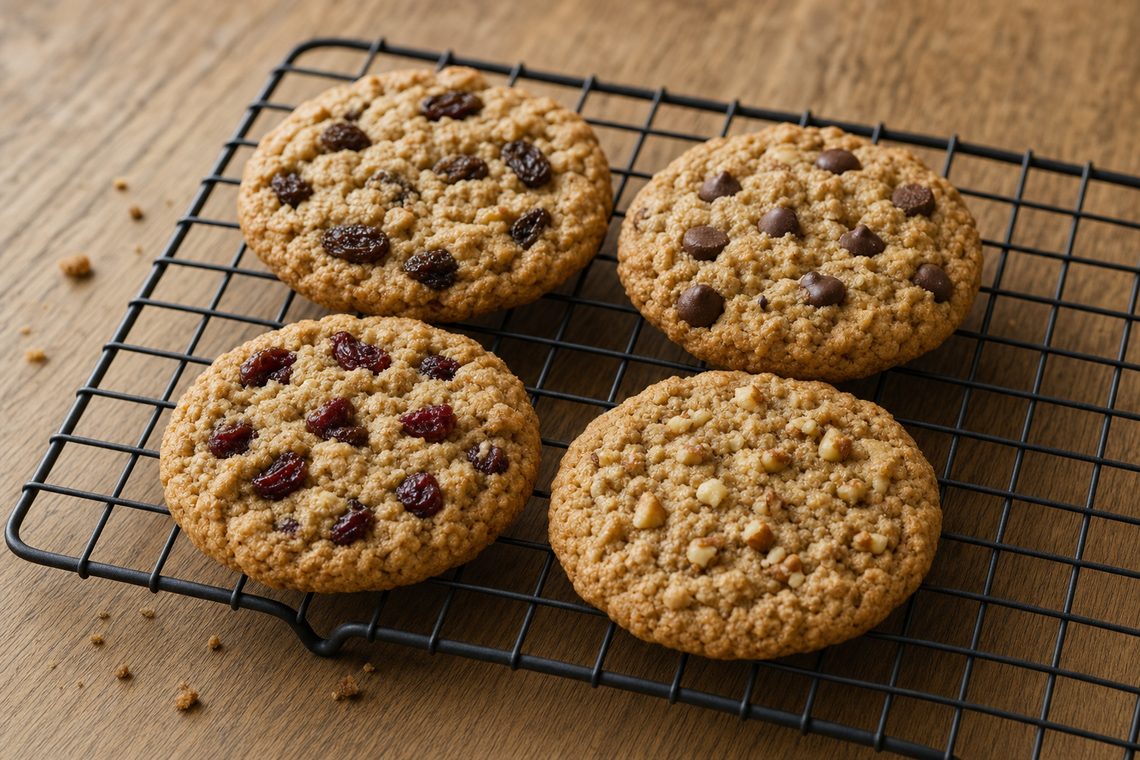
Raisins against chocolate, or what you do to the raisin

The loudest argument about this cookie carries the least information. Swapping raisins for chocolate chips, or cranberries for raisins, moves flavour and nothing structural. Soaking the raisin does change the cookie — twenty minutes in hot water plumps it into a reservoir that improved the edges and softened the middle, at a measured cost to how well the cookie held together.

Pull it early for chew, or move it early and lose it

Oatmeal cookies keep setting after they leave the oven — which is why pulling them while the centres still look glossy works, and also why they fall apart if you move them straight away. Fifteen minutes on the sheet is the standard advice and it is not fussiness. The structure that gives this cookie its chew has not formed yet.

Change your cookie recipe

Each one is measured across all 187 recipes and then converted into this recipe's own amounts. Every edit costs something. The cost is on the card.

Make it thicker

More brown sugar went with cookies that came out thicker, across 129 versions. Invert sugar in molasses binds water and holds it in the crumb after baking. Retained water is what chew is.

Costs you: Nothing else moved that we can measure — but this lever sits on a real trade, flat or thick, and we cannot put a number on that side of it.

measured, on a smaller set · 129 versions

Make it more set in the middle

More added liquid went with cookies that came out more set in the middle, across 103 versions. Flour protein plus available water plus agitation builds an elastic network that resists the bite.

Costs you: Nothing else moved that we can measure — but this lever sits on a real trade, gooey middle or cooked through, and we cannot put a number on that side of it.

measured, on a smaller set · 103 versions

Make it flatter and wider · sweeter

More sugar went with cookies that came out sweeter, across 45 versions.

Costs you: Nothing else moved that we can measure. We only detect 7 of the 60 changes cooks describe, so read that as unmeasured rather than free. Another way: more chocolate.

measured, on a smaller set · 45 versions

Make it paler

More egg went with cookies that came out paler, across 27 versions. Reducing sugars plus amino acids from egg and flour, under heat and favourable pH, produce colour and the toasted flavours that read as 'baked'.

Costs you: Nothing else moved that we can measure — but this lever sits on a real trade, deep brown or pale and soft, and we cannot put a number on that side of it.

thin evidence — treat as a hint · 27 versions

Common oatmeal cookies problems, and how to fix them

The 5 problems cooks actually report, and what to do about each one. Open the one that sounds like yours.

The dough

I chilled the dough and it still spread

Stop blaming the fridge. Twelve cooks report chilling failing to fix a spreading oatmeal cookie against five who say it worked, and it nearly always happens over a formula that is simply too wet or too sweet. Drain any soaked fruit, cut liquid sweeteners like honey or syrup, and add a quarter-cup of flour before you add another hour in the fridge.

The dough went grainy and loose — I have to shape it by hand

You crossed the oat limit, and no oven setting brings a dough back from that. This is the one failure in this cookie where adding something beats changing how you bake it: an extra egg binds water and protein at once, or add flour. Adding more oats — the instinct — makes it worse.

Out of the oven

They fall apart when I move them off the tray

Wait. This cookie is uniquely fragile while hot and keeps setting for several minutes after it leaves the oven — fifteen minutes on the sheet is the standard, and it is not caution. If they still crumble once cool, the problem was at mixing: quick or instant oats are milled too thin to hold the cookie together.

I want crisp edges

Buy them with the recipe, not with the clock. More white sugar and less brown, fewer oats, flatten the ball slightly, and a hotter oven for early colour. Baking longer is the wrong lever — four cooks report it giving them duller edges and dead chew rather than crispness.

Flavour

They taste bland even though I used all the sugar

Oats mute both sweetness and flavour, which is why the standard recipe already runs half again the sugar of a chocolate chip cookie. Do not add more sugar — raise the flavour instead. Cinnamon, or more inclusions, or darker ones. More inclusions is one of the few things our measurements actually confirm here.

The complete design space

Every cookie recipe we measured

The five above are the ones we would point you to. This is every recipe we measured, if you would rather look yourself.

What we do not know about oatmeal cookies

Where our evidence is thin, so you know which parts of this page to lean on and which to treat as a starting point.

We predicted chilling would dominate this dish, and we were wrong

Before reading a single review we wrote down what we expected to find, and top of the list was that chilling would be the decisive lever. It was not: five cooks for and twelve against, sitting mid-pack among everything else, and not one cook talked about it in terms of the oats soaking. We are reporting the prediction we lost because a page that only prints its wins is not evidence of anything.

Most of what we know here is inherited rather than measured on oats

Thirty of the thirty-four decisions on this page came from the chocolate chip cookie's own work and carried over unchanged; four are specific to oats. That is the point of building a family — but it means the oat-specific findings are the thin part of the page, not the thick part.

Nobody in our reading toasts their oats

It is the move experienced bakers rate most highly for flavour, and across every review we have, not one person mentions doing it. So we cannot tell you anything about it. The same goes for extra egg yolks, banging the pan mid-bake, and finishing salt — all real techniques, all invisible to us.