Troubleshooting

Why are my oatmeal cookies dry?

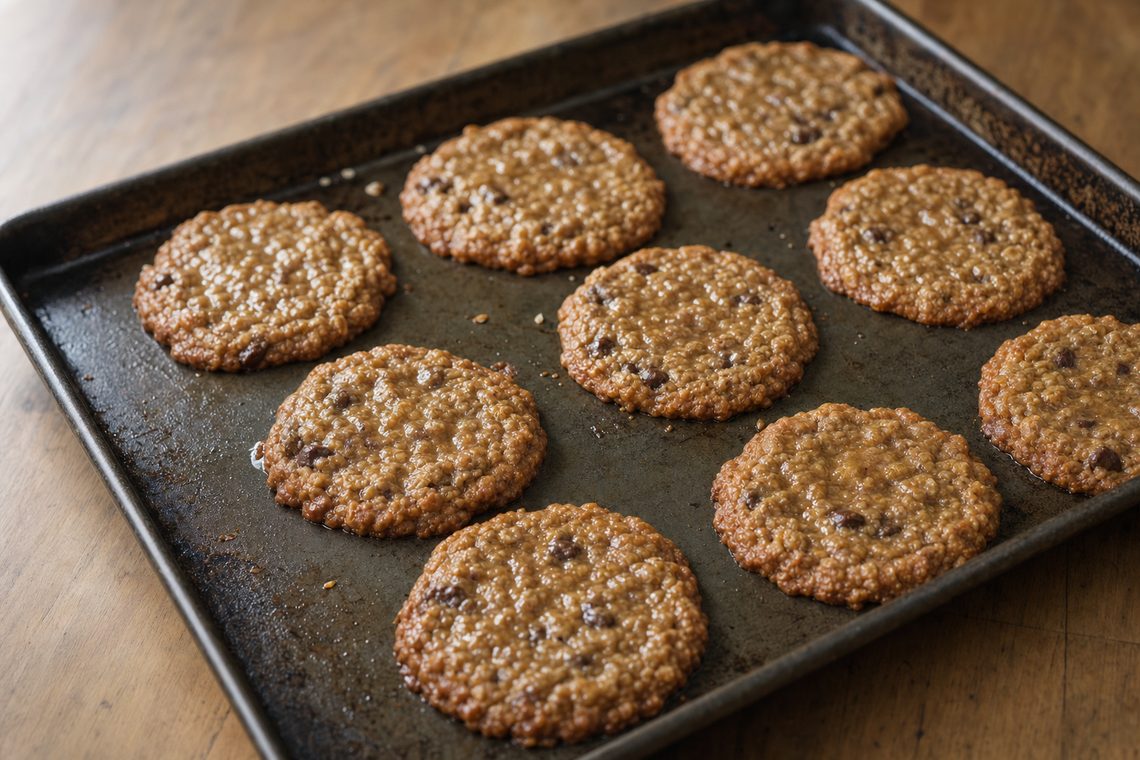
You baked them until they looked done. An oatmeal cookie has to come out of the oven looking underdone, because the oats keep drinking and setting after the heat stops.

This is the one place an oatmeal cookie behaves differently from every other cookie you have baked. Pull them with the centres still glossy and slightly raw-looking, leave them on the hot sheet for fifteen minutes, and let carryover finish the job. Below: the window that works, and the two other things worth checking.

Read against 187 published oatmeal cookies recipes and 2,628 reports from cooks who changed one thing.

Oatmeal cookies resting on a hot baking sheet with edges set and centres still glossy.
Grammy's Kitchen · illustration
What to change

How to fix a dry oatmeal cookie

In the order we would try them.

Start here

Pull them while the centres still look wet

The edge should be set and browned and the middle should look like it needs another two minutes. That is the cue.

Oats absorb water and firm up for as long as the cookie is hot, so the oven is only doing part of the work. If you wait for the centre to look finished, carryover takes it well past finished by the time it cools, and no amount of butter in the recipe will bring it back. This single change fixes more dry oatmeal cookies than every ingredient adjustment put together.

The window: 9 to 13 minutes at 350°F for a normal scoop. Cooks who went to 7 minutes reported a genuinely raw centre; at 22 minutes the cookie is at maximum browning and the chew is gone.

Then this

Leave them on the sheet for fifteen minutes

A hot oatmeal cookie is held together by the oats, and they have not finished setting yet.

Move one straight to a rack and it will sag, tear or come apart in your hand, which is where most “they fall apart” reports come from. The sheet keeps it supported and keeps the carryover going. Fifteen minutes is not fussiness, it is the second half of the bake, and it is also why these are the wrong cookie to rush.

Not the fix four cooks

Do not bake longer for a crisper edge

Cooks who ran past the stated time reported edges that got duller, not crisper, along with a drier middle.

Crispness in this cookie comes from sugar and from how far it spreads, not from oven minutes. Baking longer to chase a crisp edge costs you the centre and does not buy the edge, which is the worst trade available on this page.

Worth checking

Weigh the flour before you blame the bake

A cup of flour scooped from the bag can hold a third more than a cup spooned in and levelled.

This dish leans on flour less than most, so it is the second thing to check rather than the first, but the effect is the same as everywhere else in baking: extra flour ties up water the oats were going to use. 120 g per cup, on a scale.
Days two and three

Keeping them from drying out afterwards

Oats are the fatty grain, and that sets a real clock on how long these are good for.

Oats carry noticeably more fat than wheat, and fat in a warm, airy container goes stale in a way that flour does not. Cool and airtight is chemistry rather than fussiness: it is the difference between a cookie that is still good on day three and one that tastes flat and cardboardy. Freezing the dough works well, and cooks who baked from frozen got good chew by pulling them a touch early.

Straight with you

Where we would be guessing

So you know how far to trust the rest of this page.

The window is a starting point, not your oven

9 to 13 minutes at 350°F is where the recipes we compared sit, and ovens run hot and cold by more than that gap. The visual cue survives that: a glossy centre means the same thing in any oven, and a minute count does not.

Carryover is mechanism, not a fitted lever

Nobody in these reviews baked the same dough to two different times and reported both, so this is the baking literature and consistent cook reports rather than a measurement we made. It is well established, and it is worth being clear which kind of evidence it is.

We hold no oven temperatures

Bake times and temperatures live in each recipe's own method text, not in a field we fitted. Averaging recipes that disagree would manufacture a precision we do not have, so this page gives you cues you can see instead.