Compared by formula

Peanut Butter Cookies

169 recipes, read so you don't have to.

Every recipe is a different answer to the same few questions. Tell us the cookie you are after and we will hand you the closest one anyone has published, plus what to change to suit you.

169recipes read
5cookies, not one
5problems solved
Peanut Butter Cookies, as published.
Grammy's Kitchen · illustration
Start here

What kind of peanut butter cookies do you want?

Five real versions, not one "best." Pick one and the recipe's right here — a published, rated one, with weights.

Any limits tonight?
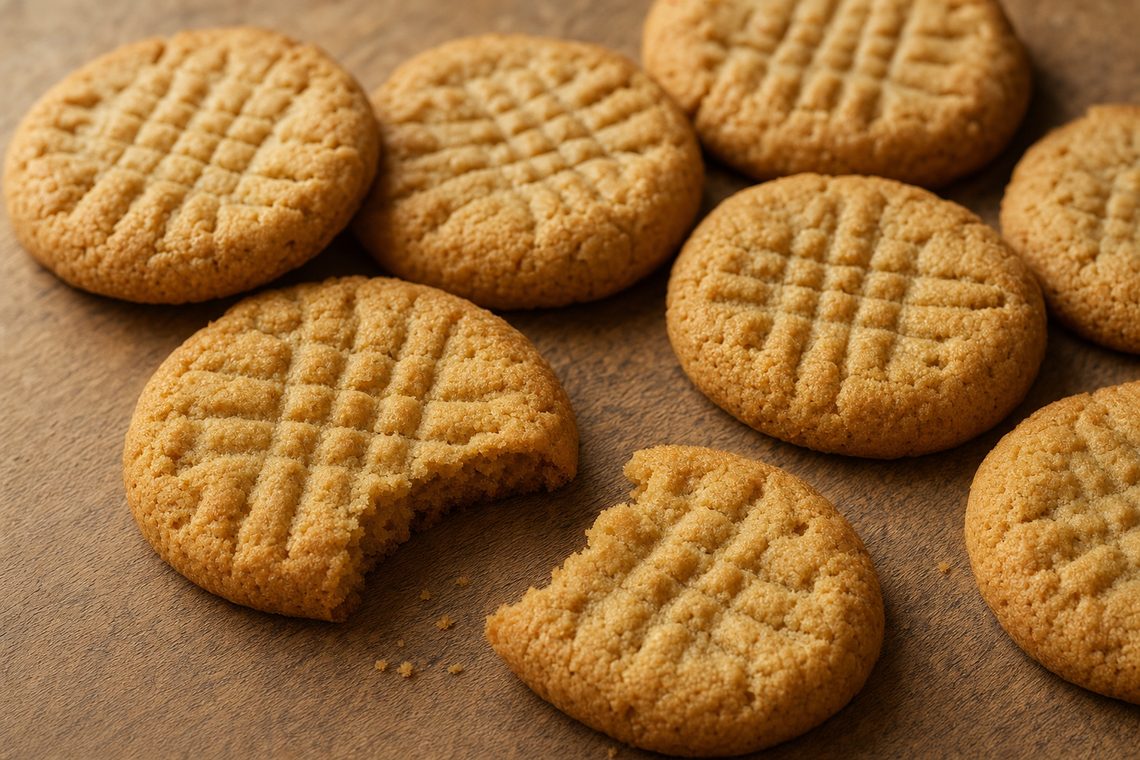
The middle of 185 recipes — the fork-marked cookie everybody pictures.
Closest published match · of 146 chewy recipes

The classic fork-marked cookie

The middle of 185 recipes — the fork-marked cookie everybody pictures.

from www.food.com 5 56 cooks rated it

Ingredients

  • 2 1/2 cups all-purpose flour
  • 1 teaspoon baking powder
  • 1/2 teaspoon baking soda
  • 1/2 teaspoon salt
  • 1/2 cup butter, at room temperature
  • 1/2 cup solid shortening, at room temperature
  • 1 cup packed brown sugar
  • 1 cup granulated sugar
  • 2 large eggs
  • 1 cup creamy peanut butter

Method

  1. Heat oven to 350°.
  2. Sift together the flour, baking powder, baking soda and salt, set aside.
  3. Cream the butter, shortening, and both sugars in a large bowl with an electric mixer at medium speed until light and fluffy.
  4. Add eggs one at a time, beating well after each addition, then mix in the peanut butter.
  5. Add the flour mixture by the cupful and beat at low speed to mix well.
  6. Shape the dough into 1 inch balls and place on ungreased baking sheets (I line the sheets with parchment paper) about 2 inches apart.
  7. Press each cookie twice in each direction with a lightly floured fork to make a crosshatch design.
  8. Bake 10-12 minutes.
  9. ***Do not overbake--they will still be a bit pale, but if you overbake, they won't be chewy on the inside.
  10. ***Use a spatula to transfer to a rack to cool.

Watch out for: The pull-early reflex from other cookies — it undercooks this one.
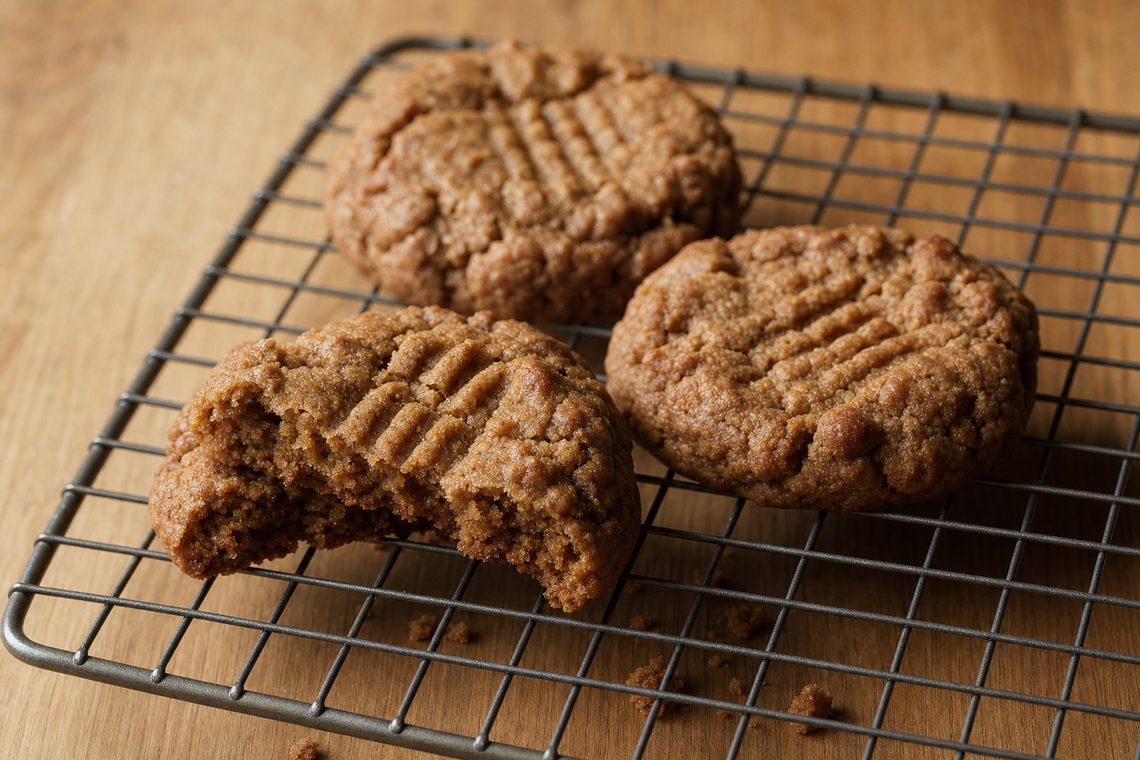
Our formula · nobody has published this one

Three ingredients, no flour

A cup of peanut butter, a cup of sugar, one egg. No flour at all, and it genuinely works.

No recipe in the 169 lands close enough to call it a match, so this one is ours, built on 250 g of all-purpose flour from where the published recipes agree.

Ingredients

  • All-purpose flour (2 cups)250 g
  • Baking soda (1/2 tsp)2 g
  • Salt (1/4 tsp)1 g

Method

  1. Pb: creamy no-stir commercial ONLY — natural PB needs technique adjustments canon spells out
  2. Mix: one bowl; the egg is the entire structural system
  3. Shape: ball; wet sugared fork, two presses — the dough is far too dense to spread
  4. Bake: 350F ~10-12 min, fully set
  5. Cool: long sheet rest — egg-only structure is fragile hot

Watch out for: Egg-size and jar variance hit structure directly with no flour buffer; the two flourless reports we have ran 7.5 edges (pure) and 2.5 (flour added to a flourless formula — don't split the difference).

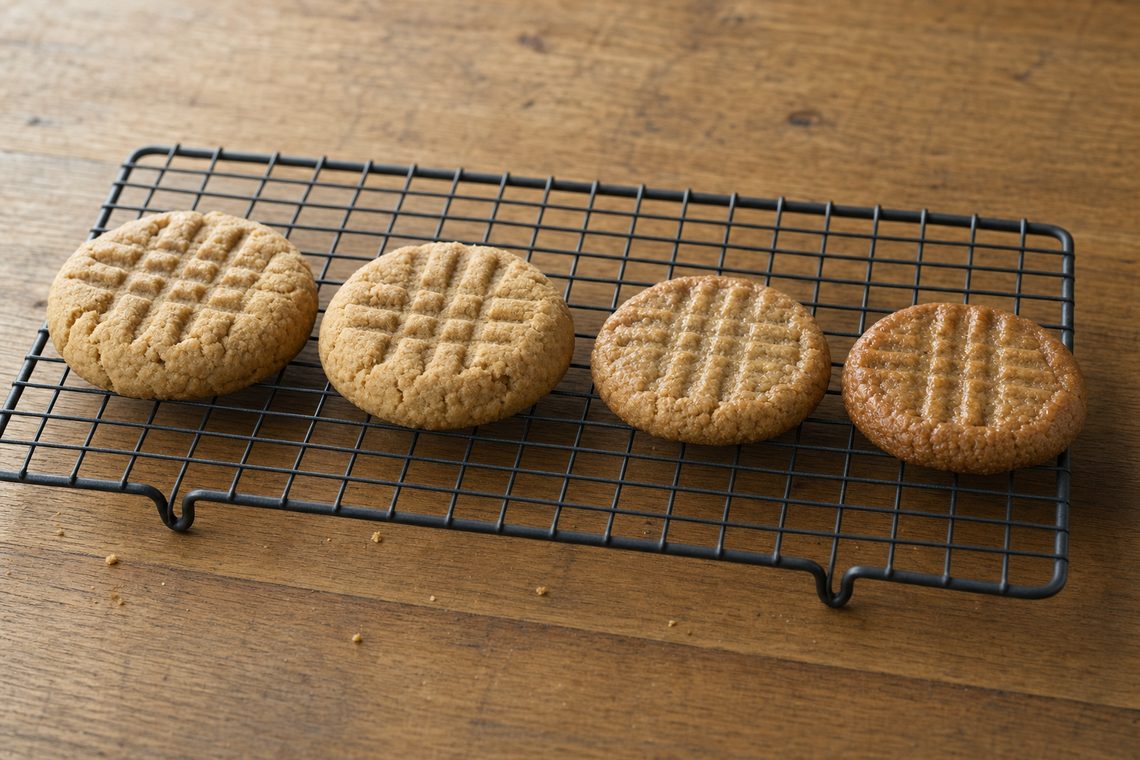
Everything aimed at chew, fighting this dough's natural tendency to go sandy.
Closest published match · of 146 chewy recipes

Soft and chewy, not crumbly

Everything aimed at chew, fighting this dough's natural tendency to go sandy.

from www.chelseasmessyapron.com 4.85 39 cooks rated it

30 minHands on
1 hr 1Waiting
24Makes
$0.31Each
IntermediateLevel

Ingredients

  • 16 tablespoons unsalted butter (melted; 1 cup)227 g
  • 1 cup brown sugar (light or dark, lightly packed)213 g
  • 1 cup granulated sugar (plus extra for rolling (optional))200 g
  • 1 cup creamy peanut butter (see note 1)258 g
  • 1/8 teaspoon almond extract (optional!)0 g
  • 1 tablespoon vanilla extract13 g
  • 2 large eggs100 g
  • 1 teaspoon baking soda5 g
  • 1/2 teaspoon salt3 g
  • 2-2/3 cups all-purpose flour (see note 2)320 g
  • 4 ounces semi-sweet baking bar (or milk or dark chocolate)113 g

Method

  1. Line a large sheet pan with a silicone baking mat (or parchment paper) and set aside.
  2. In a microwave-safe bowl, heat the butter until it’s melted. Set aside to cool back to room temperature (hot butter will melt sugars and cause greasy cookies). Once at room temperature, use a spatula to scrape every bit of butter into a large bowl and add brown sugar and granulated sugar. Mix with a large whisk until smooth, about 1 minute.
  3. Add peanut butter, almond extract (if using), and vanilla extract. Mix until combined. Add 1 egg. Mix just until ingredients are incorporated, then add the second egg. Again, mix until ingredients are just incorporated. Add baking soda and salt and mix until just incorporated. Add flour and mix again until just incorporated. Don’t overmix.
  4. Cover the dough and chill for 30 minutes, up to 1 hour—see note 3. Preheat oven to 325°F. Scoop the cookie dough and roll into large balls that are each 2 packed tablespoons (40 grams) in size (see note 4) and if desired, roll dough balls in some extra granulated sugar. Place dough balls on a lined sheet pan—6 cookies at a time—leaving ample room (2-inches) between cookies.
  5. Bake for 8–14 minutes. Ever so slightly under-baking the cookies will keep them soft and chewy. (They also bake a bit more on the sheet pan when removed from the oven.) Be careful to not overbake!
  6. Remove the cookies (if any edges are going wayward, working quickly, press the edges inwards with a metal spatula) and allow them to cool on the sheet pan 5 minutes before removing them to a cooling rack to finish cooling completely. Cool completely before dipping in chocolate (optional step).
  7. Optionally dip in chocolate: Coarsely chop the chocolate bar into evenly sized pieces and place in a microwave-safe bowl (see note 5). Microwave in bursts of 20 seconds, stirring between each burst for 15 seconds, until the chocolate is melted and smooth. Dip half of each cookie into the melted chocolate, scrape the bottom of the cookie on the bowl, then transfer the cookie to a sheet of parchment paper. Allow chocolate to set at room temperature.

Watch out for: The yolk trade: the same extra-yolk batch that bought 8.0 chew read 2.5 center — richness and set fight over the same eggs.

Needs:Nordic Ware half sheetAs an Amazon Associate we earn from qualifying purchases
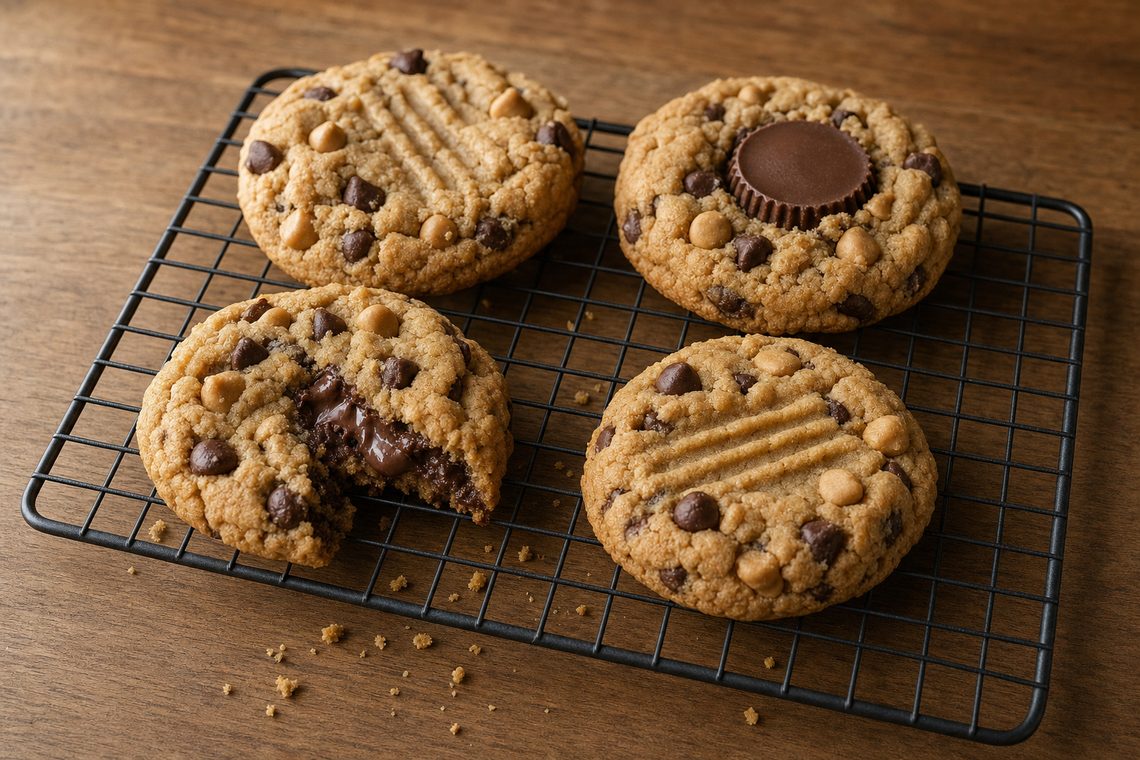
Built around what you put in or on it — chocolate, cups, kisses — doing the heavy lifting.
Closest published match · of 146 chewy recipes

Loaded with chocolate

Built around what you put in or on it — chocolate, cups, kisses — doing the heavy lifting.

from preppykitchen.com 4.95 546 cooks rated it

30 minHands on
9 minWaiting
36Makes
$0.09Each
IntermediateLevel

Ingredients

  • ¾ cup creamy peanut butter (188g)188 g
  • ½ cup unsalted butter (softened (113g))113 g
  • ½ cup granulated sugar (plus more for rolling (100g))100 g
  • ½ cup packed light brown sugar (110g)110 g
  • ¼ teaspoon salt2 g
  • 1 large egg (room temperature)50 g
  • 1 teaspoon vanilla extract4 g
  • 1½ cups all-purpose flour (180g)180 g
  • ½ teaspoon baking soda2 g
  • 36 Hersey’s chocolate kisses (unwrapped)

Method

  1. Preheat the oven to 375°F. Line cookie sheets with parchment paper.
  2. In a large mixing bowl or the bowl of a stand mixer fitted with the paddle attachment, combine the peanut butter, unsalted butter, sugars and salt. Cream together by beating on medium speed until well combined. Add the egg and vanilla. Beat until well combined. Scrape down the bowl. Add the flour and baking soda and beat on low speed just until combined.
  3. Scoop the dough and roll into 1-inch balls. Coat in additional granulated sugar if desired. Place on a prepared baking sheet 2 inches apart.
  4. Bake for 8 to 10 minutes or until the cookies look puffy and cracked and the bottom just start to turn brown. Immediately press a chocolate kiss into the center of each cookie. (The cookies will crack and that’s okay!) Allow the cookies to cool completely on the pan, until the chocolate is set. Serve or store in an airtight container for up to 1 week.

Watch out for: Hand-placing chips on top beats mixing through when structure is marginal.

Needs:Nordic Ware half sheetKitchenAid Artisan 5-qtAs an Amazon Associate we earn from qualifying purchases
What this dish forgives, including the natural-peanut-butter question people always ask.
Closest published match · of 146 chewy recipes

When you are missing something

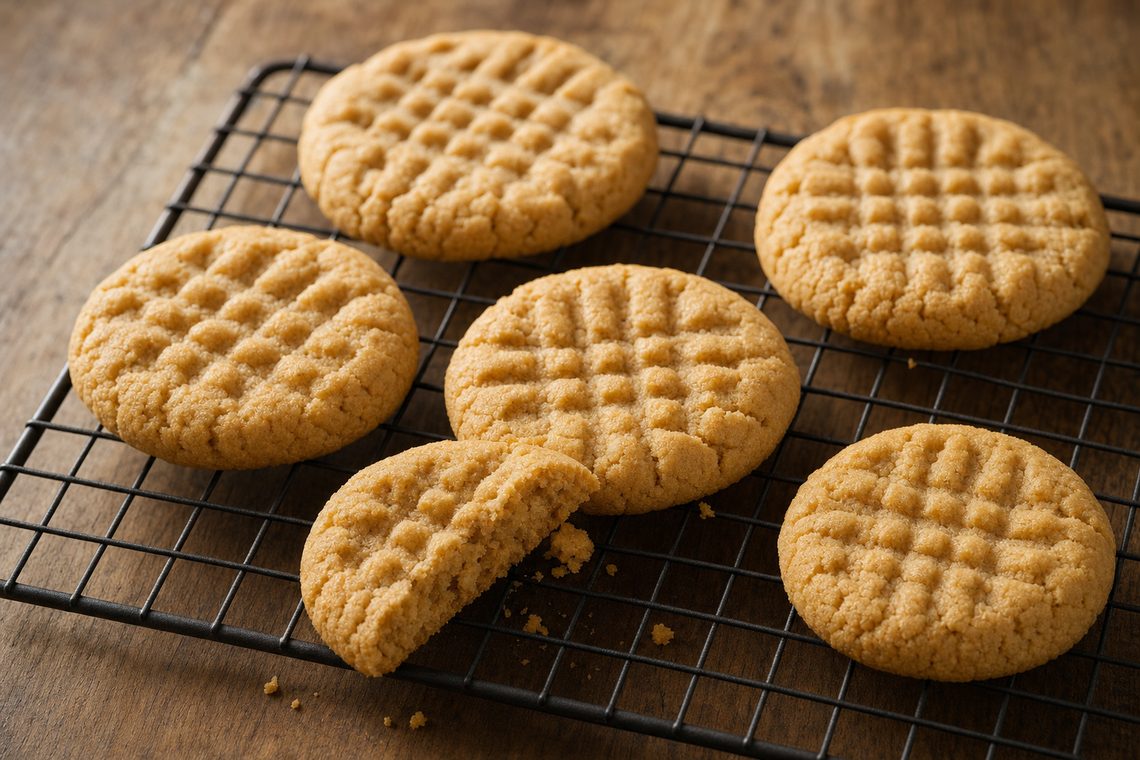
What this dish forgives, including the natural-peanut-butter question people always ask.

from www.allrecipes.com 4.7 425 cooks rated it

Ingredients

  • 0.5 cup unsalted butter
  • 0.5 cup white sugar
  • 0.5 cup packed brown sugar
  • 0.5 cup creamy peanut butter
  • 0.5 teaspoon kosher salt
  • 0.5 teaspoon baking powder
  • 0.5 teaspoon baking soda
  • 1 egg
  • 1.25 cups all-purpose flour

Method

  1. Beat together butter, white sugar, brown sugar, peanut butter, salt, baking powder, and baking soda in a stand mixer until smooth. Scrape down the sides of the bowl and beater with a spatula. Add egg and mix for about 1 minute. Slowly mix in flour with the mixer on low speed. Scrape down the sides of the bowl and beater. Continue mixing until dough comes together, about 30 seconds.
  2. Form dough into a ball, cover with plastic wrap, and refrigerate for 2 to 3 hours.
  3. Preheat the oven to 375 degrees F (190 degrees C). Line a baking sheet with a silicone baking mat.
  4. Portion cookie dough into equal-sized balls and place on the prepared baking sheet. Use damp hands to roll dough into smooth balls. Stamp each ball with a fork in a criss-cross pattern.
  5. Bake in the preheated oven until golden, about 10 minutes. Let cookies sit on the baking sheet briefly before transferring to a wire rack to cool completely.

Watch out for: The buttermilk-for-butter accident (7-cook cluster) is the exception that proves it: remove the fat entirely and the dish notices.

Need it to fit something tonight — no mixer, no long wait, no dairy? Those re-pick the recipe once JavaScript is on. With it off, you still get all 5 recipes above in full.

Why peanut butter cookies turn out crumbly

Peanut butter is about half fat and a quarter protein, so when you put a cup of it in a cookie it stands in for a lot of the butter and a lot of the flour simultaneously. That is why these recipes are the richest in the family, and why the flourless one-cup-of-each version works at all.

But the peanut protein does not join in with the structure the flour and egg are building — it sits alongside it in its own phase. That single fact explains everything odd about this cookie: it fails by going sandy and crumbly rather than tough, extra egg fixes it where milk and oil do not, the dough will not spread by itself so you have to press it flat, and — the one that surprises people — it needs baking longer rather than shorter.

Peanut butter

More of it buys flavour and costs you structure. It is not replacing one ingredient, it is replacing parts of two, and the cookie gets sandier as you add.

Egg

The rescue that works. When the dough is dry and crumbly it wants binding protein, not liquid — cooks who added an egg fixed it and cooks who added milk or oil did not.

Oven time

Backwards here. Every other cookie on this site is better pulled early. Eleven cooks say that ruins this one, and nobody disagrees.

Three things decide it. Every change on this page works by moving one of them.

What it costs

Peanut butter cookies: what each choice costs you

You cannot have all of it at once. These are the four real trades. Knowing which one you are making is most of the skill.

More peanut and more flavour, or a cookie that holds together

Adding peanut butter adds flavour and takes away structure, because the peanut protein is not part of what holds the cookie up. One cook who added an extra quarter-cup got a good centre, a middling chew and a poor structure all from the same batch — three measures disagreeing about one change, which is what it looks like when two parts of a dough are pulling away from each other.

The stabilised jar, or the natural one

This is the fat question wearing a label. Commercial peanut butter stays emulsified and behaves like a solid fat; natural peanut butter separates into oil and solids and behaves like a liquid one. That is a real difference in how the cookie spreads and sets, which is why some recipes specify conventional peanut butter outright. You can use natural — you just have to plan for it.

Full sugar and full cohesion, or less sugar and less binder

In a dough whose structure is already patchy, sugar is holding things together as well as sweetening them. The cleanest case in our reading cut the sugar and the cookie's structural integrity came out at 0.5 out of 10. Two more cooks who cut the sweetener well below standard both reported failures. Sweetness is the forgiving part; the structure is not.

The family's pull-early reflex, or this dish's bake-it-through reality

This is the loudest single finding in the dish and it reverses the advice on every other cookie page here: eleven cooks report that pulling these underdone on purpose backfires on the centre, with nobody disagreeing, and five who baked past the recipe's short default fixed exactly that problem. The peanut phase does not finish setting on the tray the way a normal cookie does.

Change your cookie recipe

Each one is measured across all 169 recipes and then converted into this recipe's own amounts. Every edit costs something. The cost is on the card.

Make it more set in the middle

More added liquid went with cookies that came out more set in the middle, across 912 versions. Flour protein plus available water plus agitation builds an elastic network that resists the bite.

Costs you: Nothing else moved that we can measure — but this lever sits on a real trade, gooey middle or cooked through, and we cannot put a number on that side of it.

measured across many versions · 912 versions

Make it chewier · flatter and wider · sweeter

More sugar went with cookies that came out chewier, across 799 versions. Sugar is hygroscopic in the dough too. It binds water and denies it to the flour, suppressing gluten.

Costs you: Also makes it crisper at the edge. Another way: more brown sugar.

measured across many versions · 799 versions

Make it more tender

More butter went with cookies that came out more tender, across 799 versions. Butter is 16-18% water. Cold or creamed butter locks that water in fat crystals where the flour cannot reach it; melted butter frees it, so gluten forms before baking.

Costs you: Nothing else moved that we can measure — but this lever sits on a real trade, chewy or cakey, and we cannot put a number on that side of it.

measured across many versions · 799 versions

Make it gooier in the middle

More egg went with cookies that came out gooier in the middle, across 225 versions.

Costs you: Nothing else moved that we can measure — but this lever sits on a real trade, gooey middle or cooked through, and we cannot put a number on that side of it.

measured across many versions · 225 versions

Make it softer at the edge

More brown sugar went with cookies that came out softer at the edge, across 203 versions. Invert sugar in molasses binds water and holds it in the crumb after baking. Retained water is what chew is.

Costs you: Also makes it chewier.

measured across many versions · 203 versions

Common peanut butter cookies problems, and how to fix them

The 5 problems cooks actually report, and what to do about each one. Open the one that sounds like yours.

Dry, sandy, crumbly

They came out dry, crumbly and sandy

That is this cookie's natural way of failing, and the fix is protein rather than liquid. Add an egg — four cooks did and rated the structure 7.5 to 8 out of 10, and it is one of the few things our measurements confirm outright. Do not add milk or oil; both are on record as not working. A dough short of binding protein does not want free water.

Shape and bake

The middles are still doughy when the time is up

Bake them longer. This is the one cookie on this site where the pull-early trick is wrong — eleven cooks report it backfiring with nobody disagreeing, and five who extended past a short stated time fixed the problem. The peanut part does not finish setting on the tray the way a normal cookie does.

They baked into shapeless blobs or dense mounds

The fork step got skipped or rushed. This dough cannot spread itself — tall mounds came out at 2 out of 10 for the centre and 1 for the edges, and skipped presses gave dense middles. Flatten to about half an inch. A fork is traditional, but the flattening is the part that matters.

The jar

The dough seems far too dry when I am mixing it

That is normal here. This dough is unusually dry and slow to come together once the flour meets the peanut fat — knead it patiently before you add anything. If it genuinely will not come together, one tablespoon of liquid at a time, not a splash.

I am going to use natural peanut butter

Fine, with your eyes open. Stir the jar until it is properly recombined first. Expect more spread and a crisper, drier result — that is the mechanism and fifteen cooks report it against five who did not notice. Compensate with a proper chill, and do not also cut the sugar.

The complete design space

Every cookie recipe we measured

The five above are the ones we would point you to. This is every recipe we measured, if you would rather look yourself.

Every dot is one recipe, placed by what it is made of — not by its title. The clusters are the cookies above; the space between them is everything else people have cooked.

Browse all 169 recipes →

What we do not know about peanut butter cookies

Where our evidence is thin, so you know which parts of this page to lean on and which to treat as a starting point.

The best-supported thing on this page contradicts the rest of this site

Every other cookie here tells you to pull it early for a soft middle. Eleven cooks say that ruins this one and nobody disagrees. We think the reason is real — the peanut part does not set on the tray the way flour and egg do — but it is worth knowing that we are overruling our own general advice on the strength of one dish's reports.

Nearly half our raw observations are unread

321 of 762 recorded modifications are not yet mined, deferred on purpose because the remainder was thinner. They are not lost and they are not counted in anything above.

The flourless version rests on two cooks

The one-cup-of-each recipe is real and it works, and our evidence about how much it varies is two reports. Treat its numbers accordingly.