Start here
four cooks, no dissent
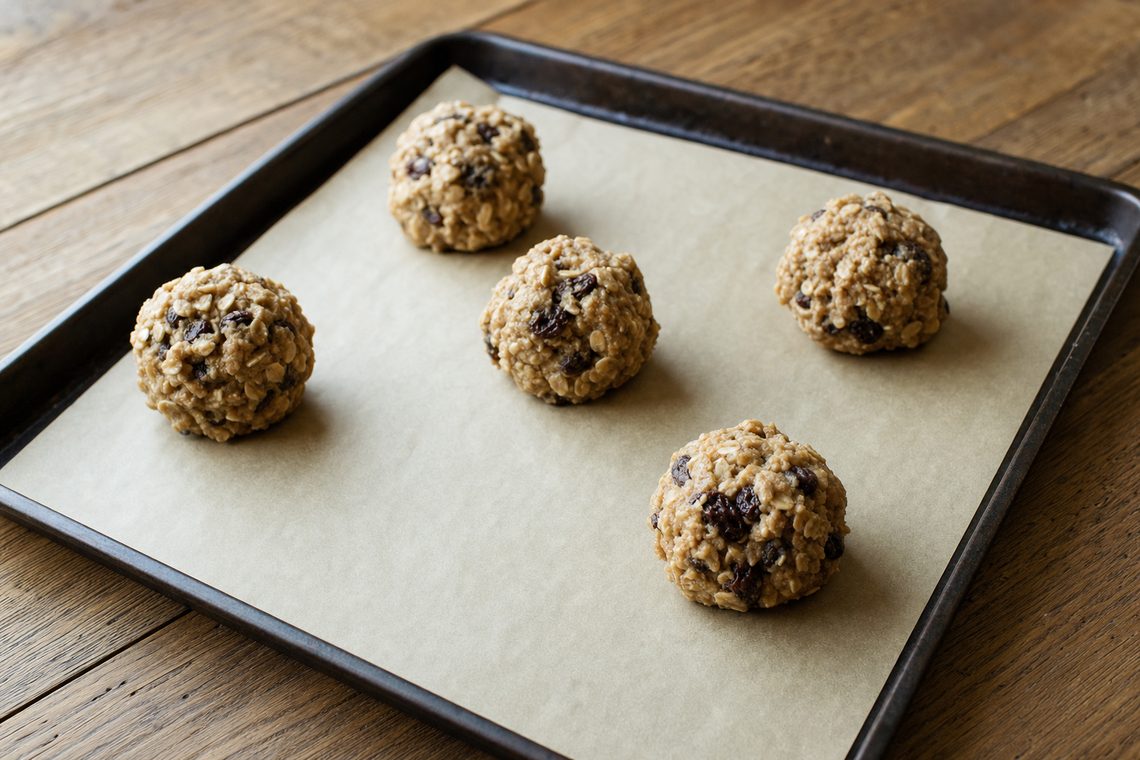
Leave the dough balls tall and rough
Cooks who left them round kept the spread in check. Cooks who flattened them with a fork got a wide cookie even after an hour in the fridge.
A ball has to melt and slump before it can spread, and that delay is exactly the time the oat matrix needs to set. Press it flat and you have handed the oven a head start it does not need. It is also the cheapest fix on this page: nothing in the bowl changes, and you can apply it to dough that is already made.
Worth knowing: one cook who flattened and then baked short got the worst of both, a raw centre and an over-browned edge from the same tray.
Then the formula
Look at the sugar and the liquid, not the fridge
When chilling fails to control spread, what is underneath is almost always a wet or sugar-heavy dough.
Sugar melts and carries the dough outward, and any liquid beyond what the recipe planned for goes the same way. This is a dough with a water-hungry third party in it already, so extra liquid does not sit quietly. If you have added milk or a splash of something to loosen a stiff dough, that is the first thing to take back out.
The one real trap
four reports
Do not swap margarine for the butter
Four cooks made exactly this swap and four cooks reported total structural failure, one of them calling it a shapeless mess.
The reason is water. Margarine carries water that butter does not, and this dough is already water-stressed because the oats want more than there is to go around. Swapping margarine for SHORTENING is a different and much milder story, because shortening never brought water either. It is the butter swap specifically that collapses.
If it is what you have: expect a flatter, softer cookie and do not also cut the flour.
Worth checking
Weigh the flour
A cup scooped from the bag can hold a third more than a cup spooned in and levelled, and this dough notices.
Under-measured flour spreads; over-measured flour dries. This dish leans on flour less than most cookies do, so it is not the first thing to check, but a scale removes it from the list of suspects for good. 120 g per cup.