Compared by formula

Gingerbread Cookies

41 recipes, read so you don't have to.

Every published gingerbread cookies recipe is a different answer to the same few questions. We resolved all 41 of them to grams, then read what cooks said happened when they changed something.

41Recipes
19Sites
240Reviews read
2,871Cook ratings
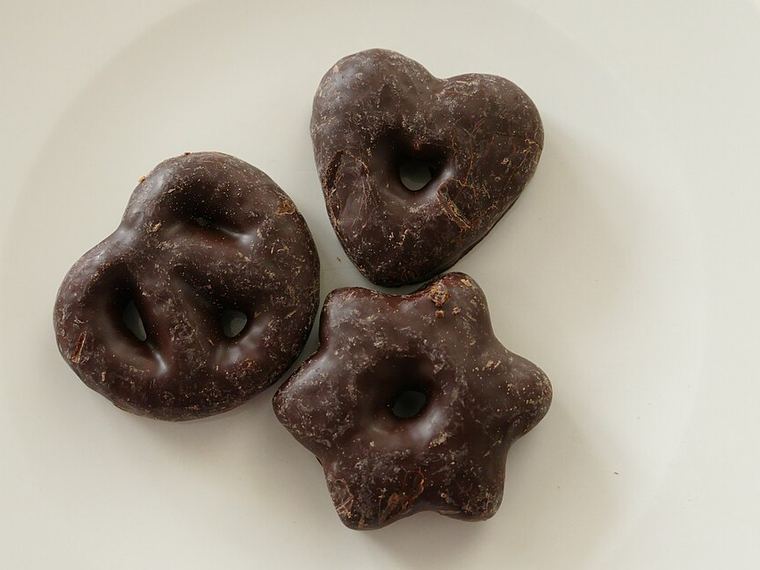
Chocolate covered gingerbread cookies 01.
Kritzolina · CC BY-SA 4.0
Start here

The one most cooks reach for

Nothing picked yet, so this is simply the most-trusted of the 41. Pick a style and the answer changes.

Tonight: these change the pick

The recipe

Make it

Weights are ours, converted from the published measures.

Ingredients

    Method

      Start here

      Find the fix for your gingerbread cookies

      Pick the texture you want, or the problem you are having. Each one is a full page with the numbers behind it.

      Why this one

      How this recipe compares to the rest

      Two of these decide which style it is. The rest are just where this recipe has a personality of its own.

      Every recipe in the same group, measured the same way. The shaded band is the middle half of the group; the line is its midpoint; the dot is this recipe.

      middle half of the group the group's midpoint this recipe
      Change it on purpose

      Four edits, written for this recipe

      Each one is measured across all 41 recipes and then converted into this recipe's own amounts. Every edit costs something. The cost is on the card.

      Make it flatter and wider

      More leavening lifts the cookie and shifts its pH, which moves both how far it rises and how dark it gets.

      Costs you: No side effect showed up in the reviews. Another way: more sugar.

      strongest lever we measured · 16 bakes

      Make it chewier

      More sugar ties up water the flour would otherwise use, so the dough spreads further and bakes crisper.

      Costs you: Also makes it flatter and wider. Another way: more brown sugar.

      strong lever · 285 bakes

      Make it gooier in the middle

      butter changes whether the butter's own water reaches the flour, which decides chewy against cakey before the oven is involved.

      Costs you: No side effect showed up in the reviews.

      strong lever · 259 bakes

      Make it less sweet

      More salt changes how sweet the cookie reads, without changing how much sugar is in it.

      Costs you: No side effect showed up in the reviews.

      measurable lever · 156 bakes

      The map

      How all the recipes compare

      One dot per published recipe, placed by what it is actually made of, not by what its title claims. Dots that sit together have near-identical formulas.

      Positions are worked out from the formula, not measured in a kitchen. Good for comparing one recipe to another, not for reading an exact value.

      other recipes most-reviewed alternatives your pick

      What cooks found out

      What cooks reported after making these

      What people actually changed, and what they said happened. Where cooks contradict each other we kept both sides rather than averaging them into something nobody said.

      Popular advice is not always advice we can measure. Cooks described 0 different changes in these reviews. Only 5 of them show up as a difference we can actually detect when we compare recipes side by side. Where an effect does not show up, that is not proof it does nothing. It means any effect is smaller than we can measure.

      The counts on each card come from an earlier, smaller reading of the reviews. They undercount how many cooks said each thing, so treat them as a floor rather than a total.

      What varies

      What actually changes your gingerbread cookies

      Some ingredients are argued over from recipe to recipe. Others every author already agrees on. Knowing which is which saves you the experiment.

      Cooks and authors still disagree about the top group. The bottom group is settled, which is a finding rather than a gap.
      IngredientWhat changing it doesStatus
      Butter Butter changes whether the butter's own water reaches the flour, which decides chewy against cakey before the oven is involved.recipes vary this
      Sugar More sugar ties up water the flour would otherwise use, so the dough spreads further and bakes crisper.recipes vary this
      Brown sugar More brown sugar holds water in the crumb, so it eats chewier and stays soft longer.recipes vary this
      Egg More egg gives the browning reaction more to work with, so it colours faster and tastes more toasted.recipes vary this
      Leavening More leavening lifts the cookie and shifts its pH, which moves both how far it rises and how dark it gets.recipes vary this
      Salt More salt changes how sweet the cookie reads, without changing how much sugar is in it.recipes vary this
      Added liquid More added liquid builds more gluten, so the cookie pulls when you bite it instead of crumbling.recipes vary this
      Chocolate A bigger chocolate keeps its centre underdone while the edge sets, widening the gap between the two.recipes vary this
      Portion A bigger portion keeps its centre underdone while the edge sets, widening the gap between the two.recipes vary this
      Cornstarch More cornstarch dilutes the protein, giving a softer set and less spread.settled · everyone agrees
      Acid More acid lifts the cookie and shifts its pH, which moves both how far it rises and how dark it gets.settled · everyone agrees
      Shortening Shortening changes whether the butter's own water reaches the flour, which decides chewy against cakey before the oven is involved.settled · everyone agrees
      Flour protein More flour protein builds more gluten, so the cookie pulls when you bite it instead of crumbling.settled · everyone agrees
      Why it works

      Why these changes work

      Every change above works through one of these. None of it is magic and none of it needs a thermometer.

      Moisture retention

      Invert sugar in molasses binds water and holds it in the crumb after baking. Retained water is what chew is.

      Gluten development

      Flour protein plus available water plus agitation builds an elastic network that resists the bite.

      Sugar-water competition

      Sugar is hygroscopic in the dough too. It binds water and denies it to the flour, suppressing gluten.

      Fat state at mixing

      Butter is 16-18% water. Cold or creamed butter locks that water in fat crystals where the flour cannot reach it; melted butter frees it, so gluten forms before baking.

      Looks wrong, isn't

      Leavening and dough pH

      Baking soda does two jobs: it makes CO2 with an acid, and it raises pH. Above about pH 8 the Maillard reaction speeds up sharply; below 7.8 it stalls and cookies stay pale.

      Maillard browning

      Reducing sugars plus amino acids from egg and flour, under heat and favourable pH, produce colour and the toasted flavours that read as 'baked'.

      Starch tenderising

      Pure starch dilutes the flour's protein without removing bulk, so there is less gluten per gram of dough.

      Bake geometry

      Mass and surface-to-volume decide how far the edge dries before the centre sets. Edge and centre are separately controllable — which is why a cookie can be crisp outside and soft inside without contradiction.

      The whole set

      All 41, grouped by the kind of gingerbread cookies they make

      Grouped by measured texture rather than by title, which is why a few recipes sit in a group their own name would not suggest. Sorted by how many cooks have rated them.

      Chewy · 23

      Show the other 15 chewy recipes

      Cakey · 12 thin evidence

      Show the other 4 cakey recipes

      Crispy · 6

      Honesty

      What we can't tell you

      The useful half of any measurement is knowing where it stops.

      Comparisons, not scores

      We can say one recipe reads further along an axis than another. We cannot put a number on it, and we do not pretend to.

      Direction, not magnitude

      Where we can name something that measurably changes the result, we can say which way it pushes. We still cannot tell you where your own gingerbread cookies will land, because that also depends on your kitchen and your equipment. here is what we can tell you when it goes wrong.

      Cakey rests on fewer recipes

      There are far fewer published cakey recipes to choose between, so that pick is provisional. We say so on the card rather than hiding it.

      Some sites give ratings but no words

      A few publishers load their reviews from somewhere we cannot read. Their star ratings count toward how trusted a recipe is; their comments could not tell us anything about what cooks changed.