The namesake decision

Which oats for oatmeal cookies?

Old-fashioned rolled oats. Quick oats work too and bake a softer, smoother cookie; instant is barely an oat by the time it reaches you, and steel-cut will not soften in the time a cookie bakes.

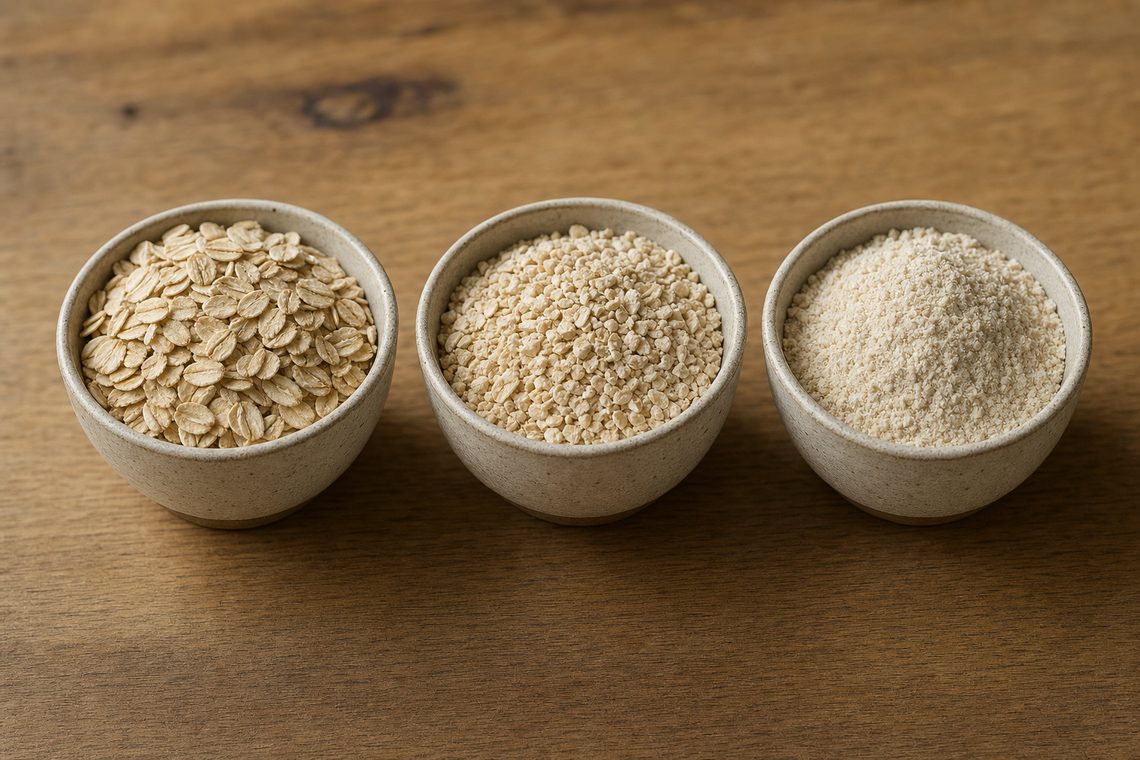
These are not five different products, they are one ladder. Steel-cut, rolled, quick, instant, oat flour: each rung is cut thinner and finer than the last, which means more surface for water to reach and less flake left to bite. Texture follows that ladder in order, so once you can place your canister on it you can predict what it will do.

Read against 187 published oatmeal cookies recipes and 2,628 reports from cooks who changed one thing.

Bowls of rolled, quick and instant oats side by side, showing the difference in flake size.
Grammy's Kitchen · illustration
One ladder, five rungs

What each kind of oat does to the cookie

In the order we would reach for them.

Use this the balance point

Old-fashioned rolled oats

Steamed and pressed flat but left whole, so they hold their shape through the bake and still soften enough to eat.

This is the rung both the published record and the baking literature settle on, and it is what a recipe means when it just says “oats”. You get visible flakes, a chew that pushes back, and enough water uptake to thicken the dough without drying it out. If you have them, the decision is made.

Also fine six cooks, no dissent

Quick oats, for a softer, smoother cookie

Same oat, cut smaller and rolled thinner, so it drinks water faster and disappears further into the dough.

Cooks who swapped them in reported a measurably softer edge and a smoother, more uniform cookie, with nobody reporting the opposite. The warning you will read elsewhere is that quick oats make a cookie crumble; that did not show up at any scale we can see. Softer, yes. Falling apart, no. A couple of cooks actively preferred the chew they got.

Worth knowing: this is the one swap on the ladder that is genuinely a preference rather than a compromise.

At a push

Instant oats will work and will not taste like much

Instant is pre-cooked, dried and cut finest of all, so it behaves closer to a soft flour than to an oat.

You will get a cookie. What you will not get is the thing that makes an oatmeal cookie worth making: there is almost no flake left to give you texture, and the oat flavour goes with it. Use it if it is what is in the cupboard tonight, and do not judge the recipe by the result.

Do not a different grain entirely

Steel-cut oats will stay hard

These are sliced groats, never steamed and never flattened, and they are not on the same ladder as the rest.

A cookie bakes for ten to twelve minutes. Steel-cut oats need far longer than that, with far more water than a dough has, before they soften at all. They come out of the oven essentially as they went in: hard grit in an otherwise finished cookie. Soaking or cooking them first makes them a different ingredient with different water, not a substitute.

A different dish

Oat flour makes something else, deliberately

Ground to powder, it is a flour rather than an inclusion, and it swaps against your wheat flour rather than your oats.

It bakes tender and faintly sweet and it carries less structure than wheat, so it is a weight class down. Baking literature starts measuring the structural loss at around a tenth of the flour replaced, which is a useful place to stop if you are experimenting rather than following a recipe written for it.
If you are mid-recipe

Swapping one for another

Cup for cup where it works, and where it does not.

What to expect when a recipe asks for one oat and you have another.
Recipe asks forYou have What to expect
RolledQuick Swap cup for cup. Softer edge, smoother crumb, slightly less visible flake.
QuickRolled Swap cup for cup. More chew and more visible oat; pulse them a few times if you want the original texture.
RolledInstant Works, and costs you most of the texture and flavour. Nothing to adjust, it is simply a plainer cookie.
AnythingSteel-cut Do not swap. Cook or soak them first and you have changed the dough's water, so follow a recipe written for them.
One more thing you can do to them

Toasting the oats first

Worth trying, and nobody we read has tried it.

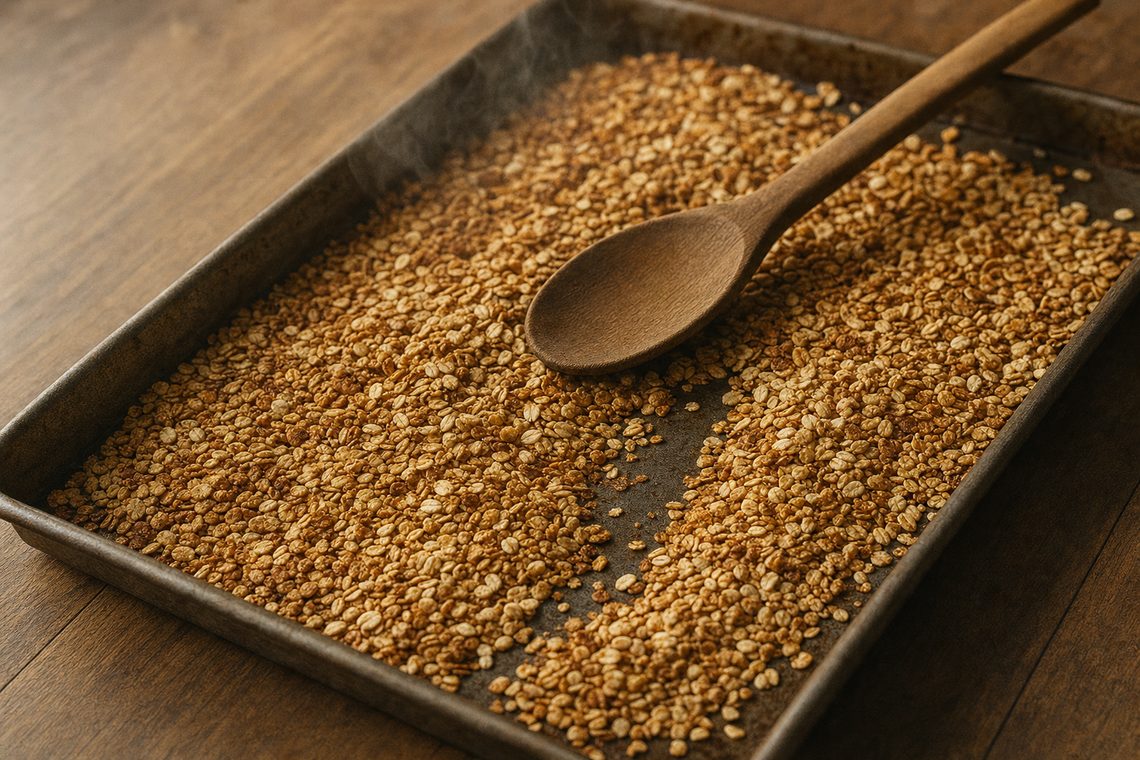
Spreading the oats on a tray and toasting them until they smell nutty, before they go anywhere near the dough, is a well-regarded move: it deepens the flavour and pairs especially well with browned butter and dark sugar. We are telling you that on the strength of the baking literature, because across every modification a cook reported to us, not one of them toasted their oats. Not a small number. None.

So treat it as a promising thing to try rather than something we can stand behind, and know that it changes flavour rather than structure. The oats were already kilned and steamed at the mill, which is the processing that decides how they behave in the dough. Toasting is seasoning on top of a decision already made.

Rolled oats toasting on a baking sheet, some pale and some golden.
Grammy's Kitchen · illustration
Straight with you

Where we would be guessing

So you know how far to trust the rest of this page.

No recipe split behind this one

Our 187 recipes are resolved for how they handle the butter, the rest and the shaping, but not for which oat they call for. So this page rests on the baking literature and on cooks reporting their own swaps, not on a rolled-versus-quick comparison across the corpus. We would rather tell you that than dress it up as a measurement.

Softer is measured, crumbling is not

Cooks who moved to quick oats consistently reported a softer edge. The crumbling that other pages warn about did not appear in what we read, which is worth saying plainly: we looked for it rather than simply not mentioning it.

Brands differ inside a category

One producer's rolled oat is thicker than another's, and “old-fashioned” is a description rather than a standard. The ladder holds; the exact rung your canister sits on can shift a little between brands.