Compared by formula

Snickerdoodles

208 recipes, read so you don't have to.

Every recipe is a different answer to the same few questions. Tell us the cookie you are after and we will hand you the closest one anyone has published, plus what to change to suit you.

208recipes read
5cookies, not one
5problems solved
Snickerdoodles, as published.
Grammy's Kitchen · illustration
Start here

What kind of snickerdoodle do you want?

Five real versions, not one "best." Pick one and the recipe's right here — a published, rated one, with weights.

Any limits tonight?
The middle of 175 recipes — the leanest dough in the whole cookie family, and deliberately so.
Closest published match · of 74 crispy recipes

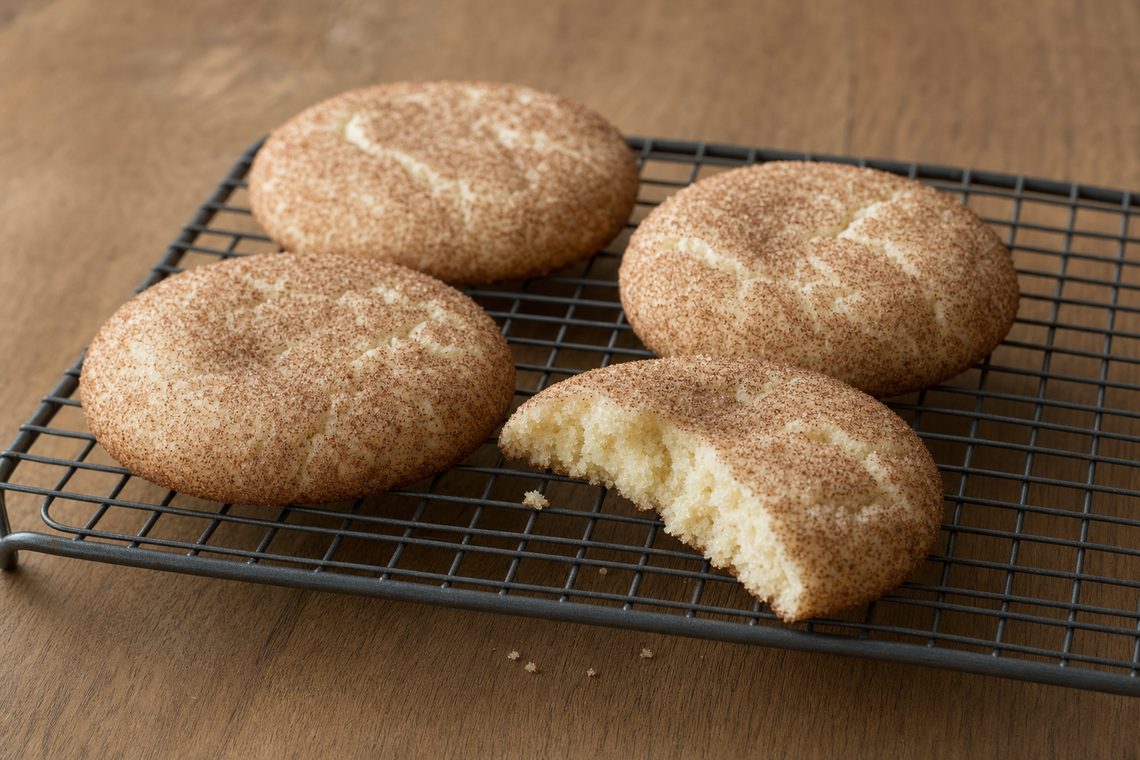
The standard snickerdoodle

The middle of 175 recipes — the leanest dough in the whole cookie family, and deliberately so.

from www.chelseasmessyapron.com 4.99 65 cooks rated it

25 minHands on
1 hr 19Waiting
22Makes
$0.19Each
IntermediateLevel

Ingredients

  • 16 tablespoons unsalted butter (melted and cooled to room temperature)227 g
  • 2/3 cup granulated sugar133 g
  • 2/3 cup light brown sugar (firmly packed)142 g
  • 1 large egg50 g
  • 1 large egg yolk50 g
  • 2 teaspoons vanilla extract9 g
  • 2-3/4 cups flour (see note 1)330 g
  • 1-1/2 teaspoons cream of tartar7 g
  • 1/2 teaspoon salt3 g
  • 1 teaspoon baking soda5 g
  • 3/4 teaspoon ground cinnamon2 g
  • 1/4 cup granulated sugar50 g
  • 3 teaspoons ground cinnamon8 g

Method

  1. In a large microwave-safe bowl, melt butter, then let cool to room temperature. Ensure it’s not hot to avoid greasy cookies.
  2. In a large bowl, combine flour, cream of tartar, salt, baking soda, and 3/4 teaspoon ground cinnamon.
  3. In a separate bowl, mix melted and cooled butter with granulated and brown sugar until well emulsified. Add whole egg, egg yolk, and vanilla extract. Whisk until smooth.
  4. Mix dry ingredients into wet ingredients until just combined, ensuring there are no streaks of flour. Avoid overmixing. Cover dough tightly and refrigerate 1 hour.
  5. Preheat oven to 325°F. Stir together cinnamon sugar coating ingredients in a small bowl.
  6. Portion dough into 45-gram balls (2 packed tablespoons) and shape them into tall balls. Roll dough balls generously in cinnamon-sugar mixture. Return shaped dough balls to the fridge for 15–20 minutes or until they firm up.
  7. Place dough balls on a sheet pan lined with parchment or a silicone baking mat with ample spacing (about 6 at a time); bake 9–12 minutes. Avoid overbaking; slight under-baking is ideal! After baking, if any cookies have uneven edges, gently press them inward with a metal spatula. Remove tray from oven and let cookies rest on the sheet 5 minutes before transferring them to a cooling rack.

Watch out for: The tops-just-cracked pull cue; minutes don't transfer between 300F and 400F recipes.
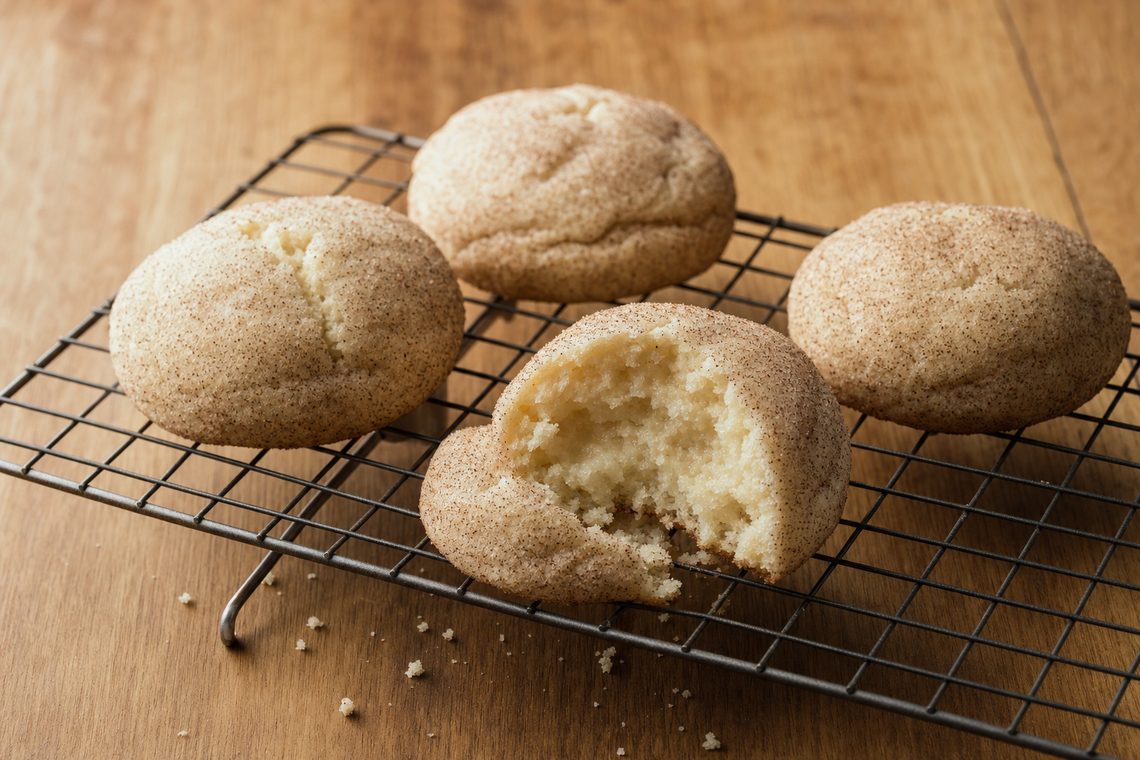
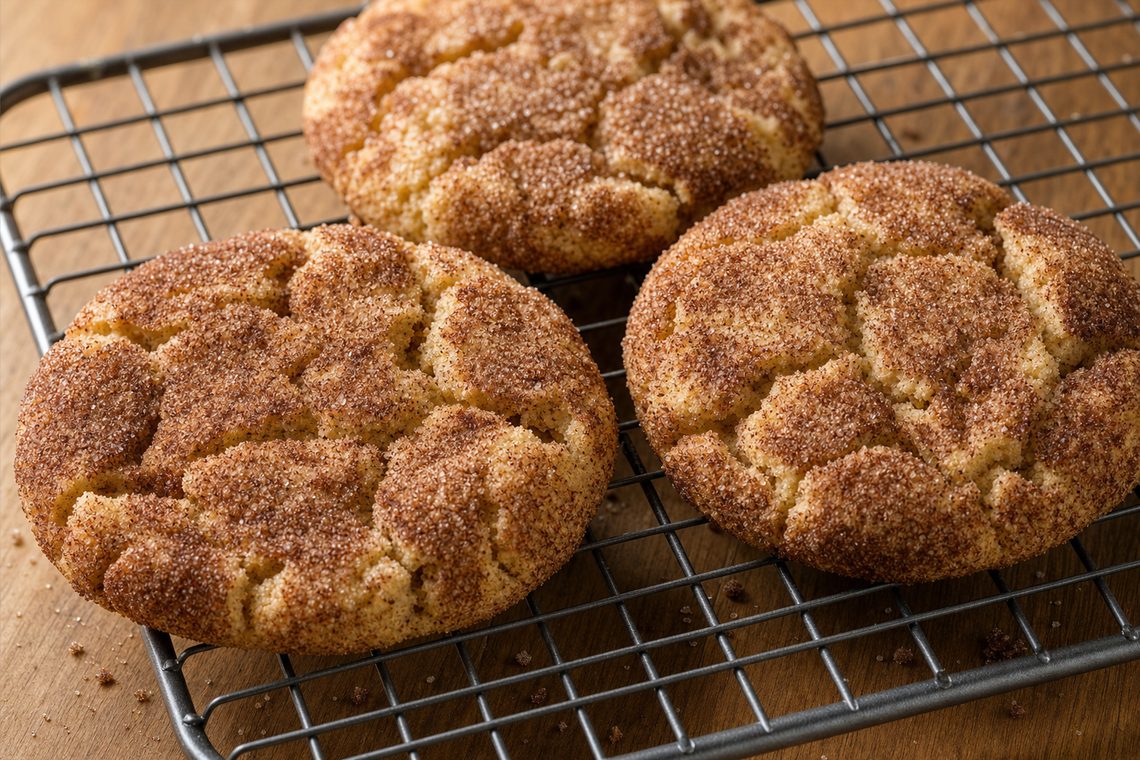
Needs:Nordic Ware half sheeta cooling rackAs an Amazon Associate we earn from qualifying purchases
Maximum soft and thick, with the cream of tartar doing everything it is capable of.
Closest published match · of 106 cakey recipes

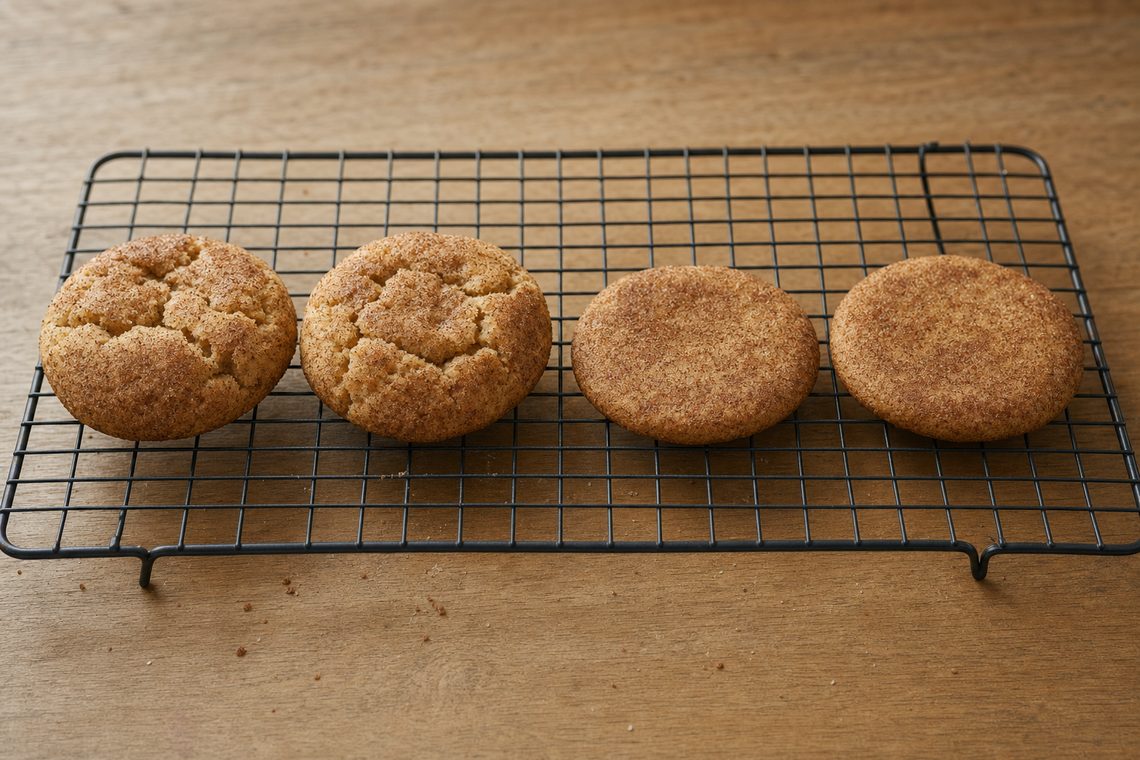
Thick and pillowy

Maximum soft and thick, with the cream of tartar doing everything it is capable of.

from www.allrecipes.com 4.7 981 cooks rated it

Ingredients

  • 1 cup shortening
  • 1.5 cups white sugar
  • 2 eggs
  • 2.75 cups all-purpose flour
  • 1 teaspoon baking soda
  • 2 teaspoons cream of tartar
  • 0.5 teaspoon salt
  • 2 tablespoons white sugar
  • 2 teaspoons ground cinnamon

Method

  1. Preheat oven to 375 degrees F (190 degrees C).
  2. In a medium bowl, cream together the shortening and 1 1/2 cups sugar. Stir in the eggs. Sift together the flour, baking soda, cream of tartar, and salt; stir into the creamed mixture until well blended. In a small bowl, stir together the 2 tablespoons of sugar, and the cinnamon. Roll dough into walnut sized balls, then roll the balls in the cinnamon-sugar. Place them onto an unprepared cookie sheet, two inches apart.
  3. Bake for 8 to 10 minutes in the preheated oven. Edges should be slightly brown. Remove from sheets to cool on wire racks.

Watch out for: Over-whipping trades chew for cake — one cook who whipped it to a mousse read 3.0 chew on a thick cookie.

Built around the shell: full coverage on the coat and a pull timed to the crack.
Closest published match · of 106 cakey recipes

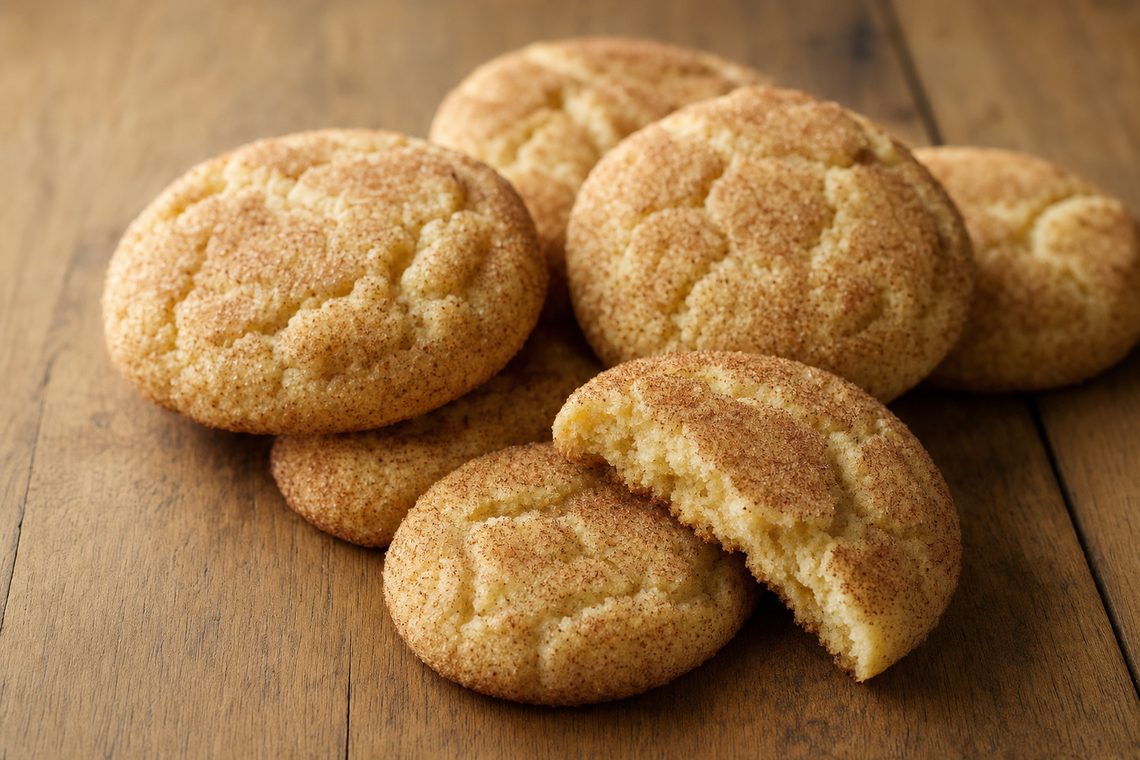
For the crackled top

Built around the shell: full coverage on the coat and a pull timed to the crack.

from tastesbetterfromscratch.com 4.98 121 cooks rated it

15 minHands on
56 minWaiting
24Makes
$0.15Each
BeginnerLevel

Ingredients

  • 1/2 cup butter (softened)114 g
  • 1/2 cup shortening* (or use all butter)102 g
  • 1 1/2 cups granulated sugar300 g
  • 2 large eggs100 g
  • 2 teaspoons vanilla extract9 g
  • 2 3/4 cups all-purpose flour330 g
  • 2 teaspoons cream of tartar10 g
  • 1 teaspoon baking soda5 g
  • 1/4 teaspoon salt2 g
  • 4 Tablespoons granulated sugar (for rolling the dough balls)50 g
  • 1 Tablespoon ground cinnamon (for rolling the dough balls)8 g

Method

  1. Preheat oven to 375 degrees F.
  2. Dough: Cream together butter, shortening, and 1 1/2 cups sugar. Add eggs and vanilla and mix well. Add the flour, cream of tartar, baking soda and salt and stir until combined.
  3. Chill dough for at least 30 minutes, if possible (or up to 3 days).
  4. Shape dough by heaping tablespoonfuls into balls, to make about 24 cookies.
  5. Cinnamon sugar: In a separate bowl, mix the 4 tablespoons granulated sugar and the cinnamon. Roll balls of dough in mixture. Place dough about 2 inches apart on a parchment lined baking sheet.
  6. Bake 8 to 10 minutes (don't over bake!). Allow to cool for a few minutes on the baking sheet before remove to a cooling rack to cool completely.

Watch out for: Raw/coarse coating sugar measurably fails edges and centers; humidity is the invisible enemy of a drying shell.

Needs:Nordic Ware half sheeta cooling rackAs an Amazon Associate we earn from qualifying purchases
The sourness turned up, the way the older recipes read.
Closest published match · of 106 cakey recipes

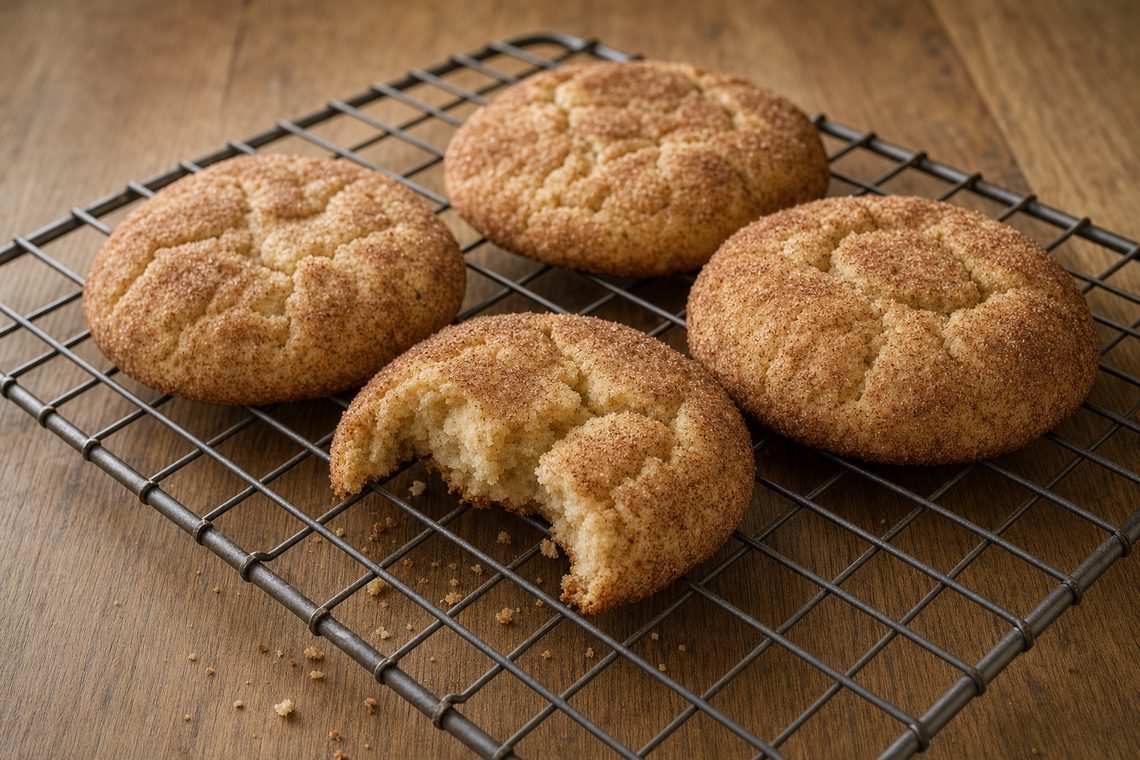
Tangier, the old-fashioned way

The sourness turned up, the way the older recipes read.

from www.allrecipes.com 4.6 493 cooks rated it

Ingredients

  • 1 cup shortening
  • 1.5 cups white sugar
  • 2 eggs
  • 2.75 cups sifted all-purpose flour
  • 1 teaspoon baking soda
  • 2 teaspoons cream of tartar
  • 0.5 teaspoon salt
  • 2 tablespoons white sugar
  • 2 teaspoons ground cinnamon

Method

  1. Preheat the oven to 375 degrees F (190 degrees C). Grease cookie sheets.
  2. In a medium bowl, cream together the shortening and sugar. Add eggs one at a time, mixing after each. Sift together the flour, baking soda, cream of tartar and salt; stir into the creamed mixture until well blended.
  3. In a small shallow bowl, stir together the 2 tablespoons of sugar with the cinnamon. Roll the dough into walnut sized balls and roll the balls in the sugar mixture. Place cookies 2 inches apart on the prepared cookie sheet. Bake for 8 to 10 minutes in the preheated oven. Cookies should be slightly golden at the edges. Remove to cool on wire racks.

Watch out for: This is the profile a baking-powder substitution kills twice over.

What this dish forgives. It is a lean formula and it polices its own boundaries fairly sharply.
Closest published match · of 74 crispy recipes

When you are missing something

What this dish forgives. It is a lean formula and it polices its own boundaries fairly sharply.

from www.food.com 4.5 166 cooks rated it

Ingredients

  • 1/2 cup butter, softened
  • 1/2 cup granulated sugar
  • 1/3 cup brown sugar (I used light brown)
  • 1 egg
  • 1/2 teaspoon vanilla
  • 1 1/2 cups flour
  • 1/4 teaspoon salt
  • 1/2 teaspoon baking soda
  • 1/4 teaspoon cream of tartar
  • 2 tablespoons granulated sugar
  • 1 teaspoon cinnamon

Method

  1. In a large bowl, cream butter and sugars at high speed.
  2. Add egg, vanilla, and beat until smooth.
  3. In another bowl, combine flour, salt, baking soda, and cream of tartar.
  4. Pour dry ingredients into the wet ingredients, mix well.
  5. Preheat oven to 300° while you let dough rest 30-60 minutes in fridge.
  6. In a small bowl combine topping.
  7. Take about 2 1/2 tablespoons of dough and roll it into a ball.
  8. Roll this dough in the cinnamon/sugar mixture and press onto greased cookie sheet.
  9. Bake cookies 10-12 minutes, NO MORE.
  10. *Cookies may seem undercooked but will develop.
  11. Don't roll your dough into too big of a ball; they may not turn out in that much time if you do that.
  12. It happened to me.
  13. lol.
  14. If the cookies don't turn out, please try again.
  15. It's a very good cookie, it's just all a matter of getting the cooking time right.

Watch out for: Chill DURATION is the real variable — 1-3+ fridge hours controls spread (1.5-2.0); brief freezer stints fail at 9.5-10 spread despite feeling colder.

Need it to fit something tonight — no mixer, no long wait, no dairy? Those re-pick the recipe once JavaScript is on. With it off, you still get all 5 recipes above in full.

What cream of tartar actually does

Everyone will tell you cream of tartar makes a snickerdoodle taste tangy. It does, a bit. But that is not why it is in there, and the cooks prove it: nineteen people swapped it for baking powder and complained about the cookie being thin, flat and dull. Not one of them said it tasted less sour.

What it is actually doing is stopping the sugar from setting hard. There is more of it in the recipe than the raising needs, and the extra keeps the sugar in a soft, non-crystalline state — which is exactly what that pillowy chew is. Swap it for baking powder and the cookie still rises. It just stops being a snickerdoodle.

Cream of tartar

Buys the chew, not the tang. Use the full amount the recipe asks for; that is the ingredient doing the work everybody credits to something else.

The coat

Load-bearing, and how you apply it matters. Rolling coats the whole surface so it dries evenly into the shell that cracks. Sprinkling it on top fails the edges and the centres at once.

The pull

This cookie puffs and then falls as it cools, and the fall is the crackle. Pull it when the tops have just cracked — every recipe's stated minutes are useless here because the ovens range from 300 to 400°F.

Three things decide it. Every change on this page works by moving one of them.

What it costs

Snickerdoodle: what each choice costs you

You cannot have all of it at once. These are the four real trades. Knowing which one you are making is most of the skill.

The chemistry, or the thing already in your cupboard

Baking powder will raise this cookie perfectly well — two teaspoons replaces the usual tartar-and-soda pair. What it will not do is keep the sugar soft, and that is where the chew comes from. Nineteen cooks made the swap and described the result as thin, flat and dull. One managed to keep good chew. Know which you are buying.

Rolling every ball, or sprinkling the tray

The cinnamon sugar is not decoration — it dries into a skin that sets the surface, and the crack in that skin is the look. So coverage is the whole thing. Cooks who sprinkled it on top instead of rolling reported failures at the edges and in the centres at the same time, because a partial coat dries unevenly.

Pull at the puff, or wait for proof and lose it

The cookie rises, then sinks as it cools, and the sinking is what makes the crackle. Wait until it looks unambiguously done and you have passed the window — the result is cakey and dry. Six cooks report the same trap: the visual cues everyone uses arrive too late, and the recipes' stated times are worthless because their ovens run anywhere from 300 to 400°F.

The leanest dough in the family, or a richer one that is not this cookie

A snickerdoodle carries about two-thirds as much fat as flour — less than any other cookie here — and that scarcity is not an accident. It leaves the flour enough water to set a real crumb. Enrich it and you get a different, softer, less structured cookie; we caught ghee thinning the edges for exactly this reason.

Change your cookie recipe

Each one is measured across all 208 recipes and then converted into this recipe's own amounts. Every edit costs something. The cost is on the card.

Make it chewier · flatter and wider · sweeter

More sugar went with cookies that came out chewier, across 799 versions. Sugar is hygroscopic in the dough too. It binds water and denies it to the flour, suppressing gluten.

Costs you: Nothing else moved that we can measure — but this lever sits on a real trade, chewy or cakey, and we cannot put a number on that side of it. Another way: more brown sugar.

measured across many versions · 799 versions

Make it more tender · gooier in the middle

More butter went with cookies that came out more tender, across 799 versions. Butter is 16-18% water. Cold or creamed butter locks that water in fat crystals where the flour cannot reach it; melted butter frees it, so gluten forms before baking.

Costs you: Also makes it flatter and wider and more crumbly.

measured across many versions · 799 versions

Make it more set in the middle

More added liquid went with cookies that came out more set in the middle, across 150 versions. Flour protein plus available water plus agitation builds an elastic network that resists the bite.

Costs you: Nothing else moved that we can measure — but this lever sits on a real trade, gooey middle or cooked through, and we cannot put a number on that side of it.

measured across many versions · 150 versions

Make it more crumbly

More egg went with cookies that came out more crumbly, across 23 versions.

Costs you: Nothing else moved that we can measure — but this lever sits on a real trade, flat or thick, and we cannot put a number on that side of it. Another way: more butter.

thin evidence — treat as a hint · 23 versions

Common snickerdoodle problems, and how to fix them

The 5 problems cooks actually report, and what to do about each one. Open the one that sounds like yours.

The chew and the tartar

I do not have cream of tartar

You can substitute, but know what you are giving up. Two teaspoons of baking powder replaces a two-teaspoon-tartar-plus-one-teaspoon-soda recipe and raises the cookie correctly — note the total goes DOWN, not across. What it cannot do is keep the sugar soft, so expect something crisper and flatter. Nineteen cooks made this swap and described a texture problem, not a flavour one.

I want it chewier but still soft

Work the sugar, not the flour. Use the full dose of cream of tartar — that is the ingredient keeping the sugar soft and the chew alive. Roll smaller balls, which one cook rated 8 out of 10 for chew. Pull at the crack. And do not whip the butter and sugar to a mousse; this is a lean dough and over-aerating it works against you.

The look

There is no crackle on top

The shell either never dried or never broke. Three things to check: whether your raising agent is still alive (expired leavening means no pressure underneath), whether you rolled the balls rather than sprinkling the tops, and whether you pulled them at the right moment. The crack happens as they sink.

The bake

They spread flat even though I chilled the dough

Check what the chill actually was. Five to seven minutes in the freezer is not a chill — cookies chilled that way spread as badly as unchilled ones, 9.5 and 10 out of 10 on record. This dough wants one to three real hours in the fridge. Baking from frozen does not work here either.

The middles look raw but the time is up

Trust the tops, not the timer. The recipes in our set run anywhere from 300 to 400°F, so their stated minutes do not transfer to your oven at all. The cue is the tops having just cracked — that is this cookie's own doneness signal, and it is a better one than the clock.

The complete design space

Every cookie recipe we measured

The five above are the ones we would point you to. This is every recipe we measured, if you would rather look yourself.

Every dot is one recipe, placed by what it is made of — not by its title. The clusters are the cookies above; the space between them is everything else people have cooked.

Browse all 208 recipes →

What we do not know about snickerdoodle

Where our evidence is thin, so you know which parts of this page to lean on and which to treat as a starting point.

We predicted cooks would argue about the tang, and they never did

Before reading any reviews we wrote down that the cream of tartar argument would show up in the language of flavour. It did not — nineteen substitution reports and every one of them is about texture. Losing that prediction is how we found the actual mechanism, so it is on the page rather than quietly deleted.

Nobody in our reading says the word "crackle"

The cracked top is this cookie's signature and our cooks never name it. Everything on this page about the shell and the crack comes from the baking literature rather than from a reviewer telling us what happened to theirs.

Nobody records their oven temperature, and the recipes disagree by 100°F

The recipes in our set bake anywhere from 300 to 400°F, and reviewers almost never say which they used or how their oven actually runs. That makes every time-based reading on this page unreliable, which is exactly why the advice is to watch the cookie instead.