Compared by formula

Sugar Cookies

211 recipes, read so you don't have to.

Every recipe is a different answer to the same few questions. Tell us the cookie you are after and we will hand you the closest one anyone has published, plus what to change to suit you.

211recipes read
5cookies, not one
5problems solved
Sugar Cookies, as published.
Grammy's Kitchen · illustration
Start here

What kind of sugar cookies do you want?

Five real versions, not one "best." Pick one and the recipe's right here — a published, rated one, with weights.

Any limits tonight?
The middle of the classic half of the recipes. Granulated sugar, plain flour, spreads and sets.
Closest published match · of 104 crispy recipes

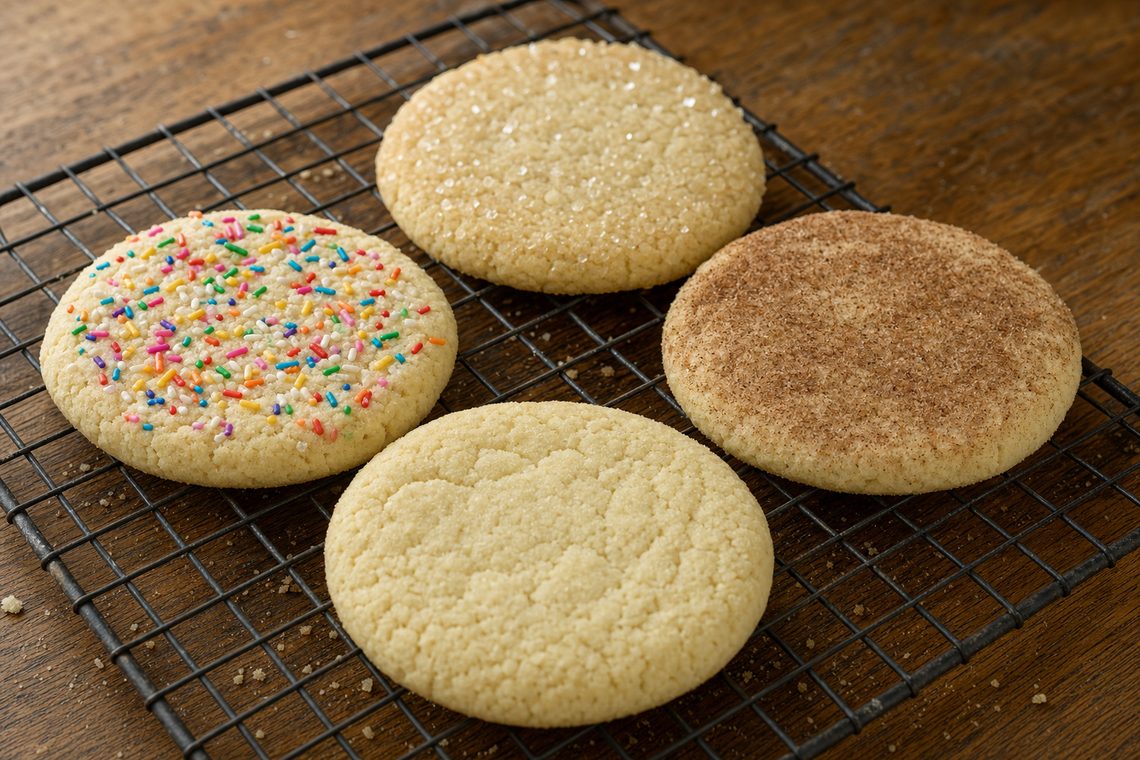
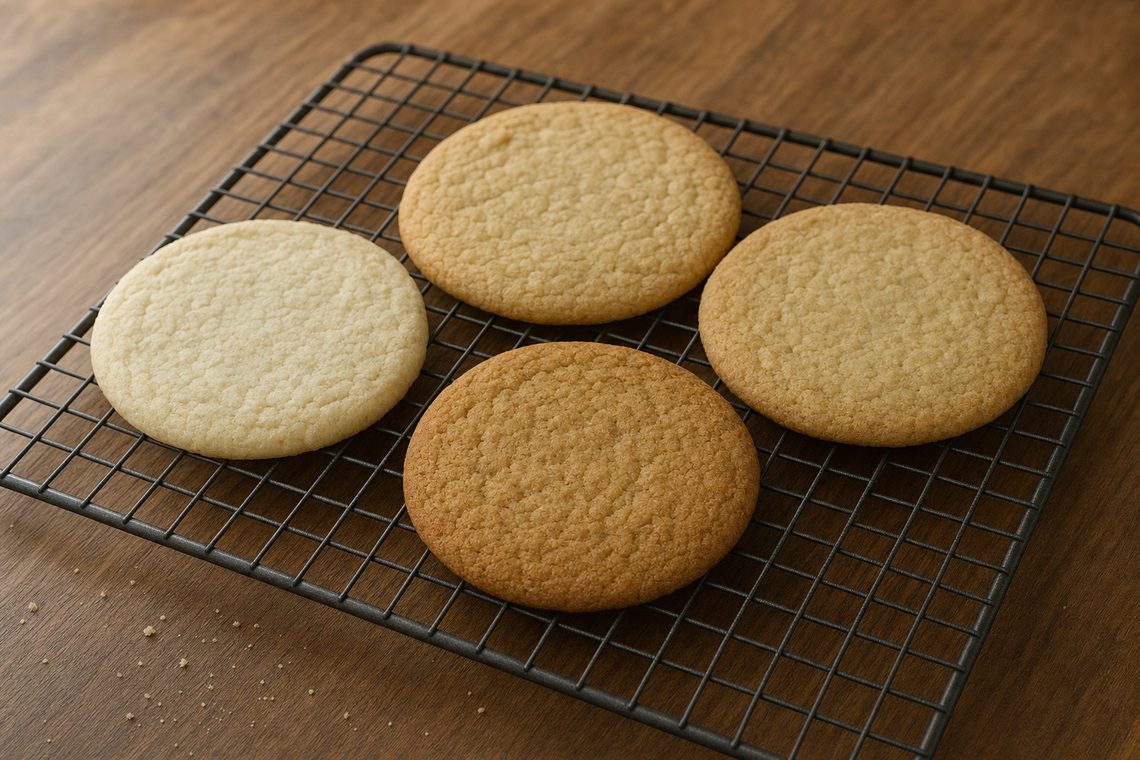
The classic drop sugar cookie

The middle of the classic half of the recipes. Granulated sugar, plain flour, spreads and sets.

from prettysimplesweet.com 4.93 84 cooks rated it

20 minHands on
25 minWaiting
24Makes
$0.13Each
BeginnerLevel

Ingredients

  • 2 1/2 cups (300g) all-purpose flour300 g
  • ½ teaspoon baking soda2 g
  • ½ teaspoon fine salt3 g
  • 1 cup (2 sticks/227g) unsalted butter, softened to room temperature227 g
  • 2/3 cup (130g) granulated sugar130 g
  • 3/4 cup (85g) powdered sugar85 g
  • 1 large egg50 g
  • 1 teaspoon vanilla extract4 g
  • ¼ cup (50g) granulated sugar, for rolling50 g

Method

  1. Preheat oven to 350°F/180°C. Line 2 baking sheets with parchment paper. Set aside.
  2. In a medium bowl, sift together flour, baking soda, and salt. Set aside.
  3. In a mixer bowl fitted with the paddle attachment, beat butter, granulated sugar, and powdered sugar on medium-low speed for 4 minutes. Beat in egg and vanilla extract just until combined. Add flour mixture and beat just until combined. Do not overmix.
  4. Place ¼ cup sugar in a small bowl. Shape dough into balls, the size of 1.5 tablespoons each (I use this ice cream scoop for that), then roll them in the sugar and place on the cookie sheets, spacing them 2-inches apart. Bake for 11-12 minutes until cookies just begin to brown at the edges, but the center is still soft (you don't want to overbake them). Allow cookies to cool on baking sheet for 5-10 minutes, then gently transfer to a wire rack to cool completely.
  5. Store cookies at room temperature in an airtight container for up to 3 days. Cookies can also be frozen for up to 2 months.

Watch out for: The bimodal trap: median numbers describe the classic mode, not the Lofthouse mode — do not average the two dishes.

Needs:KitchenAid Artisan 5-qtNordic Ware half sheetparchment papera cooling rackAs an Amazon Associate we earn from qualifying purchases
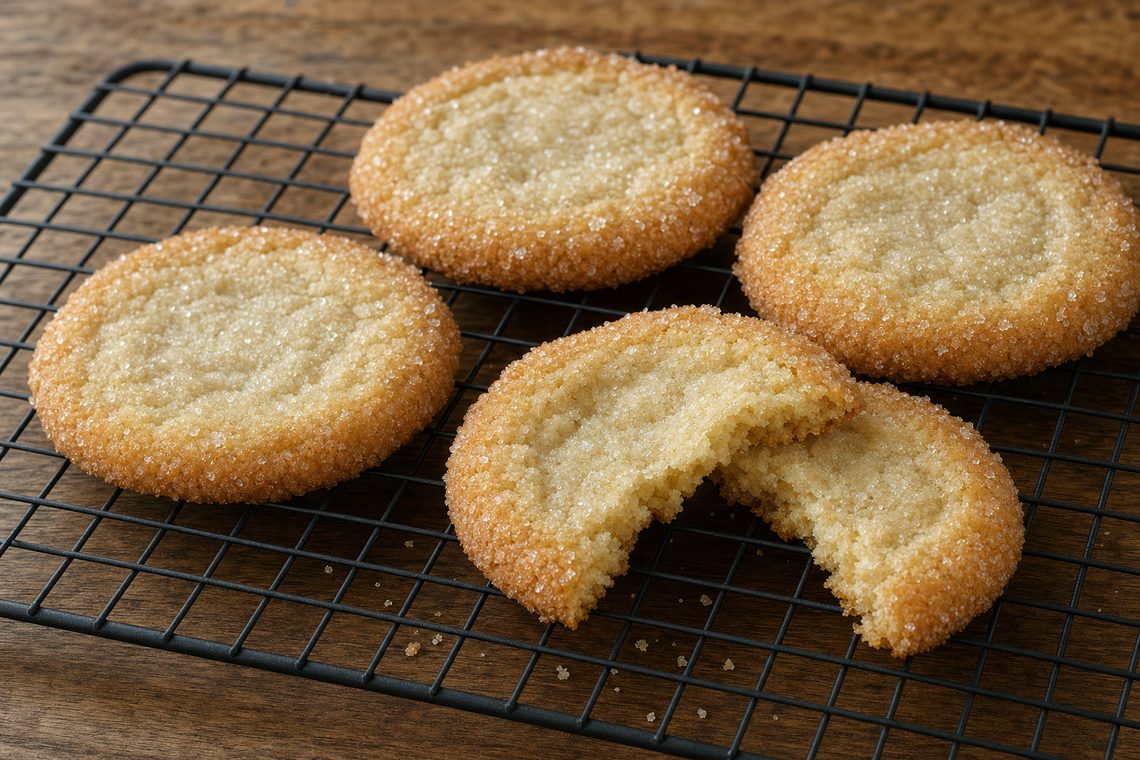
Closest published match · of 98 cakey recipes

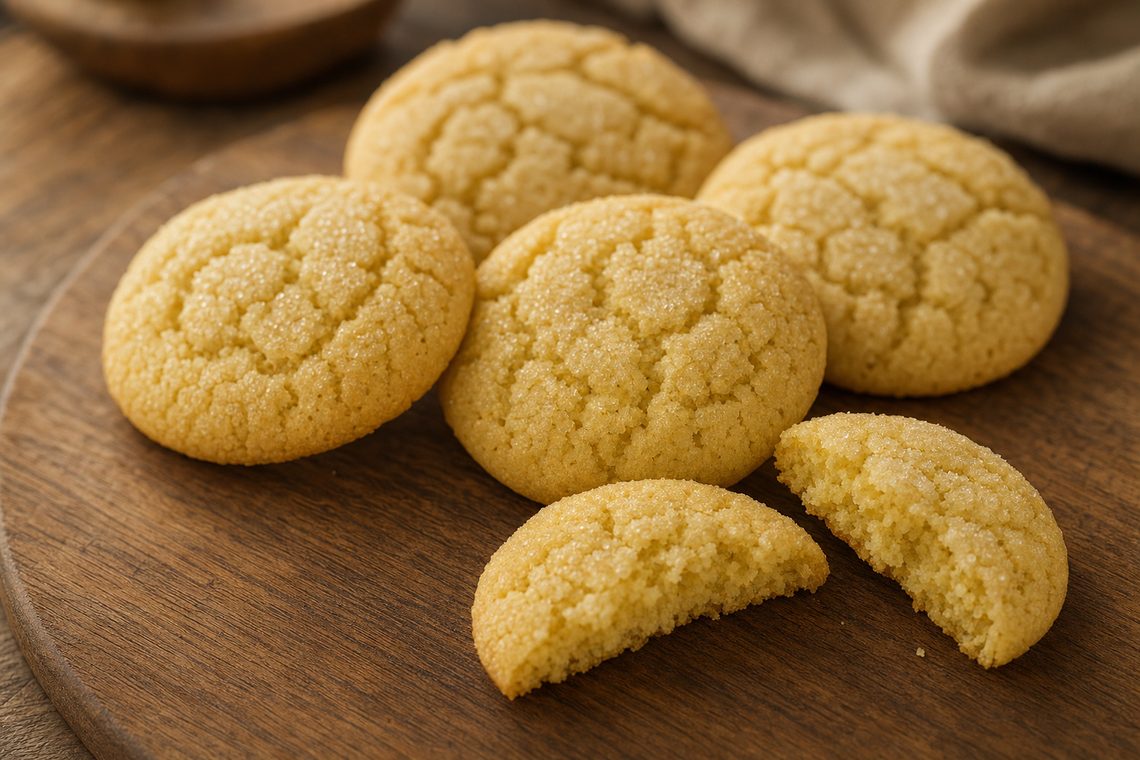
Soft and thick, like the frosted ones

The soft bakery pillow: icing sugar, cake flour and cornstarch, built to hold its shape rather than spread.

from www.crazyforcrust.com 4.42 73 cooks rated it

Ingredients

  • 2 ½ cups (310g) all-purpose flour
  • ½ teaspoon baking soda
  • ½ teaspoon baking powder
  • ½ teaspoon salt
  • 1 cup (226g) unsalted butter (softened slightly (see note))
  • 1 ½ cups (300g) granulated sugar
  • 1 large egg
  • 1 large egg yolk
  • 1 teaspoon vanilla extract
  • ⅓ cup (67g) granulated sugar (for rolling)

Method

  1. Preheat oven to 350°F. Line cookie sheets with silicone baking mats or parchment paper (see note).
  2. Whisk flour, baking soda, baking powder, and salt in a small bowl. Set aside.
  3. Using a stand mixer fitted with the paddle attachment or a large bowl with a hand mixer, cream cool but softened butter with 1 ½ cups granulated sugar until fluffy, about 1-2 minutes. Be sure to scrape down the sides of your bowl.
  4. Add egg, egg yolk, and vanilla extract and mix until smooth.
  5. Add flour mixture to the wet ingredients and mix until smooth. Dough should be soft but not wet.
  6. Place ⅓ cup sugar in a small bowl. Scoop 1-tablespoon size balls of cookie dough and roll in the sugar. Place 3-inches apart on prepared cookie sheets. (These do spread, so space accordingly.)
  7. Bake 11-14 minutes or until edges are light golden and centers are no longer glossy.
  8. Cool at least 10 minutes on cookie sheet before removing to a wire rack to cool or store.

Watch out for: Sour cream reads moist in the dough but bakes out drier (canon tested and cut it) — moisture in the bowl is not moisture in the crumb.

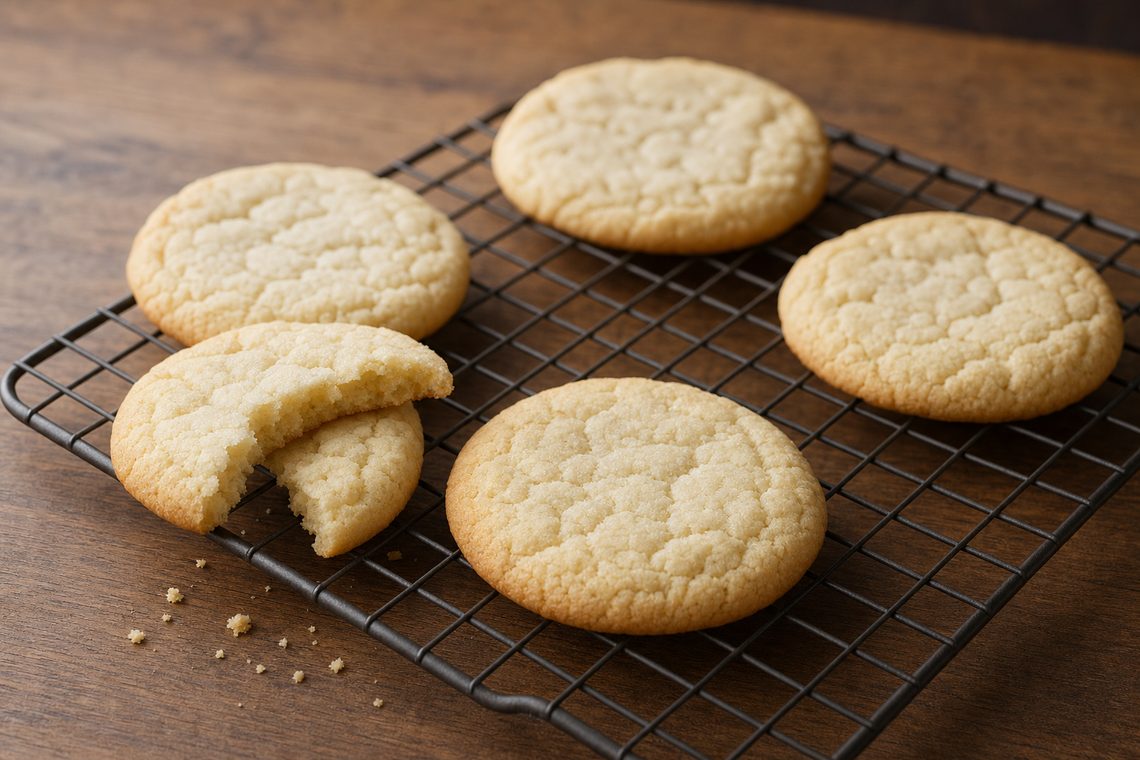
The classic with its textures pushed — crisper at the edge, chewier in the middle.
Closest published match · of 98 cakey recipes

Crisp edge, chewy middle

The classic with its textures pushed — crisper at the edge, chewier in the middle.

from www.melskitchencafe.com 4.67 1,231 cooks rated it

Ingredients

  • 1 cup salted butter (softened to cool room temperature)
  • 1 1/3 cups granulated sugar
  • 1 large egg
  • 2 teaspoons pure vanilla extract
  • 2 1/2 cups all-purpose flour (see note!)
  • 1/2 teaspoon baking powder
  • 1/2 teaspoon baking soda
  • 1/2 teaspoon salt
  • Additional granulated sugar or sprinkles (for rolling)

Method

  1. Preheat the oven to 350 degrees F (see note). Line two large, rimmed baking sheets with parchment paper and lightly grease with cooking spray.
  2. In the bowl of an electric stand mixer fitted with the paddle attachment or in a large bowl with a handheld electric mixer, cream together the butter and granulated sugar until lightly and fluffy, 3-4 minutes. Scrape down the sides of the bowl as needed.
  3. Add the egg and vanilla and mix again for 1-2 minutes until the batter lightens in color. Scrape the sides of the bowl as needed.
  4. In another bowl, whisk together the flour, baking powder, baking soda and salt.
  5. Add the dry ingredients to the wet ingredients and mix until combined.
  6. Scoop the cookie dough into rounded balls (about 2 tablespoons in size; I use my #40 cookie scoop), roll in granulated sugar or sprinkles and place on the prepared baking sheets a couple inches apart (about 12 cookies per baking sheet).
  7. Bake for 11-13 minutes until slightly crackly on top (but not much color around the edges or bottom to keep them soft and chewy).
  8. Let the cookies cool for a few minutes on the baking sheet before removing to a cooling rack to cool completely.

Watch out for: The fit's one survivor points here: fat_pct -> spread +0.079 (q=0.069) — richer formulas spread more; candidate confidence.

The plainest formula, treated as a stage for whatever you flavour it with.
Closest published match · of 104 crispy recipes

Plain, for decorating

The plainest formula, treated as a stage for whatever you flavour it with.

from www.crazyforcrust.com 4.21 34 cooks rated it

Ingredients

  • 3/4 cup granulated sugar
  • 1/2 teaspoon baking soda
  • 1/2 teaspoon cream of tartar
  • 1/2 teaspoon salt
  • 2 cups flour
  • 3/4 cup mix-ins (sprinkles and/or mini chocolate chips and/or nuts)
  • 3/4 cup unsalted butter (softened and sliced into tablespoons)
  • 1 tablespoon vanilla extract
  • 1 egg

Method

  1. Whisk all ingredients in a large bowl. Continue with making instructions or place in a resealable bag or large jar (3 pint to 1 quart sized jar or container).
  2. (If you’re gifting this mix, attach the following directions to the jar.)
  3. Preheat oven to 350°F. Line two cookie sheets with silpat liners or parchment paper.
  4. Place mix in the bowl of a stand mixer fitted with the paddle attachment. (Or, a large bowl if using a hand mixer.) Add butter and mix slowly until crumbly. (This will take a minute or two in a stand mixer; longer with a hand mixer.) Add vanilla and egg and mix until a cookie dough forms.
  5. Scoop 2 tablespoon balls of dough (use a cookie scoop if you have one) onto cookie sheets.
  6. Bake for 9-11 minutes. I like to take them out as soon as the bottom starts to turn brown (about 9 minutes for my oven) even though the centers may still be a little glossy, and let them finish cooking as they cool. Store in an airtight container or ziploc bag for up to 4 days, or freeze for up to one month.

Watch out for: Peppermint-for-vanilla read LESS sweet — extracts are not interchangeable sweetness signals.

Built around what this dish forgives — which is a lot in the middle and very little at the edges.
Closest published match · of 98 cakey recipes

When you are missing something

Built around what this dish forgives — which is a lot in the middle and very little at the edges.

from www.allrecipes.com 4.5 37 cooks rated it

Ingredients

  • 1.25 cups white sugar
  • 1 cup butter flavored shortening
  • 2 eggs
  • 0.25 cup light corn syrup
  • 1 tablespoon vanilla extract
  • 3 cups all-purpose flour
  • 0.75 teaspoon baking powder
  • 0.5 teaspoon baking soda
  • 0.5 teaspoon salt

Method

  1. Preheat the oven to 375 degrees F (190 degrees C).
  2. Beat sugar and shortening on medium speed with an electric mixer in a bowl until well blended. Add eggs, corn syrup, and vanilla; beat well. Combine flour, baking powder, baking soda, and salt in a separate bowl. Gradually add flour mixture to egg mixture on low speed until well blended.
  3. Wrap dough in plastic wrap and chill in the refrigerator for 1 hour.
  4. Roll out dough between 2 sheets of lightly floured wax paper. Cut out desired shapes with a floured cutter and place them on ungreased cookie sheets.
  5. Bake cookies in the preheated oven until the centers are set, 6 to 10 minutes. Baking time will depend on the size and thickness of cookies; do not overbake. Cool briefly, then remove from the cookie sheets to cool to room temperature.

Watch out for: The scaling nonlinearity (unregistered mechanism #2): doubled batches ran tough/cakey with proportional salt+leavener; halved batches overbaked at stated times. Scale ingredients linearly, seasonings and clocks sublinearly.

Need it to fit something tonight — no mixer, no long wait, no dairy? Those re-pick the recipe once JavaScript is on. With it off, you still get all 5 recipes above in full.

Why sugar cookie recipes disagree with each other

One is the classic drop cookie: granulated sugar, plain flour, spreads in the oven, crisp at the edge and chewy in the middle. The other is the bakery pillow — the Lofthouse kind — made with icing sugar and cake flour, engineered specifically *not* to spread, so the shape you put in is the shape you get out. They are not two points on a scale. They are opposite recipes.

The fork is the sugar. Granulated sugar is made of crystals with edges, and when you cream it into butter those edges whip air in — that air is what makes the cookie rise and then spread. Icing sugar has no edges to cut with; it just dissolves into the fat and gives you a dense, soft crumb instead. Everything else — cake flour, cornstarch, how long you bake it — follows from which of those two you picked.

Which sugar

The decision that makes every other decision. Granulated for the cookie that spreads and crisps; icing sugar for the one that holds its shape. Mixing the strategies gives you neither.

The chill

It does three jobs here, and only two of them are the usual ones. Beyond firming the fat and reducing spread, this dough is often simply unworkable until it has been cold — cooks talk about it in terms of being able to handle it at all.

The accents

On a cookie this plain there is nothing to hide behind. One cook halved the vanilla and rated the sweetness 2 out of 10 — they did not taste less vanilla, they tasted a less sweet cookie.

Three things decide it. Every change on this page works by moving one of them.

What it costs

Sugar cookies: what each choice costs you

You cannot have all of it at once. These are the four real trades. Knowing which one you are making is most of the skill.

The classic that spreads, or the pillow that holds its shape

This is a mechanical fork, not a matter of taste. Granulated sugar's crystals cut air into creamed butter and build a cookie that rises and spreads. Icing sugar has nothing to cut with — it melts into the fat and gives a dense, tender crumb instead. Add cake flour and cornstarch on top and you have the bakery pillow. Pick one before you start; the two do not average.

Chilling for the fat, or chilling so you can work with it

Everyone knows the first two reasons to chill: it firms the butter and it cuts the spread. This dish adds a third that its cooks talk about constantly and that none of its siblings mention — the dough is often simply too soft to handle until it has been cold. That is not the same job, and it takes real fridge hours rather than twenty minutes.

The sugar roll as decoration, or as a surface treatment with a deadline

Twenty separate reports put real texture readings on the sugar coating — it dries and sets the outside of the cookie, it is not just sparkle. And the timing matters in a way most recipes skip: roll it AFTER chilling. Sugar put on a warm dough dissolves into it and you get neither the crunch nor the look.

Engineer the softness into the dough, or borrow it afterwards

We expected these to go stale fast — white sugar, nothing to hold moisture. The cooks reported the opposite: sealed overnight they get softer, and icing them and covering them is a deliberate move rather than a decoration. The icing donates moisture and the container keeps it. You can build softness in, or you can add it on the second day.

Change your cookie recipe

Each one is measured across all 211 recipes and then converted into this recipe's own amounts. Every edit costs something. The cost is on the card.

Make it chewier · flatter and wider · sweeter

More sugar went with cookies that came out flatter and wider, across 830 versions. Sugar is hygroscopic in the dough too. It binds water and denies it to the flour, suppressing gluten.

Costs you: Also makes it crisper at the edge. Another way: more leavening.

measured across many versions · 830 versions

Make it more tender · more set in the middle · softer at the edge · more crumbly

More butter went with cookies that came out more tender, across 799 versions. Butter is 16-18% water. Cold or creamed butter locks that water in fat crystals where the flour cannot reach it; melted butter frees it, so gluten forms before baking.

Costs you: Nothing else moved that we can measure — but this lever sits on a real trade, chewy or cakey, and we cannot put a number on that side of it.

measured across many versions · 799 versions

Common sugar cookies problems, and how to fix them

The 5 problems cooks actually report, and what to do about each one. Open the one that sounds like yours.

Before you start

I am not sure which kind of sugar cookie I want

Decide before you start, because the two do not average into anything good. The classic wants granulated sugar, plain flour, and a bake where it spreads and sets — pull it pale. The Lofthouse pillow wants icing sugar, cake flour or a spoon of cornstarch, and a bake where it holds the shape you gave it. Half of each gives you neither.

I want to double it, or halve it

Scale carefully at both ends, because this dish punishes it. Doubled batches with the salt and leavening doubled straight came out tough and cakey, twice. Halved batches overbaked at the stated time, twice. Scale the bulk ingredients and be conservative with the salt and the raising agents, and start checking early.

At the bench

The dough is too sticky to work with

This is the chill's third job and it needs real hours, not twenty minutes. Cold it, then knead it briefly on a floured surface until it is pliable, and roll it between two sheets of parchment rather than working more flour into it. Also check the egg — an extra yolk makes a softer dough than the recipe intended.

After the bake

They taste of nothing much

On a cookie this plain the flavourings are the recipe. Check the vanilla first: one cook who halved it rated the sweetness 2 out of 10 — vanilla is read as sweetness, so cutting it makes the cookie taste less sweet rather than less vanilla-y. After that, almond extract and a little nutmeg, or lemon zest.

They go hard by the second day

Ice them and seal them. The icing donates moisture into the cookie and a sealed container keeps it there — cooks describe them as "super-soft" the next day, and putting foil over the icing is a deliberate trick rather than a way to stop it smudging. Slightly overbaked cookies recover this way too.

The complete design space

Every cookie recipe we measured

The five above are the ones we would point you to. This is every recipe we measured, if you would rather look yourself.

Every dot is one recipe, placed by what it is made of — not by its title. The clusters are the cookies above; the space between them is everything else people have cooked.

Browse all 211 recipes →

What we do not know about sugar cookies

Where our evidence is thin, so you know which parts of this page to lean on and which to treat as a starting point.

We used this cookie to test ourselves, and we failed five out of six

This was meant to be the simple one — the dish where our existing explanation of how cookies work would cover everything and nothing new would turn up. We wrote down six predictions before reading a single review and got five of them wrong. That is genuinely useful to know: it means even a plain cookie holds a lot of local knowledge our general theory does not reach.

Our recipe set is contaminated, and we are telling you rather than hiding it

This page is about the DROP sugar cookie — spooned onto a tray. Some of the recipes we gathered are rolled-and-cut-out cookies, harvested before we narrowed the scope. It shows up mostly in how much people talk about the dough being workable, which is a cut-out concern. We have flagged it rather than quietly dropping those reviews.

Seventy of our records are set aside unread

Seventy of 470 rows from the second pass are deferred rather than included. They are not lost and they are not counted.