What it does
Chill for two to three hours, for the oats
Oats go into the dough barely softened, and a long rest lets them draw water out of it before the oven does.
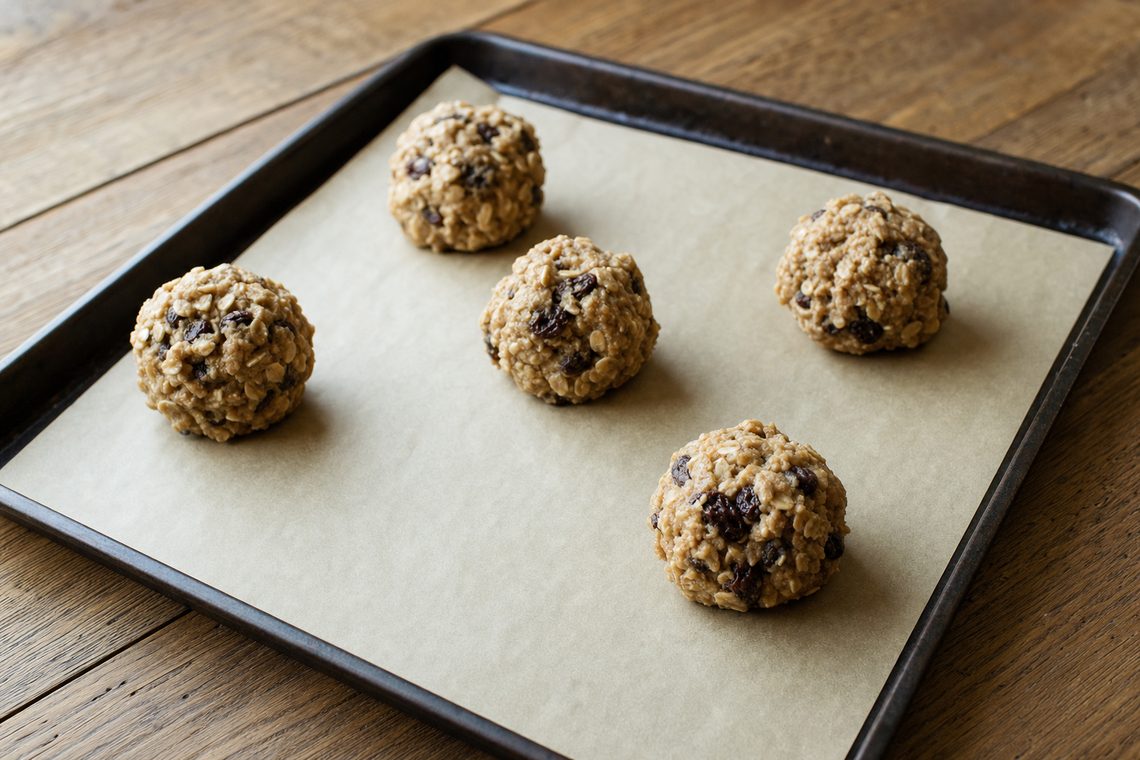
That is the oat-specific case for chilling and it is a real one: a rested dough bakes less gritty and tastes rounder, and the fat firms up on the way. Thirty minutes does not do it. If you are chilling at all, the two-to-three-hour mark is where the reason for chilling actually starts. Shaping the balls first and freezing them while the oven heats is the efficient version.
Honest note: this is the baking literature's case, not our measurement. Not one cook in what we read mentioned grit or hydration, so nobody is corroborating it from experience either way.
What it does not
5 for, 12 against
Do not chill to stop them spreading
Cooks who chilled specifically to control spread reported it not working more than twice as often as they reported it working.
They chilled for thirty minutes, an hour, overnight, and still got a wide flat cookie, and when you read what else they changed the pattern is consistent: the formula underneath was wet or sugar-heavy. A cold dough starts slower, and then it melts and spreads on the same terms as a warm one. Chilling delays the spread. It does not cancel it.
What to do instead: leave the dough balls round rather than flattening them, and check the sugar and the liquid before you reach for the fridge.
If you are in a hurry
Baking it straight away is a real option
Skipping the rest costs you the texture and flavour improvement, and it does not doom the cookie.
Plenty of published oatmeal cookie recipes are written with no rest at all and cooks are happy with them. If tonight is the constraint, bake it tonight and spend your attention on the two things that matter more: leaving the balls tall, and pulling them while the centres still look wet.