The lever and the defect are one molecule

Is gumbo supposed to be slimy?

The slime is the thickening. Okra's mucilage is what gives the pot its body, and "slimy" is the same substance in the wrong place — so the job is not removing it, it is spreading it out.

We compared 161 published gumbo recipes and read 3,299 reviews. 88 of those recipes use okra — it is not a minority ingredient here, it is one of the dish's three thickeners, and the only one that arrives with its own reputation problem.

161Recipes compared
3,299Reviews read
88Use okra
3Thickeners in the dish

Read against 161 published gumbo recipes and 3,299 reports from cooks who changed one thing.

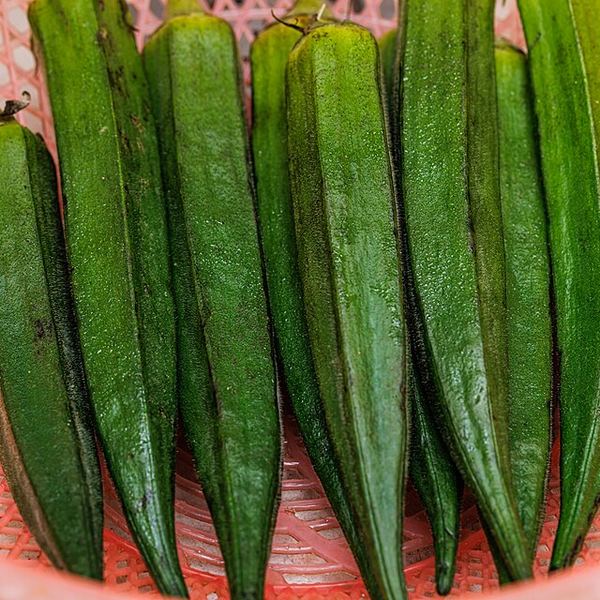
Several fresh green okra pods lying in a pink colander.
Okra pods. The mucilage inside them is both the body and the complaint. Dinkun Chen · CC BY-SA 4.0
The answer, first

Give the okra dry heat before it meets the liquid

Not to destroy the mucilage — to disperse it, so it thickens the pot instead of sitting in strings.

Next time 1 cook, 7/10 body — and a clear mechanism

Slice it thin and put it straight into the hot roux

Okra's mucilage is a soluble polysaccharide held inside the pod. Dropped into a wet pot it comes out in long strands and stays that way — that is the ropiness people describe. Given dry heat first, it breaks up and disperses, so when the liquid arrives it goes into solution and does what a thickener does. Same substance, same amount, distributed differently.

What to do: slice thin, straight into the hot roux or a dry hot pan, and give it several minutes before anything wet goes near it. Roasting or frying it separately does the same job.

Tonight Mechanism, no direct report

If it is already slimy, simmer it longer

Mucilage disperses and mellows with time in the pot. A gumbo that is ropy twenty minutes in is usually not ropy an hour in, and the body it leaves behind is the body you wanted.

We are labelling this honestly: it follows from the chemistry and it is what experienced cooks say, and no reviewer in our corpus describes doing it and reporting back. Lean on the seasoning while you wait — a gumbo people are enjoying is one they stop examining.

What to do: keep it at a bare simmer and give it another half hour before you decide it is ruined.

If you would rather not

You can simply not use okra

This is worth saying plainly, because a lot of writing about gumbo treats okra as compulsory and then spends four paragraphs on managing it. It is one of three thickeners. The other two do not have this problem.

Two cooks, going in opposite directions, both fine. One dropped the okra and used a teaspoon of filé instead; one dropped the filé and leaned on more roux and okra. Both landed in the middle of the body range with full satisfaction. The systems substitute for each other, which is the practical consequence of their being chemically unrelated.

Both of those are single reports. The direction is well-founded — three independent thickeners is the structure of the dish — and the numbers attached are one person each.

Unfinished business

The rule about never using okra and filé together

You will read that the two must never go in the same pot. We went looking for a reason and could not find one.

Okra's mucilage and filé's mucilage are different substances from different plants, and our mechanism review found no pathway by which either would interfere with the other. Two independent polysaccharides in the same liquid should simply both thicken it. We went into the corpus expecting to be able to say the rule was folklore — and we cannot, because not one cook in 3,299 reviews runs the comparison and reports back.

So it stands unadjudicated, and that is the honest place to leave it. What the history suggests is that the rule is about season rather than chemistry: okra is a summer vegetable and filé was the winter substitute for it, so a pot with both in it was simply a pot nobody needed to make. Regional identity has a way of outliving the practical reason for it.

If you want to settle this, it is a two-pot afternoon: same stock, same roux, okra in one and both in the other, and somebody who did not cook them tasting blind.

Where we would be guessing

What this page does not know

  • This is the thinnest node on the dish. Every okra-preparation report in our corpus is one or two cooks deep. The mechanism is solid and well understood; the evidence that any particular trick works is a handful of people.
  • The simmer-it-longer advice has no direct report at all. It follows from what mucilage does and it is what experienced cooks say. No reviewer describes trying it. We have marked it where we say it.
  • Nobody has tested okra against filé in the same pot. Covered above at length, because the gap is more interesting than a verdict would be.
  • Nothing here is a fitted result. Every statistical test on this dish came back null and the instrument never ran its own control.
  • Fresh and frozen okra are not the same thing going in. One cook notes fresh is more slippery than frozen and takes longer to cook down. Most of the corpus does not say which it used.