What happens
15 for, 5 against
Expect it flatter, crisper and drier
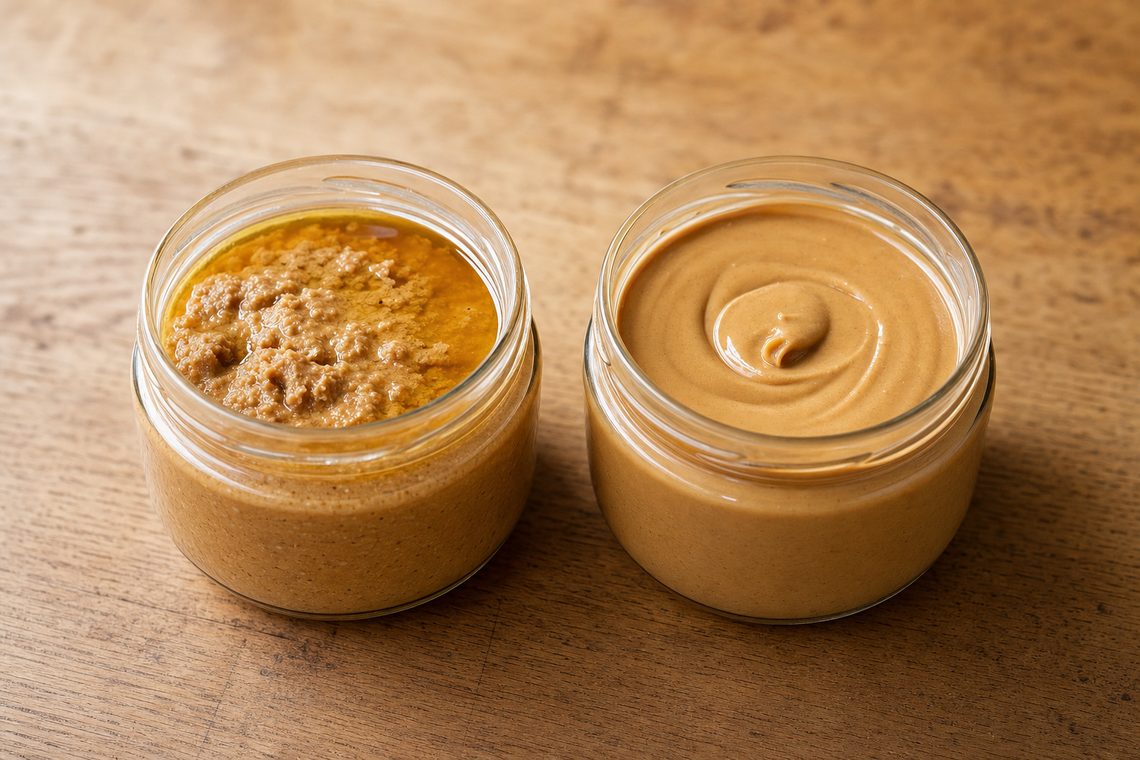
Free oil is not the same ingredient as emulsified fat, even though both are peanut butter.
An emulsified jar behaves like a solid fat: it holds structure while the cookie sets. A separated jar contributes loose oil, which spreads, crisps the edge and dries the crumb. Cooks reported exactly that, and four of them reported edge failure specifically. It is not a disaster every time, and it is the way to bet.
Not unanimous: five cooks made the swap and reported no structural problem. That is worth knowing before you assume a failed batch was inevitable.
Why reports conflict
Stir it thoroughly, and know your jar is not their jar
Natural peanut butter varies in how separated it is, so the same swap is genuinely not the same swap twice.
A jar straight off the shelf with an inch of standing oil and a jar someone has been stirring for a fortnight are different ingredients wearing the same label. That is most of why the internet cannot agree about this: people are describing real results from materially different starting points. Stir it completely back together before you measure, and you have at least removed the largest variable.
The hidden part
An unsweetened natural jar changes three things at once
Commercial peanut butter carries sugar and salt the recipe never lists, because it assumes them.
Swap in an unsweetened, unsalted natural butter and you have changed the fat behaviour, the sugar and the salt in one move, while it looks on paper like a single substitution. Then the cookie comes out wrong and the fat gets the blame. If you are going to make this swap, taste the dough and correct the salt at least, and do not judge the recipe by the first batch.
Flourless recipes are strictest: with no flour to absorb anything, a creamy no-stir jar is what those are written for, and deviating means changing the technique deliberately rather than hoping.