A technique, not a garnish

Rolling sugar cookies in sugar

Roll them after the dough has chilled, never before. Sugar meeting warm dough dissolves into it, so you get the sweetness and lose the coat entirely.

That timing is the whole technique, and it is missing from almost every recipe that tells you to do it. The coat is not decoration: it dries the surface as it bakes and pulls the top toward the fine even crackle that the baking literature treats as this cookie's quality marker.

Read against 211 published sugar cookies recipes and 2,400 reports from cooks who changed one thing.

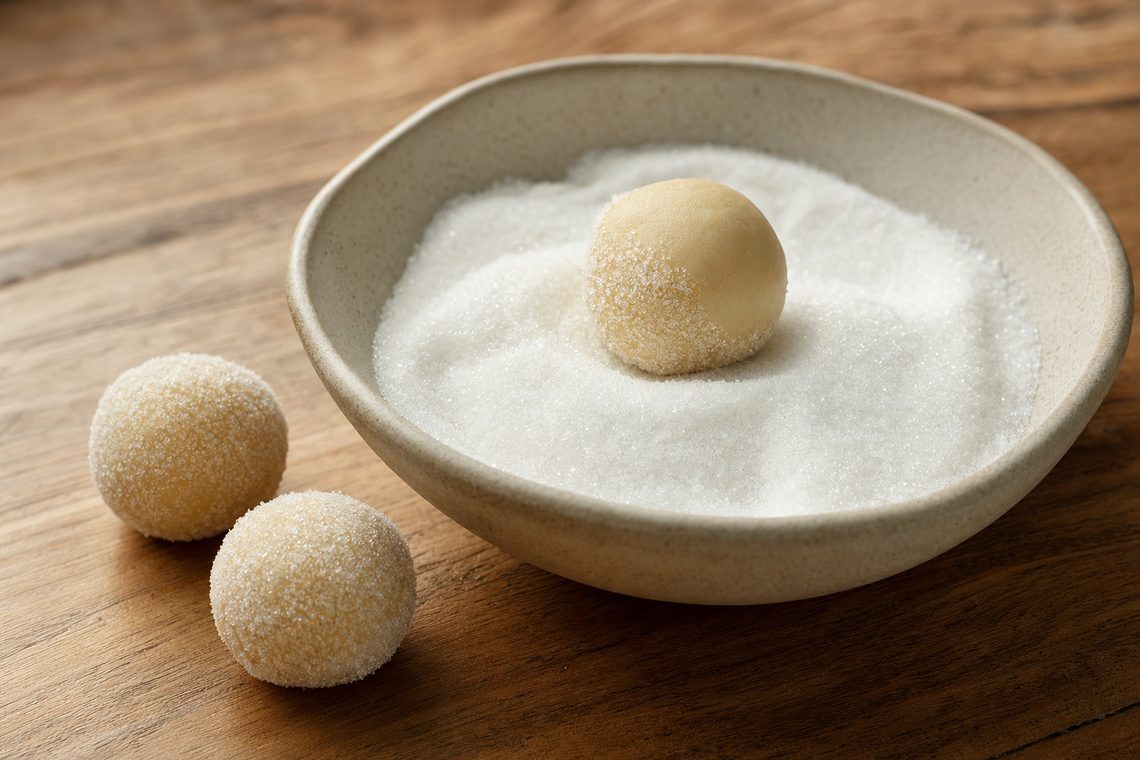
A ball of pale cookie dough being rolled in a bowl of granulated sugar.
Grammy's Kitchen · illustration
How to do it

How to roll sugar cookies in sugar

Timing, then what it buys, then which sugar.

The rule canon's timing law

Chill first, roll second

A cold, firm dough ball takes a thick even coat that stays on the outside where it can work.

Roll a room-temperature ball and the sugar starts dissolving on contact, sinking into the dough as a sweetener rather than sitting on it as a crust. The cookie comes out sweeter and plainer-looking, which is precisely the trade nobody wanted. If the dough has warmed up while you shaped it, put the balls back in the fridge for ten minutes before they meet the bowl.

What it does

The coat is what makes the top crackle

Sugar on the surface dries the exterior as the cookie bakes, setting it early while the inside is still rising.

That mismatch is what cracks the top, and a fine, even crackle is the marker the literature uses for a well-made cookie in this family. It is the same mechanism that gives a snickerdoodle its surface, which is why a cinnamon-sugar roll on a sugar cookie reads as a cousin rather than a new idea. One cook in our reviews made exactly that swap and described the result as a snickerdoodle, which is the honest name for it.

Choose your sugar

Granulated crackles, sanding softens

The size of the crystal decides whether you get a crust or a decoration.

Cooks who used coarse sanding sugar reported deliberately soft, underdeveloped edges: the big crystals sit on top and sparkle rather than drying the surface. Powdered sugar on the work surface simply read sweeter. Ordinary granulated is what does the technical job. Sprinkles rolled on after a short chill went down well and are doing an appearance job, not a texture one.
Straight with you

Where we would be guessing

So you know how far to trust the rest of this page.

Timing is canon, the texture notes are cooks

The roll-after-chilling rule comes from the baking literature and it is well established. The differences between granulated, sanding and powdered sugar come from individual cooks reporting what they got, which is thinner evidence and points consistently the same way.

No recipe split behind this

Our recipes are resolved for how they handle the fat, the rest and the shaping, not for whether they roll in sugar. So this page is mechanism and cook reports rather than a comparison across the corpus, and we would rather say so.

Crackle is a marker, not a guarantee

A fine even crackle is what the literature associates with a well-made cookie in this family. It is a sign, not the point, and a cookie can be excellent without one.