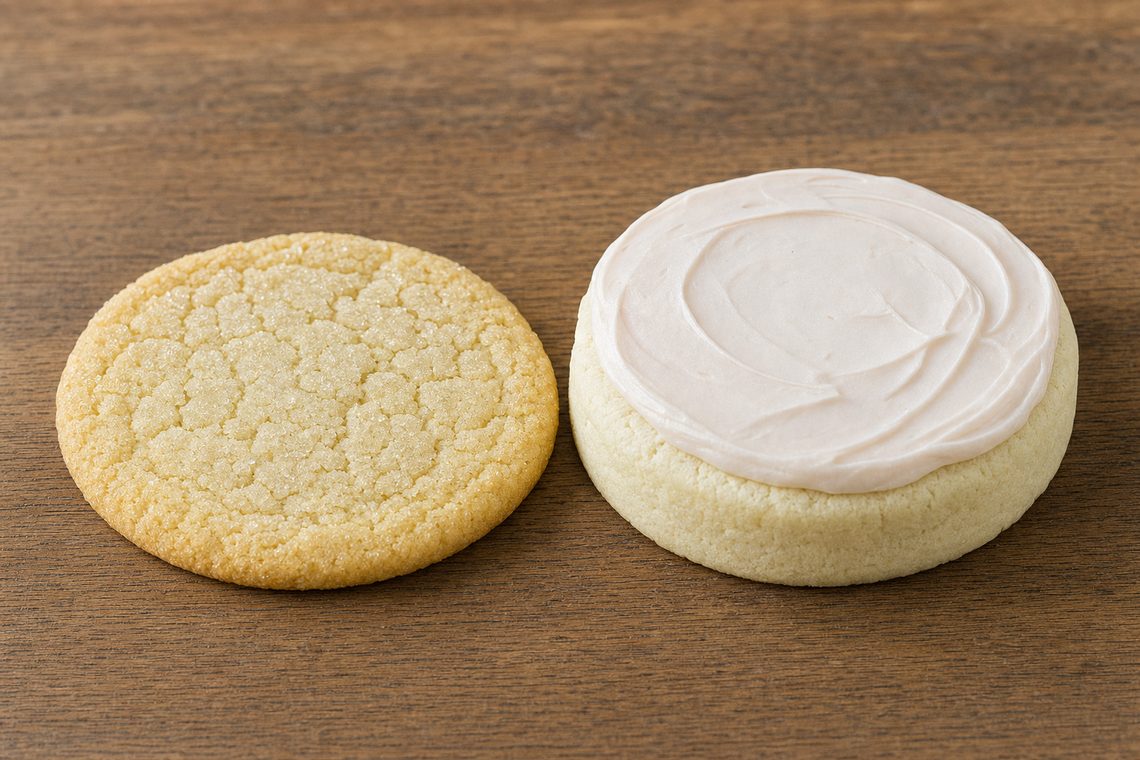
For flavour
Use butter if the cookie is eaten plain
Butter is the only one of the two that tastes of anything, and in a cookie this simple there is nowhere for it to hide.
A sugar cookie is flour, sugar, fat and not much else, which is why the design space treats it as the control dish for the whole family. Take the flavour out of the fat and you have removed most of what there was. Accept the wider, flatter cookie that comes with it, and manage the spread with cool butter and a proper chill rather than by switching fats.
For shape
Use shortening if it has to hold an edge
Shortening melts later, so the structure sets before the dough has finished moving, and you get height instead of width.
This is why the thick, pale, frosted supermarket cookie is a shortening cookie, and why cut-outs made with it keep their points. It is a real technical advantage and it costs you the flavour. If the cookie is going under a layer of icing and sprinkles anyway, that is a much easier trade to make.
Worth knowing: a cook who paired shortening with a little vinegar for a deliberately crisp cookie got what they were after, so the fat is not the only thing in play.
The middle
Half and half behaves like half and half
Blends land between the two on spread, in the place the mechanism says they should.
Cooks splitting the fat, or using butter alongside butter-flavoured shortening, reported middling spread rather than anything surprising. That is genuinely useful: it means you can dial this rather than choose a side, and that the result will be predictable when you do.
Not this
six cooks
Margarine is not the shortening substitute
Six cooks were clear that butter, not margarine, is what this dough wants, and a half-margarine blend read mid-spread rather than well.
Margarine carries water that neither butter nor shortening brings in the same way, and it melts low like butter without tasting like it. It is the worst square of the grid: the spread of the soft fat and the flavour of the hard one.