Start here
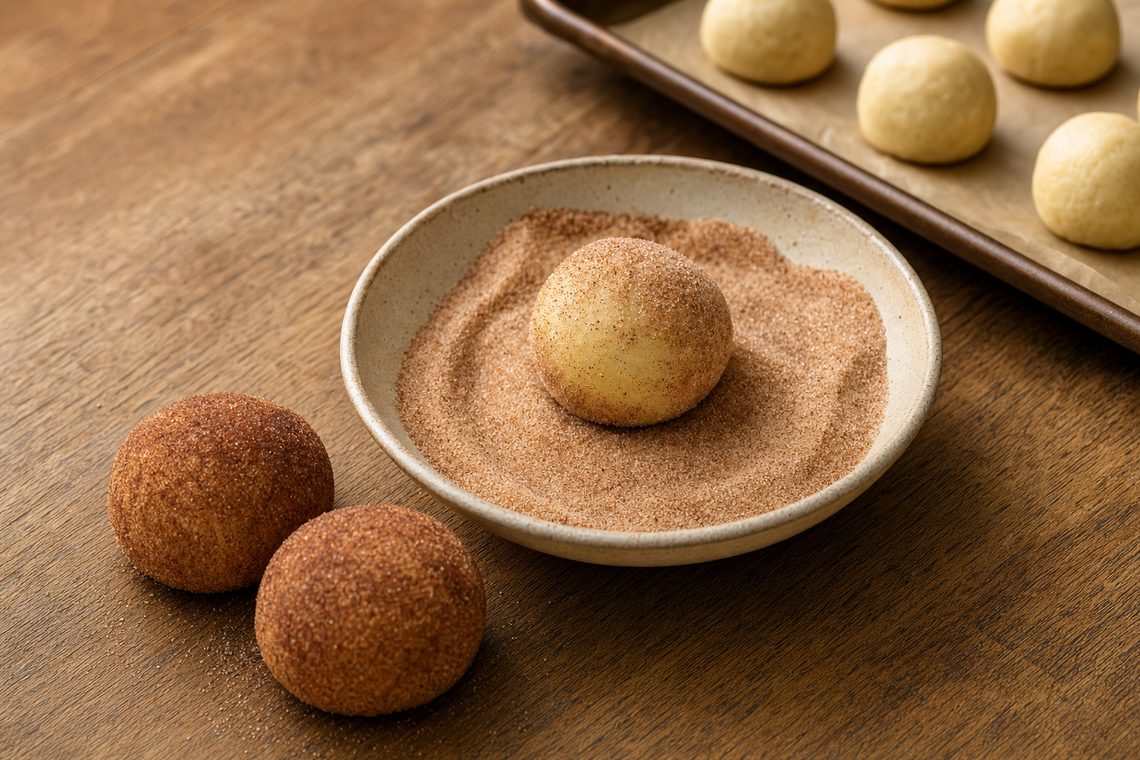
Roll the whole ball, do not sprinkle it
The coat has to cover the surface completely, because what it does is dry that surface evenly.
Cooks who sprinkled cinnamon sugar over the top instead of rolling the ball in it reported failures at both the edges and the centre, which is exactly what an uneven shell would produce. Get a bowl, get the ball fully coated, and accept that this takes an extra thirty seconds. It is the single step that decides whether the top cracks.
Use fine sugar
Ordinary granulated, not coarse crystals
Big raw-cane crystals sit on the surface instead of drying it, and they fail the same way sprinkling does.
The coat works by pulling moisture out of the outer layer of dough, and it can only do that where it is actually in contact. Coarse crystals touch in fewer places and leave gaps between, so the shell forms unevenly. Save the sparkly sugar for something where it is doing a decorative job.
Canon's ratio: half a teaspoon of cinnamon per quarter-cup of sugar to start, and up to equal parts if you want it to dominate. A ninefold overdose is survivable, and you will taste nothing else.
What it is not doing
same-batch control
The coat changes the skin, not the crumb
Uncoated cookies from the same batch kept their chew entirely.
That is about as clean a control as this site gets: same dough, same oven, coat as the only difference, and the inside was unchanged. So if your snickerdoodles are wrong in the middle, the coat is not the culprit and rolling them more thoroughly will not fix it. Look at the cream of tartar, which is the ingredient that owns the crumb.