The ingredient that makes it a snickerdoodle

What does cream of tartar do in snickerdoodles?

Three separate jobs: it activates the soda, it supplies the tang, and it keeps the cookie soft by stopping the sugar recrystallising. The third one is why swapping it out goes wrong.

That third job is the interesting one, because it is invisible and it is the one people miss. When cooks replaced tartar with baking powder, their complaints were about texture almost without exception: weak edges, undercooked-reading centres, more spread. Hardly anyone complained about losing the tang, even though they had.

Read against 208 published snickerdoodles recipes and 1,672 reports from cooks who changed one thing.

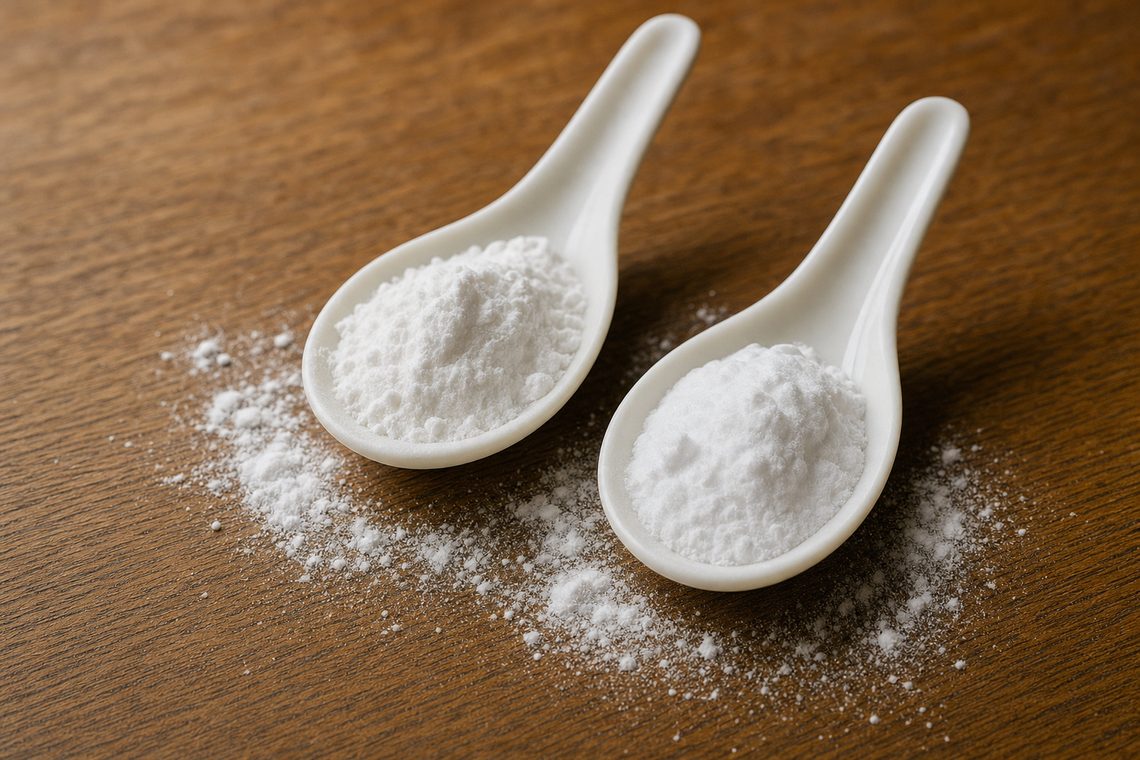
Two small spoons of white powder side by side, cream of tartar and bicarbonate of soda.
Grammy's Kitchen · illustration
Three jobs, one ingredient

What cream of tartar is actually doing

Job one

It sets off the baking soda

Cream of tartar is an acid, and soda needs an acid to do anything at all. On its own it lifts nothing.

This is the job everyone knows about, and it is the easiest one to replace, because baking powder is simply soda with an acid already in the tin. If leavening were all tartar did, the swap would be free. It is not.

Job two

It supplies the tang

The faint sourness that separates a snickerdoodle from a cinnamon sugar cookie comes from here, and it scales with the dose.

Cut the tartar to a third and the tang drops away noticeably. Lemon juice can stand in for this part if you are out, and one cook who did that was happy with the result. It buys you the flavour and none of the third job.

Job three 19 swaps

It stops the sugar recrystallising, which keeps them soft

This is the one nobody names and everybody notices, and it is the reason substitutions disappoint.

Tartar inverts some of the sugar, which is the same trick confectioners use to stop candy turning brittle. In a cookie it means the sugar stays put instead of setting hard, so the crumb keeps its softness. Cooks who swapped in baking powder reported exactly what losing that would produce: weak edges, centres reading undercooked, more spread. They described a texture problem, not a flavour one.

We expected the opposite. The prediction written down before reading the reviews was that people would complain about the missing tang. They did not. That is the most useful thing this dish taught us.

If you have run out

What to use instead, and what it costs you

Every substitute buys back some jobs and not others.

What each substitute preserves and what it gives up.
Instead of tartar and sodaYou keep You lose
Baking powder, at a reduced total The lift. It leavens perfectly well. The softness-keeping and the tang. This is the swap cooks made most, and the one they complained about.
Lemon juice plus the soda The tang, and the acid the soda needs. The sugar chemistry. One cook was pleased with this; it is a flavour fix rather than a texture one.
Leave it out entirely Nothing, and that is the point. This is not a substitution, it is a different cookie: with no acid there is less spread chemistry too, and one cook got a notably thick, well-set edge from it.

Worth knowing either way: the tartar-and-soda reaction is fast, fast enough that it is the reason commercial baking powder had to be invented. This dough loses lift if it stands around, so get it into the oven rather than leaving it to wait.

Straight with you

Where we would be guessing

So you know how far to trust the rest of this page.

Nineteen swaps is a pattern, and they are cooks

Nineteen people replacing cream of tartar with baking powder and reporting what happened is a genuinely useful body of evidence, and it is still self-reported baking rather than a controlled comparison of one dough made two ways.

The chemistry is literature, not our measurement

The sugar-inversion mechanism comes from confectionery and baking science, and it is well established there. What our reviews add is that the complaints match it: cooks describe the texture loss that mechanism predicts. Those are two different kinds of evidence agreeing, which is worth more than either alone and is not the same as us having measured it.

The dose is past what these recipes record

How much tang you lose at what reduction, or exactly how much powder replaces the pair, is not something these recipes let us calculate. Canon's starting point is a reduced total rather than a one-for-one swap.