Compared by formula

Stuffed Shells

121 recipes, read so you don't have to.

Every recipe is a different answer to the same few questions. Tell us the stuffed shells you are after and we will hand you the closest one anyone has published, plus what to change to suit you.

121recipes read
4recipes, not one
8problems solved
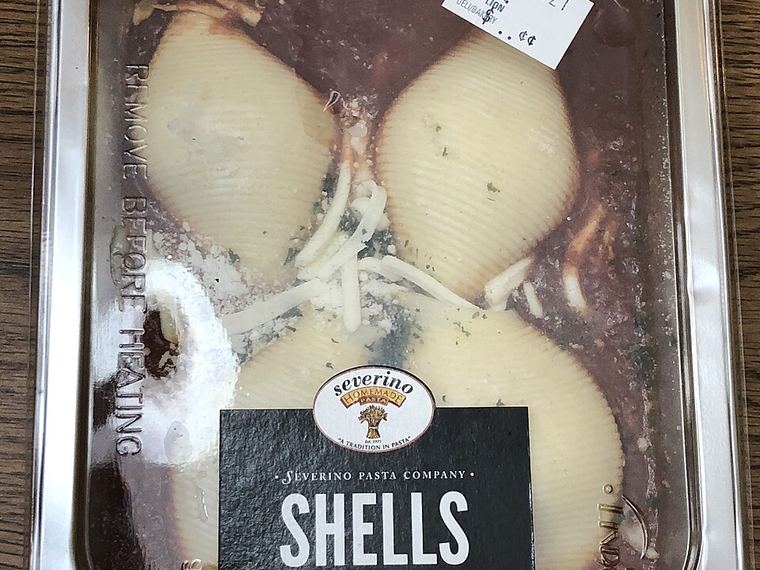
Stuffed Shells, as published.
Famartin · CC BY-SA 4.0
Start here

What kind of stuffed shells do you want?

Four real versions, not one "best." Pick one and the recipe's right here — a published, rated one, with weights.

Any limits tonight?
Our formula · nobody has published this one

Ricotta bound with egg

Ricotta with an egg through it. The route most recipes assume — 73 of the ones we compared.

No recipe in the 121 lands close enough to call it a match, so this one is ours, built on 450 g of dry pasta from where the published recipes agree.

Ingredients

  • Dry pasta (1.0 lb)450 g
  • Cheese814 g
  • Egg (1 large egg)45 g

Method

  1. Shells: boiled well short of the package time — around five minutes — then cooled enough to handle
  2. Handling: lifted out individually with a slotted ladle, not tipped into a colander
  3. Filling: ricotta with egg through it, seasoned with salt rather than herbs
  4. Assembly: sauce under the shells as well as over them
  5. Bake: covered, then uncovered at the end if you want the cheese browned

Watch out for: Boiling to the package time. The shells go soft, and the oven still has its own half hour to add.

Our formula · nobody has published this one

Straight from the jar

Jarred sauce, soft cheese, no egg. Faster, and it loses less here than the same shortcut costs a lasagna.

No recipe in the 121 lands close enough to call it a match, so this one is ours, built on 450 g of dry pasta from where the published recipes agree.

Ingredients

  • Dry pasta (1.0 lb)450 g
  • Cheese814 g

Method

  1. Shells: same short boil
  2. Filling: soft cheese, seasoned — cottage cheese and cream cheese both work
  3. Sauce: jarred, generously, above and below
  4. Bake: covered most of the way

Watch out for: Under-seasoning. Jarred sauce seasons the outside of a shell, not the inside, and the filling is most of what you taste.

Our formula · nobody has published this one

Stuffed raw, no boiling

Shells filled dry and baked in a loosened sauce. No boiling, so nothing can tear.

No recipe in the 121 lands close enough to call it a match, so this one is ours, built on 450 g of dry pasta from where the published recipes agree.

Ingredients

  • Dry pasta (1.0 lb)450 g
  • Cheese814 g

Method

  1. Shells: not boiled at all — filled dry
  2. Sauce: noticeably more than usual, thinned with water, over and under
  3. Bake: covered, low and long — 350F for around 50 minutes
  4. Target: shells hydrated through by the sauce rather than by a pot

Watch out for: Treating it as a straight swap. Without extra liquid the shells take it from the filling and the sauce, and all three suffer.

Our formula · nobody has published this one

Frozen or made ahead

Stuffed but unbaked, frozen on a tray, then baked straight from frozen.

No recipe in the 121 lands close enough to call it a match, so this one is ours, built on 450 g of dry pasta from where the published recipes agree.

Ingredients

  • Dry pasta (1.0 lb)450 g
  • Cheese814 g
  • Egg (1 large egg)45 g

Method

  1. Assembly: stuffed but unbaked, frozen individually on a tray then bagged
  2. Bake: straight from frozen, covered, longer than the recipe says
  3. Reheat: leftovers at a low temperature rather than a hot oven

Watch out for: Nothing much. This is the least risky thing in the dish.

Need it to fit something tonight — no eggs, under 20 min hands-on, kids can help? Those re-pick the recipe once JavaScript is on. With it off, you still get all 4 recipes above in full.

Why stuffed shells tear, and why the filling is the easy part

One thing separates this from every other baked pasta: the filling is sealed inside the shell rather than layered between sheets or tossed through tubes. The shell holds the portion together, so nothing has to set and nothing can disperse — which is why 'it fell apart on the plate' is not really a failure this dish has.

What it has instead is a handling problem. You have to boil each shell soft enough to open and fill without cracking it, and that is already more cooking than the oven wants to add to. Cooks feel the squeeze from both ends: boiling well short of the package time gave the best pasta anyone here reported, while shells that reached the stuffing step underdone tore in the hands even when handled gently.

The filling, by contrast, is remarkably forgiving. Cottage cheese, cream cheese and even mashed white beans all stood in for ricotta without losing creaminess. The one thing that fails is leaving the soft cheese out altogether.

How long you boil them

The lever that decides both problems at once. Too short and they crack when you fill them; too long and they slump in the dish. Around five minutes, or a brief parboil followed by a rest off the heat, is what worked here.

How you get them out of the pot

Sounds trivial, and one cook found it was not: lifting the shells out one at a time with a slotted ladle instead of tipping the pan into a colander left far more of them whole and usable.

What goes in the filling

The forgiving part. Almost any soft cheese works — cottage blended smooth matches ricotta closely, cream cheese does better still. Just do not leave it out.

Salt, not herbs

A large volume of mild dairy sits sealed inside pasta, and aromatics do not reach it. One cook added more garlic and seasonings and still called the result bland. Measured salt is what moved it.

Four things decide it. Every change on this page works by moving one of them.

What it costs

Stuffed shells: what each choice costs you

You cannot have all of it at once. These are the five real trades. Knowing which one you are making is most of the skill.

Soft enough to fill, or firm enough to bake

The squeeze that makes this dish fiddlier than its siblings. A shell has to be soft enough to open without cracking, and every extra minute in the pot is spent before the oven adds its own half hour. There is no setting that is safe at both ends — you are choosing which risk to take.

Boil them, or stuff them raw

Skipping the boil removes the tearing problem completely, because nothing is handled soft. It replaces it with a hydration problem: with extra liquid in the sauce the raw shells cooked through fine, and without it they stayed hard. The same route browned the best of any here and cost the filling its creaminess.

Ricotta as written, or whatever soft cheese you have

The most forgiving decision in the dish. Cottage cheese, cream cheese and mashed cannellini beans all worked in ricotta's place, and blending cottage cheese smooth first matches its texture closely. Substitute freely — just substitute something, because leaving the soft cheese out drops creaminess to 2 out of 10.

Season with aromatics, or season with salt

Only one of these reaches the filling. Cooks who added garlic and oregano still described the dish as bland; cooks who added measured salt to the meat, or salted the pasta water, moved it. Baked ziti produced exactly the same finding for the same reason — a lot of mild starch and dairy, and only salt penetrates it.

Foil on, or a browned top

Shells sit proud of the sauce, so their tops are exposed in a way that a lasagna's middle never is. Covered, the filling stays creamy. Uncovered at the end with the oven up at 400F is what actually browns the cheese — nothing colours under foil.

Change your stuffed shells recipe

Each one is measured across all 121 recipes and then converted into this recipe's own amounts. Every edit costs something. The cost is on the card.

Make it creamier · richer · sharper

More cheese went with recipes that came out sharper, across 259 versions. Heat makes casein proteins clump and squeeze out the fat and water they were holding — that is what grainy, broken sauce is. Young moist cheese resists it; aged dry cheese, whose protein is already fragmented, gives way soonest. Starch or an emulsifying salt is what holds the two phases together.

Costs you: Nothing else moved that we can measure. We only detect 7 of the 60 changes cooks describe, so read that as unmeasured rather than free.

measured across many versions · 259 versions

Make it milder

More milk or cream went with recipes that came out milder, across 259 versions. Sharpness comes from proteolysis during ageing — free amino acids built up over months. It can be diluted by liquid or physically masked by starch, neither of which removes any cheese.

Costs you: Nothing else moved that we can measure. We only detect 7 of the 60 changes cooks describe, so read that as unmeasured rather than free.

measured across many versions · 259 versions

Make it saltier

More salt went with recipes that came out saltier, across 148 versions.

Costs you: Nothing else moved that we can measure. We only detect 7 of the 60 changes cooks describe, so read that as unmeasured rather than free.

measured, on a smaller set · 148 versions

Common stuffed shells problems, and how to fix them

The 8 problems cooks actually report, and what to do about each one. Open the one that sounds like yours.

The shells

The shells tore while I was filling them

They were underdone and brittle. Boil a little longer next time — but only a little, because the oven adds its own half hour. Two things helped cooks here: lifting the shells out of the pot one at a time with a slotted ladle instead of tipping them into a colander, and switching to manicotti tubes, which are filled from the end and have no seam to split.

The shells came out mushy

They were boiled too long before stuffing. Around five minutes, or a brief parboil and then a rest off the heat to firm up, gave the best pasta anyone here reported.

The shells came out hard

If you skipped the boil, there was not enough liquid for them to drink. Loosen the sauce with water and bake covered — one cook did exactly that and the shells cooked through, while another baked them raw with no extra liquid and they stayed hard.

The filling

It tastes bland

Add salt, not herbs. Cooks who reached for garlic and oregano still rated it bland — one gave it 1 out of 5. Measured salt in the meat, and salting the pasta water, is what moved it. A packaged stuffing mix carries salt that a scratch filling does not.

The filling is dry or grainy

Use a softer cheese, or blend what you have. Cream cheese scored highest, cottage cheese blended smooth matches ricotta closely, and mashed white beans worked too. The only real failure is leaving the soft cheese out entirely.

The filling turned out pasty

Look at what is in it. Minced meat packs denser inside a shell than cubed or shredded does, and a cream-cheese filling that was not simmered together first came out stodgy.

Baking and making ahead

The top never browned

The foil stayed on. Take it off near the end and raise the oven to 400F — nothing colours under foil.

I want to make it ahead

Freeze them stuffed but unbaked, spread on a tray first so they do not stick together, then bag them and bake straight from frozen. That scored 9 out of 10, as did simply reheating leftovers at a low temperature the next day.

The complete design space

Every stuffed shells recipe we measured

The five above are the ones we would point you to. This is every recipe we measured, if you would rather look yourself.

Every dot is one recipe, placed by what it is made of — not by its title. The clusters are the recipes above; the space between them is everything else people have cooked.

Browse all 121 recipes →

The same ontology, other dishes

Others in this family

These share the mechanisms and the vocabulary you have just read, each one measured the same way against its own set of recipes.

What we do not know about stuffed shells

Where our evidence is thin, so you know which parts of this page to lean on and which to treat as a starting point.

This is the thinnest evidence behind any dish we have published

We read 712 reviews of stuffed shells and got 113 usable observations from them. The strongest finding here has five cooks behind it, and nothing on this page has enough to call settled. Macaroni cheese, in the same family, has a finding with forty-two. Read this as a well-informed starting point rather than a verdict.

The thing we expected to dominate barely showed up

Every recipe tells you to boil extra shells because some always break. We went looking for that and found seven reports of it across 370 reviews — real, but nothing like universal. The likeliest explanation is that breakage happens while you are cooking and people write reviews about how dinner tasted, so the gap may be in what gets reported rather than in what happens.

Nobody says how full they packed the shells

How much filling goes in each shell is a real variable — overfilling is a plausible cause of splitting — and every recipe states it as 'stuff each shell'. We cannot test it.

Our numbers are counts of cooks, not proof

When we say five cooks swapped the cheese and it stayed creamy, that is exactly what it means. Reviews skew positive and skew toward people who changed something, so the failures here are the ones somebody was annoyed enough to write down.