Compared by formula

Baked Ziti

99 recipes, read so you don't have to.

Every recipe is a different answer to the same few questions. Tell us the baked ziti you are after and we will hand you the closest one anyone has published, plus what to change to suit you.

99recipes read
4recipes, not one
10problems solved
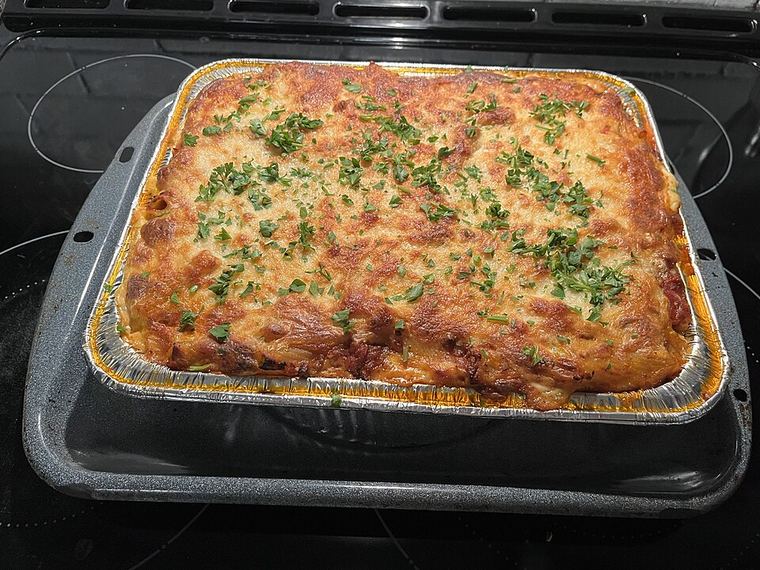
Baked Ziti, as published.
SpencerWMartin · CC0
Start here

What kind of baked ziti do you want?

Four real versions, not one "best." Pick one and the recipe's right here — a published, rated one, with weights.

Any limits tonight?
Our formula · nobody has published this one

Sauce and cheese, nothing binding

Sauce, cheese, and nothing binding it. Two thirds of the recipes we compared.

No recipe in the 99 lands close enough to call it a match, so this one is ours, built on 450 g of dry pasta from where the published recipes agree.

Ingredients

  • Dry pasta (1.0 lb)450 g
  • Cheese454 g

Method

  1. Pasta: boiled a minute or two short of the package time
  2. Assembly: tossed with the sauce before it goes in the dish, not layered on top of it
  3. Sauce: more than feels right — the tubes will take it
  4. Bake: covered, uncovered at the end only if you want colour
  5. Target: no dry patches, no pool

Watch out for: Boiling the pasta to the package time. Nothing else in this version protects it, and the oven will finish the job past where you wanted it.

Our formula · nobody has published this one

Ricotta bound with egg

An egg beaten through the ricotta so it firms in the oven instead of vanishing into the sauce.

No recipe in the 99 lands close enough to call it a match, so this one is ours, built on 450 g of dry pasta from where the published recipes agree.

Ingredients

  • Dry pasta (1.0 lb)450 g
  • Cheese454 g
  • Egg (1 large egg plus 1 yolk)81 g

Method

  1. Filling: ricotta with egg beaten through it, seasoned
  2. Assembly: still tossed, not layered — the egg sets it, it does not glue strata together
  3. Pasta: underboiled, as above
  4. Bake: covered most of the way
  5. Target: distinct pockets of set ricotta rather than white streaks

Watch out for: Expecting it to make the dish sliceable. It will not; this is a scoopable dish whichever route you take.

Our formula · nobody has published this one

A cooked white sauce

A cooked white sauce instead of ricotta. Ten recipes here take this route.

No recipe in the 99 lands close enough to call it a match, so this one is ours, built on 450 g of dry pasta from where the published recipes agree.

Ingredients

  • Dry pasta (1.0 lb)450 g
  • Cheese454 g
  • Milk or cream (about 1.9 cups)450 g

Method

  1. Sauce: butter and flour cooked out, then milk, before assembly
  2. Assembly: folded through, in alternation with the tomato
  3. Pasta: underboiled
  4. Bake: covered, then uncovered to colour
  5. Target: smooth rather than granular, and evenly distributed

Watch out for: Thinning it to make it easier to fold through. It is already going to loosen in the oven.

Our formula · nobody has published this one

Made ahead, or frozen

Assembled ahead, refrigerated or frozen, reheated with a splash of water.

No recipe in the 99 lands close enough to call it a match, so this one is ours, built on 450 g of dry pasta from where the published recipes agree.

Ingredients

  • Dry pasta (1.0 lb)450 g
  • Cheese454 g

Method

  1. Pasta: underboil harder than usual — it will sit in sauce before it ever sees the oven
  2. Assembly: assemble complete, cover, refrigerate or freeze
  3. Reheat: a splash of water or extra sauce, covered, and give it longer than you think
  4. Target: as good on Thursday as it was on Sunday

Watch out for: Assembling ahead with pasta boiled to done. It keeps absorbing in the fridge as well as the oven.

Need it to fit something tonight — no eggs, under 20 min hands-on, kids can help? Those re-pick the recipe once JavaScript is on. With it off, you still get all 4 recipes above in full.

Why baked ziti comes out mushy, or dry in patches

Both of the usual failures come from the same thing: treating ziti like a lasagna. It is not one.

Mushy pasta is a timing problem nobody warns you about. Everything in this dish is cooked twice — the pasta is boiled, then baked in liquid for another half hour, and it keeps drinking the whole time. Pasta boiled to the package time has already spent its budget before it reaches the oven. Only nine of the ninety-nine recipes we compared mention this.

Dry patches are a geometry problem. A lasagna is layers that stay layers. A ziti is a tossed mass, so anything you place in a band — sauce on top, ricotta through the middle — does not spread out on its own. Nine cooks between them found the same answer from two directions: toss the pasta with the sauce before it goes in the dish, and work the soft cheese through it rather than dolloping it on.

How long you boil it

The strongest lever in the dish and the one recipes skip. Take a minute or two off the package time, or pull it while it still has real bite — the oven will do the rest. The clearest proof runs the other way: a slow cooker on low for six hours, the gentlest and longest second cooking anyone reported, produced the worst pasta on record here.

Tossed, not layered

Things placed in bands stay in bands. Cooks who tossed the pasta with the sauce first, or worked the sour cream through it, reported it noticeably creamier — nine of them, which makes it the best-supported idea on this page.

How much sauce

More than feels right. Tubes hold sauce inside as well as around them, and underboiled pasta keeps absorbing, so a ziti takes more liquid than a lasagna. Cooks who used an extra jar came out wetter but not soupy.

Whether you are eating it today

This is the baked pasta that survives being made ahead. Ten cooks assembled it the night before, froze a pan, or reheated leftovers, and it came back at 7 to 8 out of 10 — there is no emulsion in a tomato sauce to break.

Four things decide it. Every change on this page works by moving one of them.

What it costs

Baked ziti: what each choice costs you

You cannot have all of it at once. These are the five real trades. Knowing which one you are making is most of the skill.

Pasta cooked right in the pot, or right on the plate

You cannot have both, because the oven is a second cooking and you do not get to choose how long it lasts. Boil to the package time and the tubes finish somewhere past done. Boil short and they arrive correct. Three cooks who deliberately underboiled reported firmer, better pasta.

Built in layers, or tossed together

This is where ziti stops being lasagna with different pasta. Layers only stay layers if something holds them, and in a tossed dish nothing does — so ricotta smeared through the middle turns into white streaks and sauce sitting on top leaves dry pasta underneath. Mix it through and you get the dish.

A careful hand with the sauce, or a generous one

Ziti takes more liquid than a lasagna, and the reason is the shape: tubes hold sauce inside as well as around, and pasta that went in underboiled keeps drinking. Four cooks used more than the recipe asked and finished wetter but not soupy. Sauce it as cautiously as a lasagna and you get a dry one.

Nothing dries out, or the top browns

A tossed mass only evaporates from its top face, so the foil decides both how moist the middle stays and whether anything colours. Covered the whole way it stays creamy and stays pale. If you want a crisp top you have to put something up there to brown — crumbs, or a scatter of onion.

Straight from the oven, or made ahead

Almost no cost either way, which is unusual. Ten cooks assembled it the night before, froze half, or reheated the leftovers, and it came back at 7 to 8 out of 10. Tomato sauce has no emulsion to split — the exact thing that makes reheated macaroni cheese a disappointment.

Change your baked ziti recipe

Each one is measured across all 99 recipes and then converted into this recipe's own amounts. Every edit costs something. The cost is on the card.

Make it creamier · richer · sharper

More cheese went with recipes that came out sharper, across 259 versions. Heat makes casein proteins clump and squeeze out the fat and water they were holding — that is what grainy, broken sauce is. Young moist cheese resists it; aged dry cheese, whose protein is already fragmented, gives way soonest. Starch or an emulsifying salt is what holds the two phases together.

Costs you: Nothing else moved that we can measure. We only detect 7 of the 60 changes cooks describe, so read that as unmeasured rather than free.

measured across many versions · 259 versions

Make it milder

More milk or cream went with recipes that came out milder, across 259 versions. Sharpness comes from proteolysis during ageing — free amino acids built up over months. It can be diluted by liquid or physically masked by starch, neither of which removes any cheese.

Costs you: Nothing else moved that we can measure. We only detect 7 of the 60 changes cooks describe, so read that as unmeasured rather than free.

measured across many versions · 259 versions

Make it saltier

More salt went with recipes that came out saltier, across 148 versions.

Costs you: Nothing else moved that we can measure. We only detect 7 of the 60 changes cooks describe, so read that as unmeasured rather than free.

measured, on a smaller set · 148 versions

Common baked ziti problems, and how to fix them

The 10 problems cooks actually report, and what to do about each one. Open the one that sounds like yours.

The pasta

The pasta came out mushy

Boil it shorter next time — a minute or two under the package time, or pull it while it still has real bite. The oven is a second cooking of the same pasta, and it will use every minute you give it. Three cooks did exactly this and got firmer, better pasta.

It came out of the slow cooker as mush

It was on low for too long. Two reports at about four hours on high gave good pasta; six hours on low was the worst result anyone here recorded. The gentle setting is the problem, not the machine — a longer, softer cook just gives the pasta more time to keep drinking.

Dry, watery, or bland

There are dry patches under the sauce

You layered it. Toss the cooked pasta with the sauce before it goes in the dish rather than pouring the sauce over the top — four cooks did and reported it noticeably creamier. A tossed dish does not redistribute itself in the oven.

It tastes bland

Add salt, not herbs. Three cooks reached for garlic powder, dried oregano or fresh garlic and it still read bland — one reheated portion with added garlic and oregano was rated 1 out of 5. There is a great deal of unseasoned starch in this dish and only salt gets to it.

It came out dry

Use more sauce than feels right. This dish takes more than a lasagna does, because the tubes hold sauce inside and underboiled pasta keeps absorbing it. Four cooks used an extra jar and finished wetter but not soupy.

It came out watery

Look at what you added rather than at how much sauce you used. Raw zucchini and other wet vegetables each pushed it to around 5 out of 10. Drying them first helps less here than it does in a lasagna — one cook towel-dried theirs and still finished fairly watery.

Cheese and the top

The ricotta disappeared into the sauce

Expected, in a dish with no layers to hold it. Beat an egg through the ricotta so it firms in the oven and stays a component, or work it deliberately through the pasta rather than dolloping it in. Five cooks who mixed the soft cheese through reported it creamier for it.

The top never browned

Either there was nothing up there to brown, or the foil never came off. A parmesan-breadcrumb layer reached 7 out of 10 and a scatter of onion reached 8. Uncover it for the last stretch.

Making it ahead

I want to make it ahead

This is the dish for it. Assemble it complete, refrigerate or freeze, and reheat covered with a splash of water — three cooks did exactly that and got 8 out of 10. One adjustment: underboil the pasta harder than usual, because it carries on absorbing in the fridge as well as the oven.

Can I change the meat?

Yes, and it appears to cost nothing. Seven cooks swapped in turkey, mild or hot Italian sausage, a mix of both, or left the meat out altogether, and none of it hurt the dish or how well it reheated.

The complete design space

Every baked ziti recipe we measured

The five above are the ones we would point you to. This is every recipe we measured, if you would rather look yourself.

Every dot is one recipe, placed by what it is made of — not by its title. The clusters are the recipes above; the space between them is everything else people have cooked.

Browse all 99 recipes →

The same ontology, other dishes

Others in this family

These share the mechanisms and the vocabulary you have just read, each one measured the same way against its own set of recipes.

What we do not know about baked ziti

Where our evidence is thin, so you know which parts of this page to lean on and which to treat as a starting point.

This is the thinnest evidence behind any dish we have published

We read 796 reviews of baked ziti and got 179 usable observations from them. The strongest finding here has seven cooks behind it, and nothing on this page has enough to call settled — nine findings have three or more cooks and the rest are one or two people reporting carefully. Pot roast, for comparison, has a finding with sixty-six. Read this page as a well-informed starting point rather than a verdict.

The most important instruction here is the least written down

Only nine of the ninety-nine recipes we compared say anything about underboiling the pasta, even though the whole dish turns on it. So our central advice rests on what a handful of cooks reported in reviews, not on what the recipes teach.

We cannot see your pan or your pasta

How deep the dish is decides how much surface there is to evaporate from, and brands of pasta differ in how fast they drink. Both matter to everything on this page and neither gets written down.

One thing we expected turned out not to be true

We thought binding the ricotta with egg would keep a ziti drier, because that is what it does in a lasagna. It does not — bound and unbound versions came out equally watery. It seems to be because a ziti has no layers for the binding to hold in the first place.