Chemistry, cited. Corpus, thin. We're telling you which is which.

Sodium citrate mac and cheese

We hold 3 recipes built around this technique out of 117. That's too few to rank against anything. This page explains why the technique works instead.

Sodium citrate sequesters the calcium that normally holds casein proteins together, so a cheese sauce emulsifies into something silky instead of breaking into curds and a slick of fat. Use it at roughly 3–4% of the combined weight of cheese and liquid, dissolved into the warm liquid before the cheese goes in. That's the technique. The rest of this page is the physics behind it, and one connection nobody selling it points out: your grocery store already sells this trick under a different name.

3Recipes in our corpus
117Total recipes
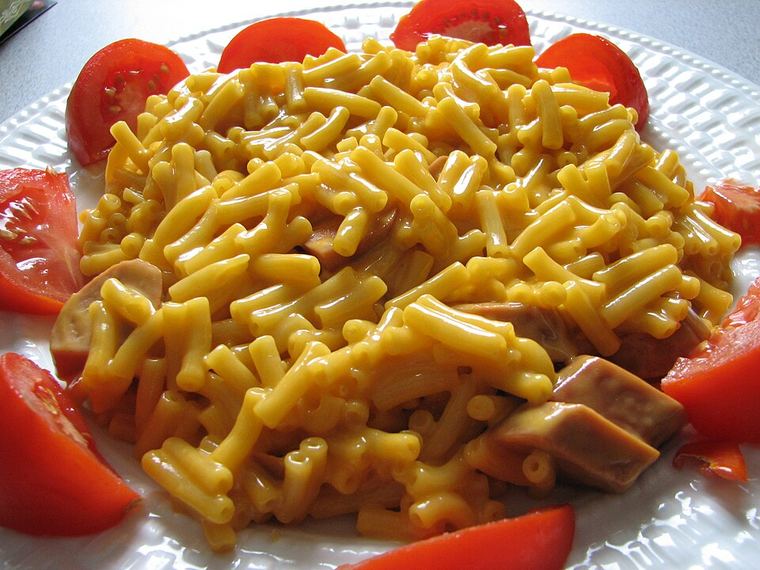
A box of macaroni and cheese with a processed cheese sauce.
Matt MacGillivray from Toronto, Ontario, Canada · CC BY 2.0
The problem citrate solves

Why cheese sauce breaks in the first place

Cheese sauce breaks mechanistically past roughly 150F (66C): continued heat drives casein-casein bonding until the protein network collapses into clumps, squeezing out fat and water -- the same event reads as grainy curds, an oil slick, and a thin weepy liquid.

Source: scienceandfood.org

Every fix in this corpus, from starch to a lower oven to a splash of pasta water, is a way of postponing or absorbing that collapse. Citrate is the only one that stops it at the source: it keeps calcium from bridging the proteins in the first place, so there's no clump for the heat to force together.

The physics

What sodium citrate actually does to the cheese

Casein chain length

Stretch comes from long, intact casein chains bridged by calcium. Ageing chops those chains, so aged cheese melts smooth but will not pull. Emulsifying salts (in sodium citrate and in American cheese alike) dismantle the same calcium bridges deliberately, which is why the silkiest sauces are also the least stretchy.

Not a free upgrade

What you give up, and what you gain

Citrate-stabilized sauces read gooey and pourable but not stretchy, because calcium chelation dismantles the same calcium-bridged casein network that cheese-pull depends on -- roux-based sauces keep more native stretch because they don't touch calcium.

Source: cheesescientist.com

A roux mutes cheese flavor because the starch masks it. America's Test Kitchen ran its own comparison against sodium citrate and rated the citrate version stronger on cheese flavor, not weaker.

Source: America's Test Kitchen

Stretch and stability come from the same calcium bridges. Citrate takes them apart on purpose, so a citrate sauce pours and coats but won't pull into a string. Roux-based sauces keep more native stretch precisely because they never touch the calcium.

Why chefs reach for it

It melts cheeses that won't melt on their own

Sodium citrate reliably melts even cheeses that refuse to melt smoothly on their own -- aged cheddar, Parmesan, even blue cheese -- because it chelates calcium rather than depending on the cheese's own structure, at roughly 3-4% of the cheese-plus-liquid weight.

Source: modernistcuisine.com

The connection nobody makes

Velveeta already figured this out

Processed cheese, the Velveeta and American-cheese kind, is made with emulsifying salts for exactly the reason sodium citrate gets added by hand: to hold the calcium-bridged proteins apart so the block melts smooth instead of breaking.

23 of our 117 recipes already use a processed cheese product as part of the blend. Sodium citrate isn't a novel technique bolted onto mac and cheese; it's the industrial version of a trick a fifth of this corpus is already doing, one slice at a time. See how processed cheese compares on melt score to the rest of the corpus.

Mix a slice or two of American cheese in with the natural cheese to reduce graininess and stabilize the sauce.

4 cooks reported this · 1 disagreed

One more claimed advantage

Reheating, according to the literature

Sodium citrate's calcium-chelation stability doesn't depend on repetition, so citrate sauces are explicitly documented to reheat well even after fully resolidifying in the fridge.

Source: cheeseprofessor.com

We can't check this one ourselves. Reheat stability is a score we fit across the recipes that use a roux, evaporated milk or custard base, dozens deep. We hold exactly 3 citrate recipes, with 9, 1 and 1 reviews behind them. Running our own metric on 3 recipes and calling it a finding would be worse than just citing the source and saying so, so that's what we're doing.

What's actually in our corpus

The 3 we hold

Not ranked against each other. Three recipes is too few to elect a winner, so here they are as reference, not a verdict.

Honesty

What this page cannot tell you

3 recipes is chemistry, not a corpus finding

Everything about the effect of citrate on a real batch, texture, reheating, how it compares to a roux in your kitchen, comes from cited outside sources, not from our own fitted scores. We don't have enough recipes to fit anything ourselves.

The processed-cheese link is a real pattern, not a controlled test

Recipes that fold in a processed cheese slice do so for their own reasons, not because someone ran an experiment. The chemistry is well established; the corpus count just shows it's already happening at scale in home kitchens, under a different name.

Two kinds of evidence, kept separate

Every claim on this page is either cited to an outside source or labeled as a count of cooks in our own reviews. We never blend the two into one unsourced sentence.