What melts, counted, not quoted

The best cheese for mac and cheese

Every listicle repeats the same two lines: cheddar for flavor, gruyère for melt. We counted the cheeses in the recipes that actually melt best and worst across 117 recipes instead.

Melting and flavor pull in opposite directions, and you can see it directly in what cooks reach for: young, mild cheeses show up again and again in the recipes that read most meltable, aged and hard cheeses in the ones that read least. Pick which one tonight is for. Whether the cheese came off a block or out of a bag matters less than either listicle claims, and we'll show you why.

117Recipes scored for melt
39Blend more than one cheese
17Shred from a block
14Buy it pre-shredded
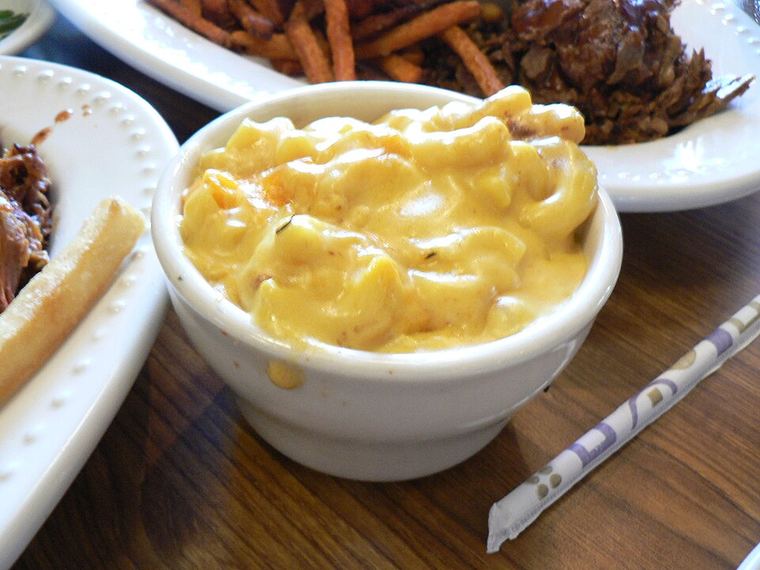
A dish of macaroni and cheese.
Stuart Spivack from Cleveland, Ohio, USA · CC BY-SA 2.0
What we're actually measuring

What “melt score” is, and what it isn't

Every recipe's cheese blend gets a score for how meltable the cheese blend is, built from which cheeses go into it.

Cheese emulsion stability: Heat makes casein proteins clump and squeeze out the fat and water they were holding: that is what grainy, broken sauce is. Young moist cheese resists it; aged dry cheese, whose protein is already fragmented, gives way soonest. Starch or an emulsifying salt is what holds the two phases together.

This score has no fitted lever behind it in our model, unlike sauce stability or richness. It's built from the recipe's own composition, not tested against a measured outcome, so we're showing you how it varies and what it correlates with, not claiming it predicts a result.
What the corpus's cheese choices look like

Most recipes don't blend cheeses at all

78 of 117 recipes use a single cheese. 37 blend two. 2 blend three or more. Whatever a listicle's ingredient photo implies, blending is the exception here, not the rule.

Recipes that blend two cheeses read more meltable on average than the ones that use just one. The 2 recipes that blend three or more score highest of all on melt, but 2 recipes is an anecdote, not a trend. We're not dressing it up as more than that.

The wedge

Which cheeses actually show up where

Split the corpus into thirds by melt score. Count how often each named cheese turns up in the ingredient list of the top third against the bottom third. A recipe can count in more than one row if it blends.

Presence counts: how many of the 39 most- and least-meltable recipes mention this cheese anywhere in the ingredient list.
CheeseIn the most-meltable third In the least-meltable third
Sharp cheddar17 of 3929 of 39
Mozzarella12 of 391 of 39
American cheese11 of 391 of 39
Colby10 of 390 of 39
Parmesan2 of 3912 of 39
Velveeta6 of 391 of 39
Mild cheddar6 of 391 of 39

Mozzarella, American cheese and colby cluster in the meltable third; sharp cheddar and parmesan cluster in the least-meltable one. Gruyère doesn't sort as cleanly as its age would suggest, which tracks with what cheesemongers already know: it melts better than most cheeses its age.

Folded in, not a separate page

“Never use pre-shredded”: what that claim rests on

Real chemistry, real cook opinion, and a corpus comparison that's honestly too small to settle it either way.

Pre-shredded bagged cheese is coated with an anti-caking agent (cellulose and/or starch) that resists fusion when melted by design, producing a grainier or chalkier sauce than cheese grated fresh from a block.

Cited: www.chowhound.com

Shred cheese fresh from a block instead of buying pre-shredded bagged cheese, for a smoother and more stable sauce.

15 cooks said this · 3 disagreed

Grouped by which one a recipe actually calls for, 17 block recipes against 14 bagged ones: too few to lean on hard, and worth saying so before the number does any work. Read on our own smoothness measure, the bagged group reads smoother, not grainier. The gap between the two groups is the narrowest split on this page.

Melt score itself barely moves between the two groups either, which fits: anti-caking starch is a claim about coating, not about which cheese is in the bag. What visibly swings our smoothness measure is how the sauce gets made and finished, not the shredding format. That split is the widest one on this page.

One more cheese choice

The one cheese that's already built not to break

23 of 117 recipes fold in a processed cheese slice: American cheese, Velveeta.

That group reads with the highest melt score of any cheese-state group we track. There's a real chemical reason a processed slice melts more reliably than a wedge of aged cheddar, and it's the same trick behind sodium citrate. How it works, and how thin our evidence for it is.

So, tonight

Which cheese should you actually buy?

Melt is the point

Reach for something young and mild

American cheese, Colby, Mild cheddar, Mozzarella: these show up again and again in the third of the corpus that reads most meltable.

What to do: build the base of the blend from one of these; save the sharp stuff for a minority share on top.

Flavor is the point

Lean on the aged cheese, accept the texture cost

Parmesan, Sharp cheddar dominate the least-meltable third. You get more flavor per ounce and a sauce that's more prone to graininess if the heat gets away from you.

What to do: cut it with a melty cheese or a little extra thickener rather than using it alone.

Block or bag?

Shred fresh if you like, but don't stress over it

The literature and the cooks who mentioned it lean toward a block. Our own 17-vs- 14 comparison doesn't confirm a real gap either way.

What to do: shred it yourself for the documented anti-caking benefit if you want it, then spend your actual attention on the heat. That's what moved our numbers.

Honesty

What this page cannot tell you

Melt score is descriptive, not a proven lever

It's built from the recipe's own cheese composition. No fitted vector in our model connects it to a measured outcome, so treat it as a way of comparing recipes to each other, not a number that predicts what will happen in your kitchen.

Cheese-name counts are presence, not weight

A recipe counts once for every named cheese in its ingredient list, whatever the amount. Two tablespoons of parmesan on top counts the same as a pound of cheddar underneath.

Block vs. bag rests on 17 and 14 recipes

That's thin next to the rest of this page, and cheese state isn't independent of which sauce method a recipe uses. We haven't untangled the two, so read the comparison as suggestive, not settled.

Two kinds of evidence, kept separate

Some claims on this page come from cook reviews of these recipes; others come from a cited outside source. We label which is which rather than blending them into one voice.