Compared by formula

Roast Chicken

197 recipes, read so you don't have to.

Every recipe is a different answer to the same few questions. Tell us the roast chicken you are after and we will hand you the closest one anyone has published, plus what to change to suit you.

197recipes read
5recipes, not one
10problems solved
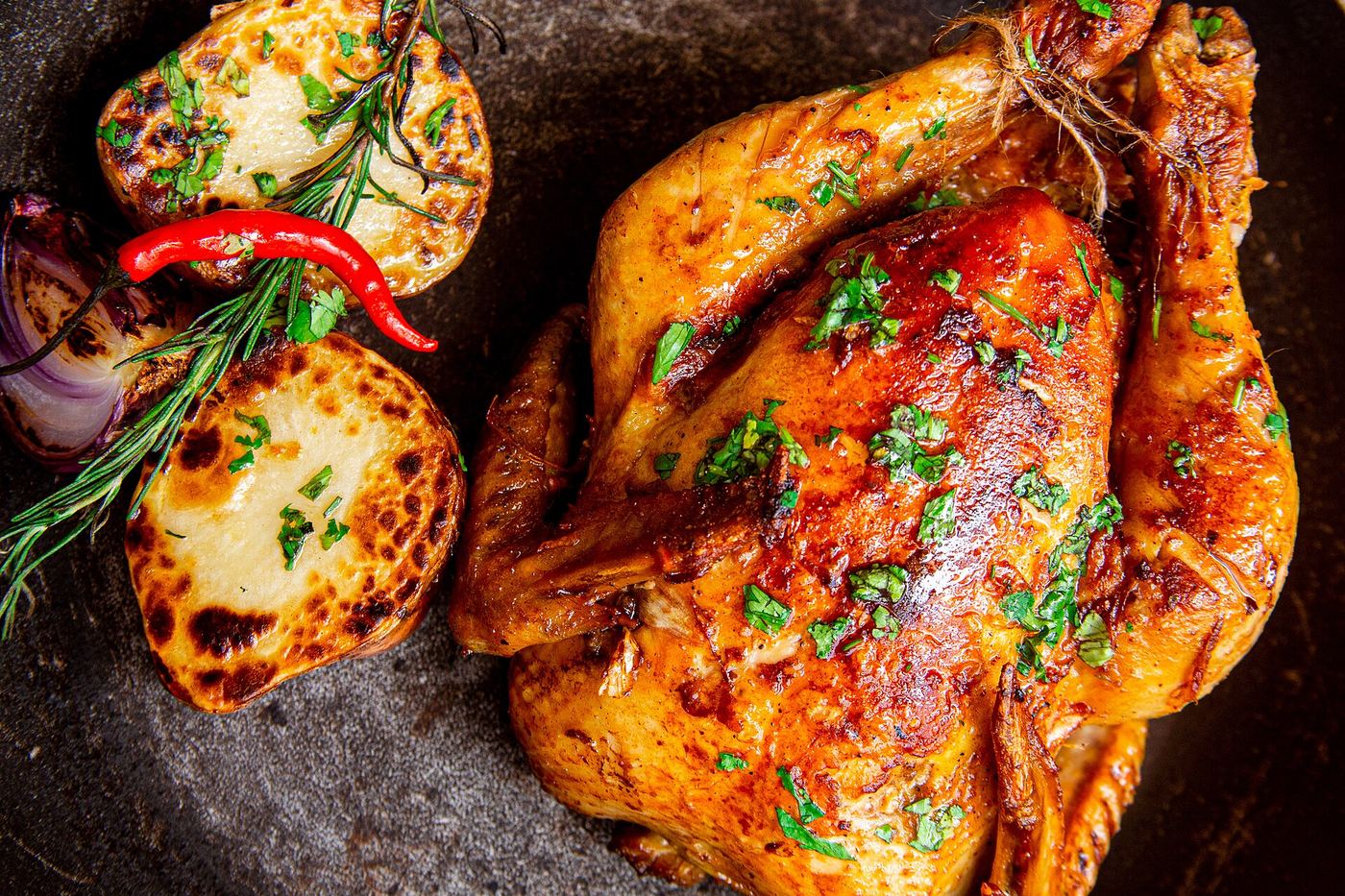
Roast Chicken, as published.
Jameswasswa · CC BY-SA 4.0
Start here

What kind of roast chicken do you want?

Five real versions, not one "best." Pick one and the recipe's right here — a published, rated one, with weights.

Any limits tonight?
Closest published match · of 63 hot the whole way recipes

Spatchcocked, under an hour

Backbone out, bird pressed flat, hot oven. Done in under an hour and cooks more evenly than a whole bird.

from www.allrecipes.com 4.6 68 cooks rated it

Ingredients

  • 2 (3 1/2) pound whole chickens, wingtips removed
  • 2 teaspoons salt
  • 1 teaspoon dried tarragon
  • 1 teaspoon paprika
  • 0.25 teaspoon black pepper
  • 4 teaspoons olive oil
  • 2 lemons, thinly sliced and seeded

Method

  1. Preheat the oven to 450 degrees F (230 degrees C). Line a large rimmed baking sheet with foil.
  2. Place chicken, breast-side down, on a work surface. Starting at the tail end, cut along both sides of backbone with kitchen shears. Remove backbone.
  3. Grab both sides of the chicken and open it like a book. Turn breast side up. Push down on each side of breast with your hands until you hear it crack. Flatten chicken and transfer to one short end of the prepared baking sheet. Repeat with the second chicken.
  4. Combine salt, tarragon, paprika, and pepper in a small bowl. Stir in oil. Run your fingers under chicken skin and rub tarragon paste under skin. Slide lemon slices under skin, in a single layer.
  5. Roast until skin is crisp and an instant-read thermometer inserted into thickest part of breast reads 165 degrees F, about 35 to 40 minutes. Let stand 5 minutes before cutting each chicken into 8 pieces.

Watch out for: The dry pan smokes at these temperatures — 5 cooks hit it. Scatter vegetables or a splash of water under the rack, or accept a loud kitchen fan.

Closest published match · of 36 two-stage recipes

For the crispiest skin

Salt and baking powder the day before, a night uncovered in the fridge, high heat at the end.

from tastesbetterfromscratch.com 5 963 cooks rated it

Ingredients

  • 1 whole chicken
  • 4 Tablespoons butter (softened)
  • 1 lemon
  • 2 sprigs fresh rosemary (or 2 tsp dried rosemary, finely chopped)
  • salt and freshly ground black pepper
  • 3-4 large carrots (chopped )
  • 1 onion (chopped)
  • 1.5 lbs baby red potatoes (halved)
  • chicken gravy (optional)

Method

  1. Prep Chicken: If using a frozen whole chicken, thaw completely (1-2 days in the fridge) before cooking. When ready to roast chicken, preheat oven to 450 degrees F and adjust your oven rack so the chicken will sit in the center of the oven. Remove neck and giblets from inside the cavity of the chicken and pat dry all over with paper towels.
  2. Herb Butter: In a bowl combine softened butter, lemon zest and chopped rosemary. Season the outside of the chicken and inside the cavity with salt and pepper.
  3. Apply Herb Butter: Use your fingers to loosen and lift the skin above the breasts (on the top of the chicken) and smooth a few tablespoons of the herb butter underneath. Microwave the remaining herb butter mixture for 5-10 seconds, until softened, and smear the remaining herb butter all over the outside of the chicken, legs and wings.
  4. Finish: Cut the lemon in half and place inside the cavity of the bird. Add the onion, carrot and potato to the bottom of a 9x13 inch baking dish. Drizzle a little olive oil over the veggies, season them with salt and pepper, and toss to coat. Place the chicken on top, and tie the legs together with kitchen twine if desired (not required).
  5. Roast the chicken, uncovered, at 450 degrees F for 10-15 minutes. Reduce temperature to 350 degrees F and roast for 20 minutes per pound, or until internal temperature (inserted on middle of thigh and breast) reaches about 165 degrees F. Skin should be golden brown and the juices should run clear. *Check the chicken about halfway through cooking and if the skin is getting overly brown you can cover it with a piece of tinfoil to protect the breast meat from overcooking.
  6. Rest: Remove chicken from the oven and tent with aluminum foil to rest for at least 10 minutes before carving.
  7. Serve with the cooked vegetables at the bottom of the pan. Reserve the drippings in the roasting pan, if desired, to make chicken gravy.

Watch out for: Baking POWDER, never soda — and if your powder carries aluminum the skin can taste of it. Herb rubs go UNDER the skin; on top they burn and their water blocks the browning you engineered.

Closest published match · of 63 hot the whole way recipes

Whole bird, carved at the table

Trussed or not, breast-down for the first half, foil if it colours early. The tricks that save the breast.

from www.averiecooks.com 4.6 32 cooks rated it

Ingredients

  • 5 pound whole roasting chicken (use a 4 to 5 pound chicken)
  • 2 pounds fingerling potatoes
  • kosher salt (to taste)
  • freshly ground black pepper (to taste)
  • 4 tablespoons olive oil (divided)
  • 1 teaspoon paprika (or to taste (poultry seasoning or your favorite chicken seasoning may be substituted))
  • fresh parsley (optional for garnishing potatoes)

Method

  1. Preheat oven to 425ºF convection, line a large baking sheet with foil; set aside. If you don’t have a convection oven, bake at 425F regular, noting that the baking time will need to increase (see step 6. below).
  2. Remove the chicken giblets, pat dry the exterior of the chicken using paper towels, and place on one side of the baking sheet, breast side up; I don’t truss it.
  3. Add the potatoes to the other side of the baking sheet.
  4. Very liberally season the chicken with salt and pepper, more moderately season the potatoes with salt and pepper, and evenly drizzle about 2 tablespoons olive oil over the chicken and 2 tablespoons olive oil over the potatoes; toss the potatoes with your hands to coat evenly.
  5. Evenly sprinkle the chicken with paprika.
  6. Bake for about 55 to 60 minutes convection, or until potatoes are tender and chicken is done* (see Tips below). Toss potatoes once midway through baking to ensure even cooking. If you don’t have a convection oven, I imagine the potatoes will need about 1 hour (remove them after 1 hour) and bake the chicken for another 30 minutes (about 90 minutes total), or until done. As with anything, bake until done and don’t get caught up on what the clock says.
  7. Optionally garnish potatoes with parsley before serving.

Watch out for: This is the profile where the 30F thigh-breast gap bites hardest. If you own one probe, put it in the breast and check the thigh by hand at pull time.

Closest published match · of 8 slow-roasted recipes

Slow-roasted at 275°F

Three and a half hours, very forgiving, and the best pan drippings you will get. The skin stays pale.

from www.panningtheglobe.com 4.9 54 cooks rated it

20 minHands on
3 hr 15Waiting
4Makes
$3.83Each
IntermediateLevel

Ingredients

  • 3½–4 pound chicken1701 g
  • 8 medium garlic cloves, divided24 g
  • 1/4 cup extra virgin olive oil54 g
  • 1 tablespoon kosher salt11 g
  • 2 teaspoons of ground fennel seed (even better if you freshly crush 2 teaspoons of fennel seeds with mortar and pestle)4 g
  • 1/2 teaspoon crushed red pepper flakes (or 1 teaspoon Aleppo pepper flakes)1 g
  • 1/4 teaspoon freshly ground black pepper1 g
  • 1 lemon, thinly sliced
  • 1 whole bunch of fresh thyme1 g

Method

  1. Preheat the oven to 300ºF (not convection) and arrange a rack in the center position. Remove the chicken from the fridge so it has time to come to room temperature before you roast it (see notes below).
  2. Squeeze 3 of the garlic cloves through a garlic press or finely mince them, and put them into a small mixing bowl. Add the olive oil, salt, fennel, red pepper flakes, and black pepper. Mix thoroughly and set aside.
  3. Remove the giblet pouch from the cavity of the chicken (if there is one); rinse the chicken inside and out with cold water and pat it very dry with paper towels, inside and out. Place the chicken, breast side up, in a roasting pan.
  4. Coat the chicken with the garlic and spice mixture, spooning it on, under and inside the chicken, and using your hands to spread it around evenly, making sure there's plenty on top of the breasts.
  5. Lightly crush the remaining 5 garlic cloves (see notes below) and stuff them into the cavity of the chicken. Set aside a few sprigs of fresh thyme to use as a garnish and stuff the rest into the chicken, along with the sliced lemon. Tie the chicken's legs together with twine (see notes below) and roast it in the oven uncovered for 3 hours, undisturbed.
  6. Remove the pan from the oven and let the chicken rest in its juices for fifteen minutes before carving. Cut it into eight serving pieces and then cut each breast crosswise, into 5 or 6 thin slices, if you like. Transfer the chicken to a serving platter or, even easier, serve it right in the roasting pan. Nestle the chicken pieces into the pan juices, scatter the cooked lemons around, and garnish with reserved thyme sprigs.

Watch out for: One cook's covered-Dutch-oven variant came out DRIER — covering steams and defeats both skin and depth. Slow means low and open, not sealed. And budget the skin blast; without it this bird is delicious and beige.

Closest published match · of 63 hot the whole way recipes

Roasted on a bed of vegetables

The bird roasts on potatoes and carrots and the drippings cook them. One pan, whole dinner.

from www.ambitiouskitchen.com 5 27 cooks rated it

30 minHands on
1 hr 35Waiting
6Makes
$0.53Each
IntermediateLevel

Ingredients

  • 1 whole chicken (about 4 pounds)1814 g
  • ¼ cup extra-virgin olive oil (or sub melted butter or avocado oil)54 g
  • 1 lemon, juiced
  • 3 cloves garlic, roughly chopped9 g
  • 2 teaspoons kosher salt8 g
  • 1 teaspoon garlic powder3 g
  • 1 teaspoon sweet paprika2 g
  • 1 teaspoon oregano1 g
  • 1 teaspoon dijon mustard4 g
  • Freshly ground black pepper
  • 1 pound fingerling potatoes or baby gold yukon gold potatoes, halved454 g
  • 4 to 5 medium to large carrots, peeled, cut in half lengthwise and cut into 3-inch segments274 g
  • 1 yellow onion, cut into large chunks150 g
  • For serving:
  • 3 tablespoons fresh chopped dill19 g
  • 3 tablespoons fresh chopped parsley19 g
  • Crumbled feta
  • Lemon zest
  • Whipped Feta Yogurt Sauce, optional
  • Arugula, optional for extra greens!

Method

  1. Preheat the oven to 450°F. Remove chicken from the fridge and bring to room temperature for 30 minutes.
  2. Marinate the chicken: In a small bowl, mix together the olive oil, lemon juice, garlic, salt, garlic powder, paprika, oregano and dijon until well combined. Set aside. Generously brush half of the mixture over all sides of the chicken and rub it under the skin.
  3. Assemble the sheet pan: Add the potatoes and vegetables to a large roasting pan, drizzle with about 2 tablespoons of the olive oil mixture, tossing well to coat, then arrange the vegetables on the edges of the pan so there is room for the chicken in the middle. The chicken can cover some of the vegetables as needed.
  4. Prep the chicken: Place the chicken breast-side down on a sturdy cutting board and pat dry with paper towels. Using sharp, strong kitchen shears, cut closely along one side of the backbone, then repeat with the other side of the backbone. Be sure to cut as close to the spine as possible so you do not remove excess meat. Remove the backbone and discard, or save it to make homemade stock.
  5. Spatchcock the chicken: Flip the chicken breast-side up and firmly press down on the breast to flatten it until you hear the small crack of the breastbone breaking, which will allow the chicken to lie flat. Alternatively, with the legs facing away from you, you can make two 1-inch incisions on either side of the breastbone along the neck to help flatten the chicken.
  6. Transfer the chicken to the roasting pan and generously brush the remaining marinade mixture all over the chicken and rub it under the skin.
  7. Roast: Roast in the oven, stirring the vegetables halfway through, and cooking until a meat thermometer inserted in the thickest part of the chicken breast reads 160°F, 45 to 50 minutes. (The chicken will continue to cook once you remove it from the oven.)
  8. Rest the chicken: Transfer the chicken to a clean cutting board or large plate and allow it to rest for 15 to 20 minutes before cutting it into quarters.
  9. Garnish & serve: Transfer vegetables to a large platter, then arrange the chicken in the middle or on top of the vegetables. Garnish with fresh herbs, feta and lemon zest. Serve on plates with some whipped feta sauce spread on for enjoying with the chicken and vegetables. This is also absolutely delicious served over a little arugula. Enjoy!

Watch out for: Cut the vegetables large or they surrender to mush before the bird is done — and stagger quick-cooking ones in late.

Need it to fit something tonight — no long wait, no dairy, under 20 min hands-on? Those re-pick the recipe once JavaScript is on. With it off, you still get all 5 recipes above in full.

Why roast chicken comes out dry

A chicken is two different meats bolted together. Breast is lean and perfect at 150°F; above that it squeezes itself dry. Leg is full of connective tissue and still rubbery at 150°F — it needs 160 to 175°F before it turns silky. Cook the bird without planning for that and one of them will be wrong.

That is the whole dish, and every famous technique is a workaround for it. Spatchcocking — cutting out the backbone and pressing the bird flat — is the best of them, and it works because of where things end up: the legs sit at the hot edges of the pan and the breast sits in the cooler middle, so they finish together, in about half the time. Slow roasting is the other answer: at 275°F the whole bird heats so gently that the gap between the two never gets wide.

Water

You cannot spend it twice. Everything that crisps the skin takes water out — salting the day before, an uncovered night in the fridge, a hot blast at the end. Everything that adds water back attacks the skin, which is why basting and wet brining lose.

Where the heat reaches

Not how much of it. The reason spatchcocking beats every timing trick is that it changes which part of the bird sits in the hottest part of the pan.

Watching the end of the cook

Recipes state a time and the times miss in both directions — eleven cooks say so. Two thermometer readings, breast and thigh, are the only clocks that work.

Three things decide it. Every change on this page works by moving one of them.

What it costs

Roast chicken: what each choice costs you

You cannot have all of it at once. These are the five real trades. Knowing which one you are making is most of the skill.

A perfect breast, or perfect legs

This is the founding problem and everything else is a response to it. Traditional whole-bird roasting quietly sacrifices the breast so the legs can finish; the modern answers refuse that trade. In order of how well they work: spatchcocking, because the geometry does the job on its own; roasting breast-down or flipping partway, which protects the breast at the cost of handling a scalding bird; and a foil hat over the breast, which is an honest field repair. Reported pull temperatures show gaps of 30°F between thigh and breast at the same moment. That gap IS the dish.

Shattering skin, or the wettest possible meat

Water is the currency and you cannot spend it twice. Everything that crisps skin removes water; everything that adds water attacks the skin. Basting is the clearest case — even butter is roughly a fifth water, so you are re-wetting the surface you spent a day drying, and opening the oven each time. And there is a move that wins both sides at once: salting the day before dries the surface for browning AND helps the meat hold its own juices. Wet brining's extra juiciness is retained tap water. There is no informed version of choosing it.

Dinner in an hour, or the bird you carry to the table

Unusually, this one is mostly a false choice that presentation keeps alive. The spatchcocked bird at 450 to 500°F is on the table in under an hour, cooks more evenly, browns more skin and renders more fat — it wins on every measurable count and loses only the theatre of an intact bird. The whole roast costs an extra hour and needs the whole repair kit: foil hats, flipping, hoping. The reports on spatchcocking are unanimous as far as they go. Pay the ceremony tax knowingly, or do not pay it.

Deep and developed, or bright and fast

Depth here comes from hours spent before or below the roast, not during it. A 275 to 300°F oven for three and a half to four and a half hours is the strongest pattern in the whole dish, and it buys concentration and reliability. A long salt the day before seasons deeper than anything you can do on the day. Cavity aromatics and a vegetable bed are cheap flavour — though the same aromatics in a brine are a documented waste. And the fast bird has its own answer: turning the drippings into a pan sauce is the single most-supported flavour instruction in the dish, thirteen cooks, and it gives an hour-long roast depth it never had time to build.

What grandma did, or what the thermometer says

No dish here carries more inherited ritual that the evidence rejects. Basting does not moisten the meat — muscle that is shrinking cannot absorb fat, and that has been tested — while it does harm the skin and cool the oven every time you open the door. Trussing is backwards on both counts: it plumps the breast that already cooks too fast and insulates the legs that need more heat, and ten cooks skipped it with no penalty. The lemon in the cavity is real but modest. What survives is unglamorous — salt early, dry the skin, use a thermometer, rest before carving. This is the page where knowing the mechanism mostly saves you work.

Change your roast chicken recipe

Each one is measured across all 197 recipes and then converted into this recipe's own amounts. Every edit costs something. The cost is on the card.

Common roast chicken problems, and how to fix them

The 10 problems cooks actually report, and what to do about each one. Open the one that sounds like yours.

The skin

It is up to temperature but the skin is pale

Blast it at 500°F for the last few minutes and watch it. Do NOT give it more time at roasting temperature to chase the colour — that spends breast moisture on browning, and the breast is the part you cannot get back.

The oven was hot and the skin still came out flabby

Water got there first. Look back for the culprit: a wet brine, basting, a lid or foil over it for part of the roast, or simply not drying the skin. Tonight, blast it and serve it. Next time: salt it the day before, leave it uncovered in the fridge overnight, and mix a little baking powder into the salt.

The two meats

The breast is getting ahead of the legs

Put a loose foil hat over the breast now — it is a repair and it works. If you are confident handling a hot bird you can flip it breast-down instead. Next time, spatchcock it: moving the meat to where the heat is beats every mid-roast rescue.

The time is up but the thermometer disagrees

Believe the thermometer. Stated times miss in both directions — eleven cooks report it, some pulling early and some late. The only two numbers that matter are 150°F in the thickest part of the breast and 165°F or above at the thigh joint.

I only have thighs and legs, or the whole-bird business sounds hard

Then the central problem simply disappears. Bone-in, skin-on pieces each hit their own target independently, and they score just as well as a whole bird. If the two-meats problem is what puts you off, separating the meats is a completely legitimate answer.

The bird and the pan

My pan is smoking at 450°F

Fat is hitting bare hot metal. Put something under the bird — a layer of vegetables, or just a splash of water in the pan. The vegetable-bed version of this dish exists partly because it turns this problem into the side dish.

I have no time to salt it in advance

Salt it hard right now, every surface, and then be strict about temperature — careful monitoring does the job the advance salt would have done as a safety margin. Even one hour uncovered in the fridge measurably helps the skin.

The label says kosher, enhanced or self-basting

Then it arrived already salted, and you should add none of your own until you have tasted it. This is the one case where the salt advice on the rest of this page does not apply.

My bird is bigger than the recipe assumes

Scale the seasoning up by about half again, expect more carryover heat after it comes out, and lean harder on the thermometer. Time scales worse than temperature does — a bird half again as big does not want half again as long.

There are lovely drippings in the pan — should I baste with them?

No. They are mostly water, so you would be softening the skin, and the meat cannot absorb them anyway. Those drippings have a better destiny: shallots, a splash of stock, reduce it, finish with butter. That pan sauce is the most-supported flavour instruction in the whole dish.

The complete design space

Every roast chicken recipe we measured

The five above are the ones we would point you to. This is every recipe we measured, if you would rather look yourself.

The same ontology, other dishes

Others in this family

These share the mechanisms and the vocabulary you have just read, each one measured the same way against its own set of recipes.

What we do not know about roast chicken

Where our evidence is thin, so you know which parts of this page to lean on and which to treat as a starting point.

Our statistics found nothing here

Not one measurement survived our checks, and we can say why: almost everybody who reviews a roast chicken says it was wonderful, so the scores pile up at the top with nothing to compare. Everything here comes from mechanism and from counting what cooks did.

Some of the brine evidence is from turkey

The wet-versus-dry brine comparisons were run on turkeys. Same muscle, same family, and we think it carries — but nobody has repeated it on a chicken.

We have nothing on convection

Not one cook in our reading mentions using a convection setting. Our advice about it is borrowed from the appliance literature.